
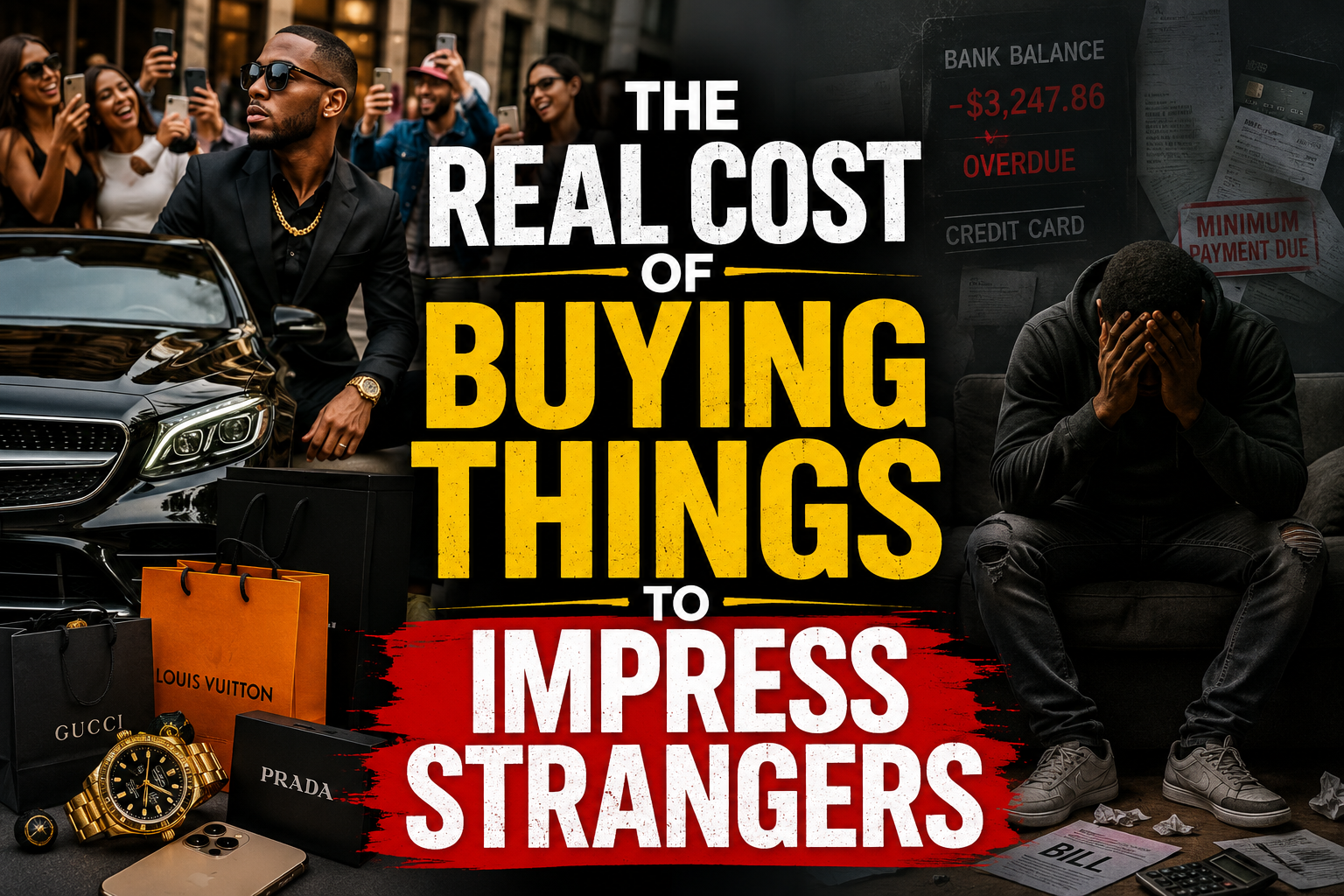
The Real Cost of Buying Things to Impress Strangers
Have you ever purchased something expensive, not because you truly needed it, but because you imagined how other people would react when they saw it? Maybe it was the latest smartphone, a luxury wristwatch, designer clothing, a high-end car, or even a lavish party. For a brief moment, the purchase felt exciting. Compliments came in, people noticed, and you felt validated. But weeks or months later, the excitement faded while the financial burden remained. This silent cycle is far more common than many people are willing to admit.
The real cost of buying things to impress strangers goes far beyond the amount printed on the price tag. It affects your finances, your peace of mind, your future opportunities, your relationships, and even the way you view yourself. In a world driven by social media, instant gratification, and constant comparison, many people unknowingly sacrifice long-term financial security just to earn temporary admiration from people who may not even remember them tomorrow.
One of the biggest misconceptions in modern society is the belief that appearance equals success. Expensive clothes are often mistaken for wealth. Luxury cars are assumed to represent financial freedom. Large houses are viewed as evidence of prosperity. The truth, however, is that appearances can be carefully manufactured. A person may drive a luxury vehicle while drowning in debt. Another may wear designer labels while struggling to pay rent. Someone else may post glamorous holiday pictures while secretly worrying about overdue bills.
True wealth rarely announces itself. Many genuinely wealthy people live surprisingly modest lives because they understand an important principle. Wealth is not about looking rich. Wealth is about having choices. It is about having the financial freedom to make decisions without constantly worrying about money. That freedom cannot exist when most of your income is spent trying to convince strangers that you are successful.
One reason people fall into this trap is the natural human desire for acceptance. Humans are social beings. We want to belong. We want respect. We want recognition. Unfortunately, advertisers and marketers understand these desires better than most consumers understand themselves. Instead of selling products, they often sell emotions. They associate expensive items with confidence, status, attractiveness, intelligence, and happiness. As a result, people begin believing that buying certain products will somehow transform their identity.
The reality is that a product can improve your lifestyle, but it cannot permanently improve your self-worth. Confidence that depends entirely on external possessions disappears whenever those possessions become outdated or unavailable. Real confidence comes from competence, character, discipline, and consistent personal growth.
Social media has intensified this problem dramatically. Every day millions of carefully edited photos display luxury vacations, expensive restaurants, fashionable outfits, new gadgets, and beautiful homes. What people rarely see are the loans, credit card balances, financial anxiety, and personal sacrifices hidden behind those images. People compare their ordinary lives to someone else’s carefully selected highlights, then feel pressured to spend money they cannot comfortably afford.
Comparison has become one of the most expensive habits in the digital age. The danger is that comparison has no finish line. There will always be someone driving a newer car, wearing more expensive clothing, travelling to more exotic destinations, or living in a larger home. If your happiness depends on keeping up with everyone else, financial satisfaction will remain permanently out of reach.
Many financial problems begin with a single dangerous sentence: “What will people think?” This question influences purchasing decisions more often than logic does. Instead of asking whether something creates value, people ask whether others will be impressed. Instead of considering long-term affordability, they think about short-term appearance. This mindset quietly redirects money away from investments, savings, education, and business opportunities into rapidly depreciating possessions.
Ironically, strangers usually care far less than we imagine. Most people are occupied with their own challenges, responsibilities, and insecurities. The expensive shoes you purchased hoping everyone would notice might receive only a few seconds of attention before people return to thinking about themselves. The luxury car that stretched your finances may impress someone briefly, but it will not pay your monthly bills or secure your retirement.
Psychologists sometimes describe this as the spotlight effect. We naturally overestimate how much other people notice our appearance and actions. In reality, everyone else is usually just as focused on themselves as we are. Understanding this simple truth can save thousands of pounds, dollars, naira, or any other currency over a lifetime.
Buying to impress often creates a dangerous financial cycle. A person purchases one expensive item to improve their image. Soon that item becomes ordinary, so another purchase feels necessary. A new phone leads to designer accessories. Designer accessories lead to luxury clothing. Luxury clothing leads to expensive holidays. Each purchase temporarily satisfies the desire for recognition before creating another craving for something newer or better.
This cycle benefits businesses because recurring consumption drives profits. It rarely benefits consumers because possessions lose value while financial obligations accumulate.
Credit cards and consumer financing have made this problem even easier. Years ago, people generally needed to save before making major purchases. Today many people borrow instantly. Monthly instalments create the illusion that expensive products are affordable, even when the total cost significantly exceeds their financial capacity.
Debt taken to acquire appreciating assets can sometimes be strategically beneficial. Debt used primarily to impress others usually becomes a burden. Every monthly payment reduces future financial flexibility. Money committed to debt cannot simultaneously be invested, saved, or used to build additional income.
Opportunity cost is another invisible expense. Every pound, dollar, or naira spent on unnecessary status purchases is money that cannot be used elsewhere. Imagine two people with identical incomes. One consistently purchases luxury items to maintain an impressive image. The other invests the same amount into diversified assets, education, business development, or retirement accounts. Initially their lifestyles may appear similar. Ten or twenty years later the difference can become extraordinary.
Small financial decisions repeated consistently create enormous long-term consequences. The true price of an unnecessary luxury purchase is not simply today’s payment. It also includes the investment returns that money could have generated over many years.
Many wealthy individuals understand delayed gratification. They willingly postpone immediate pleasure to create greater future freedom. This mindset often appears boring to outsiders because disciplined financial behaviour rarely attracts attention. Nobody applauds the person who quietly invests every month, builds an emergency fund, or pays off debt consistently. Yet these habits create lasting security while flashy purchases often create lasting stress.
There is also an emotional cost to buying things for validation. When self-worth becomes connected to possessions, happiness becomes unstable. Every newer product released by competitors suddenly feels threatening. Every trend creates pressure to spend again. Satisfaction becomes temporary because identity depends on constantly maintaining an external image.
Financial stress affects far more than bank accounts. It contributes to anxiety, relationship conflict, reduced productivity, poor sleep, and emotional exhaustion. Couples frequently argue about money, especially when one partner prioritises appearance over financial stability. Families sometimes delay important goals such as buying a home, funding education, or starting businesses because too much income has been directed toward maintaining appearances.
Children also observe financial behaviour. Parents who constantly purchase items to impress others may unintentionally teach their children that appearance matters more than financial wisdom. Future generations often inherit attitudes toward money long before they inherit money itself.
There is nothing wrong with enjoying quality products or rewarding yourself after achieving financial goals. The issue is motivation. Buying something because it genuinely improves your life differs completely from buying something primarily to influence how strangers perceive you. One decision is based on value. The other is based on validation.
Before making any significant purchase, it can be helpful to ask several honest questions. Would I still buy this if nobody else ever saw it? Does this purchase solve a meaningful problem? Will it improve my life beyond the excitement of owning something new? Can I comfortably afford it without sacrificing my future financial security? Am I buying this because I genuinely want it, or because I hope someone else will admire me?
These questions often reveal motivations that advertising encourages us to ignore.
Minimalism has gained popularity partly because it challenges the assumption that more possessions automatically create greater happiness. Many people discover that owning fewer but more meaningful items reduces stress, saves money, simplifies decision-making, and increases appreciation for what they already have. Financial freedom frequently grows faster when consumption becomes intentional rather than emotional.
Another important consideration is the difference between assets and liabilities. Assets generally put money into your pocket or appreciate over time. Liabilities usually require ongoing expenses or lose value. While not every purchase must be an investment, consistently prioritising liabilities over assets makes long-term wealth creation significantly more difficult.
Some people mistakenly assume that wealthy individuals spend extravagantly because they can afford to. In reality, many self-made millionaires became wealthy precisely because they resisted unnecessary spending while building their fortunes. They understood that every unnecessary expense delayed financial independence. Once wealth was established, spending decisions became choices rather than attempts to prove success.
The desire to impress strangers often stems from insecurity rather than abundance. People comfortable with themselves rarely feel an overwhelming need to display success publicly. Their confidence comes from internal achievements, meaningful relationships, valuable skills, and financial stability instead of visible consumption.
Success itself is deeply personal. For one individual, success may mean travelling the world. For another, it means raising healthy children. Someone else may value owning a profitable business or achieving complete financial independence before the age of fifty. Problems arise when people adopt someone else’s definition of success without examining whether it aligns with their own values.
Consumer culture constantly encourages upgrading. Better phones, bigger televisions, faster cars, newer fashion, larger houses. There is always another version promising greater happiness. Yet research and everyday experience consistently show that material satisfaction fades remarkably quickly. Humans adapt. Yesterday’s luxury soon becomes today’s normal. This phenomenon explains why constant consumption rarely produces lasting contentment.
Meanwhile, investments in knowledge, health, relationships, and meaningful experiences often produce benefits that continue growing over time. Learning valuable skills increases earning potential. Maintaining good health reduces future medical costs. Building strong relationships provides emotional support during difficult seasons. These investments may not attract attention on social media, but they frequently generate much greater long-term value.
One powerful shift in thinking is replacing the question, “How will this make me look?” with “How will this improve my life?” That single change encourages purchases based on genuine usefulness instead of public perception. It redirects attention from temporary appearances toward lasting value.
Financial independence is built quietly. It grows through disciplined budgeting, thoughtful investing, continuous learning, consistent saving, wise risk management, and intentional spending. None of these habits appear glamorous, yet together they create something far more valuable than public admiration. They create freedom.
Freedom means sleeping peacefully because bills are manageable. Freedom means taking opportunities without fear of financial collapse. Freedom means helping loved ones during emergencies. Freedom means retiring with dignity instead of depending entirely on others. Freedom means making decisions based on values rather than desperation.
Ironically, many people spend years trying to appear wealthy while sacrificing the very financial habits that create genuine wealth. They purchase depreciating possessions hoping strangers will assume they are successful, while quietly postponing the investments that would actually make them successful.
The next time you feel tempted by an expensive purchase, pause before reaching for your wallet. Ask yourself whether you are buying an object or purchasing approval. Ask whether the admiration you seek will still matter five years from now. Ask whether the money could serve you better somewhere else. Most importantly, ask whether you are building a lifestyle designed to impress strangers or a future designed to give yourself and your family lasting security.
The real cost of buying things to impress strangers is not measured only in money. It is measured in missed investment opportunities, accumulated debt, delayed dreams, unnecessary stress, lost financial freedom, and years spent chasing approval that was never truly satisfying. The greatest form of wealth is not owning the most expensive possessions. It is reaching a point where you no longer feel the need to prove anything to people who have no meaningful influence over your life. When your financial decisions become guided by purpose instead of perception, you begin building something far more valuable than an impressive image. You begin building genuine wealth, lasting peace of mind, and a future that no stranger’s opinion can ever take away.

EarnSmartOnline.com.ng is dedicated to helping readers make smarter financial decisions through practical guides on online income, personal finance, technology, digital business, and wealth creation. Our goal is to provide reliable, easy-to-understand, and actionable content that empowers individuals to earn smarter, build sustainable income streams and achieve long-term financial success.
Recommended: Start Earning Online
- Ultimate Affiliate Marketing Program — learn affiliate marketing with a done-for-you sales system ($15). Check it out
- The Newbie Affiliate Guide — the beginner-friendly starter guide (~$6.68). Check it out
- Easy Dollar Maker — earn in dollars uploading AI images and videos from your phone ($17). Check it out
Disclosure: These are affiliate links. If you buy through them, I may earn a commission at no extra cost to you.



