
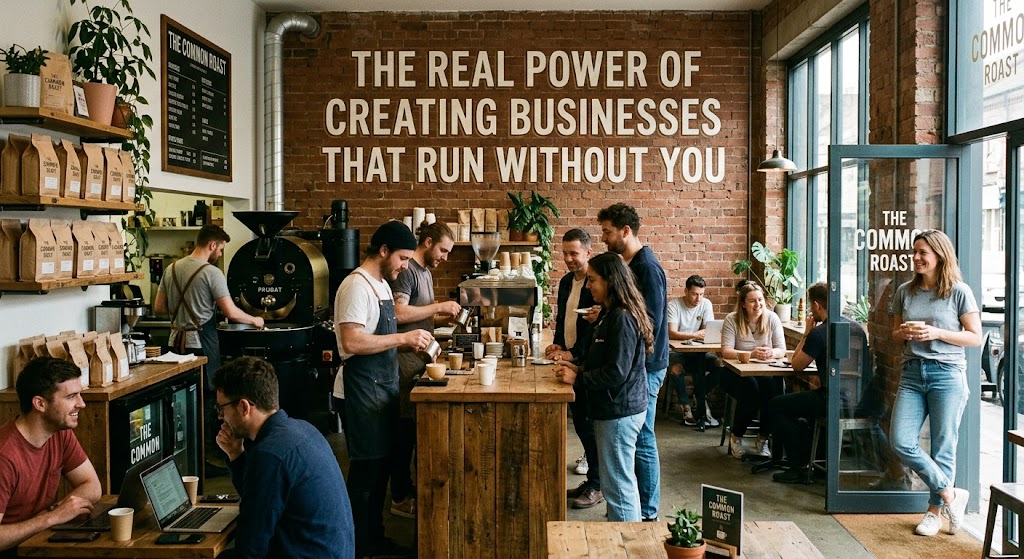
The Real Power of Creating Businesses That Run Without You
Most people start a business with one dream in mind. They want freedom. They imagine waking up when they want, spending more time with family, traveling without asking for permission, and making money even while they sleep. Ironically, many entrepreneurs end up creating the exact opposite. Instead of building freedom, they build another full-time job. They become the accountant, customer service representative, marketer, salesperson, cleaner, delivery manager, human resources officer, and chief executive officer all at once. The business depends on them for every single decision, every customer complaint, every payment, and every problem. The day they stop working is the day the business stops making money. That is not real business ownership. It is self-employment disguised as entrepreneurship.
The real power of creating businesses that run without you lies in building systems rather than depending on personal effort. It is about designing an organisation that continues to serve customers, generate income, solve problems, and grow whether you are sitting in the office, spending time with your children, taking a vacation, or recovering from an illness. This is one of the biggest differences between small struggling businesses and companies that survive for decades. Businesses come and go, but systems outlive individuals.
Many people misunderstand what it means for a business to run without its owner. They imagine that it means doing nothing or becoming lazy. That could not be further from the truth. Creating a business that operates independently often requires more work at the beginning than running everything yourself. It demands careful planning, documentation, hiring, delegation, automation, and constant improvement. The owner moves from being the worker inside the business to becoming the architect of the business. That shift changes everything.
One of the greatest risks of owning a business that depends entirely on you is burnout. Human beings have limits. You can only answer so many phone calls in a day. You can only attend so many meetings. You can only solve so many problems before your energy begins to fade. Many entrepreneurs proudly say they work sixteen or eighteen hours every day. While hard work deserves respect, endless exhaustion is not a business strategy. If your success depends entirely on how many hours you personally work, your income will always have a ceiling. Time is limited, but systems can work around the clock.
Imagine owning a hotel where guests can only check in if you are physically present. Every booking requires your approval. Every complaint requires your attention. Every supplier must speak directly to you before making a delivery. Such a hotel would struggle to grow because one person has become the bottleneck. Now imagine another hotel where trained staff follow clear procedures, reservations are managed automatically, payments are processed securely, customer complaints follow structured escalation paths, and managers make operational decisions without waiting for the owner’s permission. Which business has greater long-term potential? The answer is obvious.
One reason many entrepreneurs refuse to let go is fear. They believe nobody can do the job as well as they can. While that may be true initially, it often becomes an excuse for avoiding leadership. Employees become better through training, feedback, and experience. Systems improve through testing and refinement. If an owner never gives people responsibility, nobody will ever become capable. The business remains trapped at the owner’s current capacity forever.
Another hidden danger of owner-dependent businesses is that they become difficult to sell. Investors and buyers do not simply purchase income. They purchase predictable systems. If the owner disappears and revenue disappears with them, the business has little value beyond its equipment or inventory. On the other hand, a company with trained managers, documented processes, recurring customers, and automated operations becomes a valuable asset. Buyers are willing to pay far more because they are purchasing a machine that continues producing results.
The ability to step away from your business without everything falling apart is one of the clearest signs that you have built something valuable. It proves that your business has matured beyond individual effort. It demonstrates that knowledge has been transferred, responsibilities have been delegated, and systems have replaced constant supervision. That kind of business creates wealth instead of merely creating work.
Technology has made this easier than ever before. Modern businesses can automate appointments, billing, customer communication, inventory management, payroll, accounting, email marketing, and even certain aspects of customer support. Automation does not eliminate human beings. Instead, it allows people to focus on higher-value activities that require creativity, judgement, and relationship building. Every repetitive task you automate creates more space for innovation and growth.
Documentation is another powerful secret behind businesses that operate independently. Many businesses fail whenever experienced employees leave because vital knowledge exists only inside people’s heads. Smart business owners write everything down. Standard operating procedures explain how tasks should be completed, how customers should be treated, how problems should be resolved, and how quality should be maintained. When new employees join the company, they learn from proven systems instead of relying on guesswork.
Customer experience also improves when businesses rely on systems instead of personalities. Customers appreciate consistency. They want the same excellent service whether the owner is present or not. They want reliable quality every single time. Businesses that depend on one charismatic founder often struggle to maintain standards as they grow. Systems create predictable excellence that customers can trust.
Creating a business that runs without you also changes your personal life in remarkable ways. Many entrepreneurs sacrifice family relationships while chasing financial success. They promise themselves they will spend more time with loved ones after reaching the next milestone. Unfortunately, that milestone keeps moving further away because the business continually demands their attention. A system-driven business allows owners to attend school events, family celebrations, holidays, and important life moments without constantly checking their phones or rushing back to solve another crisis.
Health is another overlooked benefit. Chronic stress damages both physical and mental wellbeing. Entrepreneurs who never disconnect often experience anxiety, insomnia, fatigue, and burnout. They carry the weight of every decision on their shoulders. Building capable teams and reliable systems distributes responsibility, reducing unnecessary pressure while creating healthier work environments for everyone involved.
The financial benefits extend far beyond personal freedom. Businesses that function independently can expand into multiple locations because operations no longer depend on one individual. Franchising becomes possible. Partnerships become easier. Investors gain confidence. Banks become more willing to provide financing because they see organized operations instead of chaotic dependence on one person.
Leadership also evolves dramatically. Many people think leadership means making every decision. In reality, true leadership means creating an environment where good decisions happen even when you are absent. Great leaders develop other leaders. They teach people how to think rather than telling them exactly what to do every minute. This multiplies organisational intelligence and allows businesses to grow faster than any single individual ever could.
Trust plays a central role in this transformation. Delegation requires trust, but trust should never be blind. It should be supported by accountability, measurable performance, regular reporting, and clear expectations. Business owners should know what is happening without personally doing everything themselves. Effective dashboards, financial reports, customer satisfaction metrics, and operational indicators provide visibility while allowing teams to function independently.
Many famous companies illustrate this principle. Their founders eventually stepped away from daily operations, yet the businesses continued growing because strong systems were already in place. Customers continued buying products. Employees continued serving clients. Managers continued making decisions. The organisations became larger than the individuals who created them. That is the true test of sustainable entrepreneurship.
Small businesses can apply these same principles regardless of industry. A restaurant owner can create recipe manuals, service standards, inventory procedures, and management training programmes. A hotel owner can establish reservation systems, housekeeping checklists, maintenance schedules, and guest service protocols. An online business owner can automate sales funnels, customer onboarding, payment processing, and follow-up communication. A consulting company can document methodologies, templates, and client management processes. Every industry offers opportunities to reduce dependence on the owner’s daily involvement.
One common mistake entrepreneurs make is confusing activity with productivity. Being constantly busy feels important, but constant busyness often hides poor systems. Running around solving problems all day may create the illusion of effectiveness, but it usually indicates that root causes remain unresolved. Businesses that operate smoothly require fewer emergencies because preventive systems address issues before they become crises.
Hiring the right people becomes even more important when building independent businesses. Skills matter, but attitude, integrity, willingness to learn, and alignment with company values matter even more. Technical abilities can often be taught. Character is much harder to develop. Strong businesses invest in recruiting individuals who embrace responsibility and continuous improvement.
Training should never be viewed as an unnecessary expense. Every hour invested in teaching employees pays dividends through improved performance, reduced mistakes, better customer experiences, and increased independence. Owners who refuse to train people often complain that nobody can help them effectively. In many cases, the problem is not employee potential but inadequate preparation.
Communication systems also deserve careful attention. Teams perform better when expectations are clear, responsibilities are defined, and information flows efficiently. Regular meetings, written updates, project management tools, and documented goals reduce confusion while encouraging accountability. Businesses that communicate effectively spend less time correcting misunderstandings and more time creating value.
Another significant advantage of businesses that run without their owners is resilience during unexpected events. Life is unpredictable. Illnesses happen. Family emergencies occur. Economic conditions change. Travel becomes necessary. Businesses that collapse whenever the owner becomes unavailable face constant vulnerability. Organisations built around systems continue functioning even when circumstances disrupt normal routines.
Innovation also becomes easier when owners escape daily operational chaos. Constant firefighting leaves little time for strategic thinking. Entrepreneurs trapped inside daily operations rarely have opportunities to analyse market trends, identify new opportunities, develop better products, or explore expansion strategies. Freedom from routine tasks creates mental space for creativity and long-term planning.
Business growth often accelerates after owners stop trying to control everything personally. Decisions happen faster because authority has been distributed appropriately. Customers receive quicker responses. Employees feel empowered. Managers develop confidence. The organisation becomes more adaptable because multiple capable people contribute ideas and solve problems simultaneously.
One powerful mindset shift involves viewing every recurring task as a future system instead of a permanent personal responsibility. Whenever you perform the same activity repeatedly, ask yourself whether it can be documented, delegated, automated, or simplified. This simple habit gradually transforms chaotic operations into organised processes. Small improvements accumulate into major competitive advantages over time.
Financial systems deserve particular attention because money management affects every business. Automated invoicing, structured budgeting, regular financial reporting, expense approval procedures, and internal controls reduce errors while improving transparency. Owners should receive accurate financial information quickly without manually calculating every transaction themselves.
Marketing systems can also operate independently. Content calendars, scheduled social media posts, automated email campaigns, customer relationship management software, referral programmes, and search engine optimisation continue attracting customers even when owners focus elsewhere. Consistent marketing produces more reliable growth than occasional bursts of promotional activity.
Customer service systems create another important advantage. Frequently asked questions, knowledge bases, automated confirmations, ticket management systems, and trained support teams provide fast, reliable assistance without requiring constant owner involvement. Satisfied customers become repeat buyers and enthusiastic ambassadors who recommend the business to others.
The psychological transformation experienced by entrepreneurs who successfully build independent businesses can be profound. Instead of feeling trapped by their own success, they regain control over their lives. Business ownership becomes enjoyable again because it serves personal goals rather than consuming every waking moment. Freedom, originally imagined at the beginning of the entrepreneurial journey, finally becomes reality.
It is important to understand that creating businesses that run without you does not mean becoming disconnected from your company. Owners should remain informed, involved in strategic decisions, and committed to organisational culture. The difference lies in choosing when and how to contribute rather than being forced to solve every operational issue personally. Leadership becomes intentional instead of reactive.
Many entrepreneurs hesitate because they worry employees will make mistakes. Mistakes certainly happen, but owners make mistakes too. The goal is not perfection. The goal is creating learning systems that minimise errors while continuously improving performance. Every mistake should become an opportunity to strengthen procedures, improve training, or refine communication rather than reinforcing micromanagement.
Company culture becomes especially important as businesses become more independent. Shared values guide decision-making even when detailed instructions are unavailable. Employees who understand the organisation’s mission and principles make better choices because they know what the business stands for. Culture becomes the invisible force that aligns individual actions with collective goals.
Another overlooked benefit is succession planning. Every entrepreneur will eventually leave their business, whether through retirement, sale, illness, or unexpected circumstances. Businesses designed to operate independently transition far more smoothly because leadership responsibilities have already been distributed. Families, employees, customers, and investors all benefit from greater stability.
Many small business owners mistakenly believe these principles only apply to large corporations. In reality, even solo entrepreneurs can begin building systems from the very beginning. Templates, automation tools, documented workflows, virtual assistants, outsourced specialists, and digital platforms allow even modest businesses to reduce owner dependence significantly. Waiting until the business becomes large often makes transformation more difficult because poor habits become deeply established.
Patience is essential throughout this journey. Businesses rarely become self-sustaining overnight. Building systems requires experimentation, adjustment, and continuous refinement. Some delegations will fail initially. Some processes will require revision. Some employees will need additional coaching. Progress comes through persistence rather than perfection.
One useful question every entrepreneur should ask regularly is this: if I disappeared for one month, what would happen to my business? The answer reveals important opportunities for improvement. Every activity that cannot continue without you represents a system waiting to be created. Every decision requiring your personal approval may indicate unnecessary dependence. Every recurring emergency may signal missing processes that deserve attention.
The most successful entrepreneurs understand that wealth is not simply measured by income. True wealth includes freedom, flexibility, health, meaningful relationships, peace of mind, and the ability to choose how time is spent. Businesses that demand constant personal involvement may generate impressive revenue while quietly destroying the very lifestyle they were supposed to create. Businesses built on systems generate both financial rewards and personal freedom.
The future belongs to entrepreneurs who embrace intelligent systems rather than endless personal sacrifice. Artificial intelligence, cloud computing, digital payment platforms, remote collaboration tools, workflow automation, and data analytics continue expanding what businesses can accomplish with fewer manual interventions. Those who adopt these technologies thoughtfully will enjoy significant competitive advantages while reducing operational dependence on themselves.
Every entrepreneur faces a choice. You can remain the hardest-working employee in your own company forever, or you can gradually transform yourself into the designer of an organisation that thrives independently. One path creates constant pressure, limited growth, and exhaustion. The other creates scalability, resilience, financial value, and genuine freedom. The decision shapes not only your business but your entire life.
The real power of creating businesses that run without you is not simply that you can take holidays or spend less time at work, although those are valuable benefits. The deeper power is that you create something bigger than yourself. You build an organisation capable of serving customers consistently, providing employment, generating wealth, solving problems, and creating lasting impact regardless of your daily presence. Your business stops being an extension of your personal effort and becomes an enduring asset with the ability to grow, adapt, and prosper across generations.
When your business reaches the point where customers receive excellent service without asking for you, employees confidently solve problems without waiting for your approval, managers make wise decisions based on established principles, systems handle repetitive tasks efficiently, and revenue continues flowing while you focus on strategy rather than survival, you will discover what entrepreneurship was always meant to be. The greatest achievement is not building a business that cannot survive without you. The greatest achievement is building one that succeeds because of the foundation you created, even when you are not there to hold it together. That is the real power of creating businesses that run without you.

EarnSmartOnline.com.ng is dedicated to helping readers make smarter financial decisions through practical guides on online income, personal finance, technology, digital business, and wealth creation. Our goal is to provide reliable, easy-to-understand, and actionable content that empowers individuals to earn smarter, build sustainable income streams and achieve long-term financial success.
Recommended: Start Earning Online
- Ultimate Affiliate Marketing Program — learn affiliate marketing with a done-for-you sales system ($15). Check it out
- The Newbie Affiliate Guide — the beginner-friendly starter guide (~$6.68). Check it out
- Easy Dollar Maker — earn in dollars uploading AI images and videos from your phone ($17). Check it out
Disclosure: These are affiliate links. If you buy through them, I may earn a commission at no extra cost to you.



