
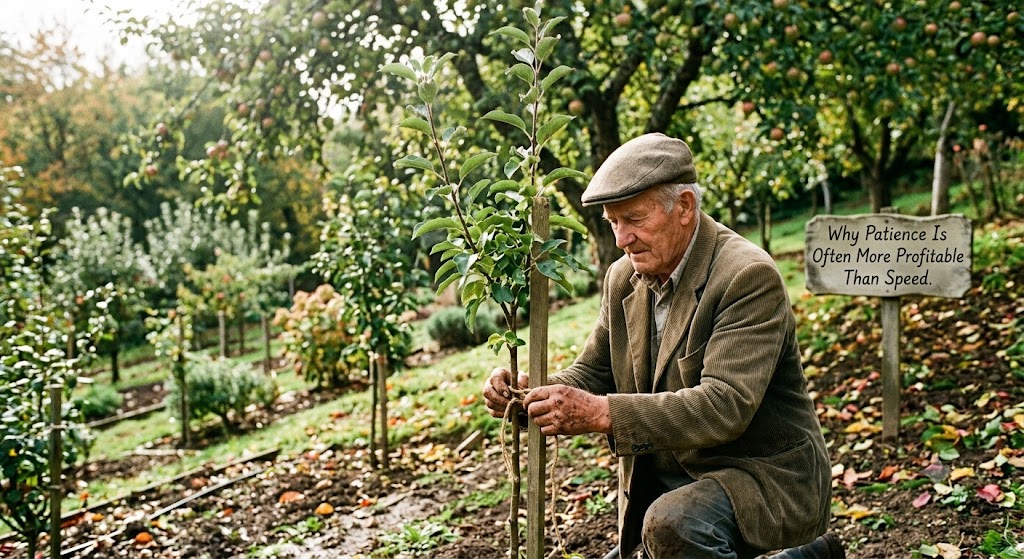
Why Patience Is Often More Profitable Than Speed
In a world that celebrates instant success, overnight millionaires, viral fame, and quick results, patience has quietly become one of the most underrated qualities anyone can develop. Everywhere you look, people are encouraged to move faster, earn faster, grow faster, and achieve more in less time. Social media rewards instant gratification, businesses compete to deliver products in record time, and many people measure success by how quickly they reach a destination rather than how well they prepare for it. Yet history repeatedly proves that some of the most meaningful achievements, strongest businesses, healthiest relationships, and greatest fortunes were not built in a hurry. They were built through patience, consistency, careful planning, and the willingness to allow time to multiply effort.
The truth is that speed is attractive because it promises immediate rewards, but patience often delivers lasting rewards. While speed may help someone arrive first, patience frequently helps them stay longer. There is a significant difference between reaching success quickly and sustaining success for decades. Many people achieve temporary victories through shortcuts, but only those who understand the value of patience usually build foundations strong enough to withstand challenges, competition, economic downturns, and changing circumstances.
Patience should never be confused with laziness or inactivity. Being patient does not mean sitting back and waiting for life to improve on its own. Instead, patience is the discipline to continue working even when the results are not immediately visible. It is the ability to remain committed despite delays, setbacks, criticism, or uncertainty. A patient person continues planting seeds while others abandon the field because the harvest has not appeared quickly enough.
Nature itself teaches this principle remarkably well. Farmers understand that planting a seed today does not produce crops tomorrow. Every stage of growth requires time. Seeds germinate beneath the soil long before anyone can see visible progress. During that invisible period, important development is taking place underground. If someone became impatient and dug up the seed every few days to check its progress, they would destroy its chance of growing. In much the same way, many people sabotage their own success because they expect visible results before the necessary growth has taken place internally.
Business provides countless examples where patience becomes more profitable than speed. Entrepreneurs who rush to launch products without proper research often face disappointing outcomes. On the other hand, those who spend time understanding customer needs, refining their services, improving quality, and building trust frequently create businesses that last much longer. Customers may initially be attracted by low prices or flashy advertising, but they remain loyal because of consistent value. That consistency cannot be rushed.
Many successful companies spent years operating without widespread recognition. Their founders focused on improving their products instead of chasing immediate popularity. While competitors rushed into every opportunity, these businesses patiently improved systems, strengthened customer relationships, and refined operations. Eventually, when demand increased, they were prepared to grow sustainably while others struggled under the pressure of rapid expansion.
Investing is another area where patience repeatedly outperforms haste. Many inexperienced investors constantly chase the latest trend, hoping to become wealthy within weeks or months. They buy when excitement is high and sell when fear appears. Their decisions are often driven by emotion instead of strategy. Patient investors usually adopt a different mindset. They understand that wealth grows through compounding, disciplined investing, and allowing time to work in their favour. Instead of reacting to every market movement, they focus on long-term value. Over many years, the power of patience often produces returns that far exceed the gains from constant buying and selling.
Compounding itself is perhaps one of the greatest examples of patience generating extraordinary rewards. Whether it involves money, knowledge, relationships, reputation, or personal growth, small consistent improvements accumulate into remarkable results over time. Reading just a few pages each day eventually leads to dozens of completed books. Saving a small amount regularly gradually builds financial security. Publishing useful content consistently creates authority. Exercising regularly transforms physical health. None of these outcomes happen overnight, but patience allows small actions to become significant achievements.
Many people underestimate the hidden cost of impatience. Impatience often leads to poor decisions because it prioritises immediate satisfaction over long-term benefit. Someone eager to make quick money may fall victim to scams promising unrealistic returns. An impatient entrepreneur may abandon a profitable idea too early because results are slower than expected. A content creator might quit after producing only a handful of articles because they expected instant traffic. An employee may constantly change jobs without giving themselves enough time to develop valuable expertise. In each situation, impatience becomes expensive.
Modern technology has unintentionally made patience more difficult. Food can be ordered within minutes. Movies stream instantly. Messages arrive immediately. Shopping requires only a few clicks. While these conveniences improve daily life, they also train people to expect immediate outcomes in areas where time cannot be accelerated. Skills still require practice. Trust still requires consistency. Expertise still requires experience. Character still develops through repeated choices. No technology can eliminate these realities.
The desire for speed often causes people to compare their beginning with someone else’s success. Social media highlights achievements while hiding the years of struggle that came before them. People see profitable businesses but not the sleepless nights spent building them. They see successful authors but not the countless rejected manuscripts. They admire wealthy investors without seeing decades of disciplined saving. They celebrate athletes without witnessing years of relentless training. Because the journey remains invisible, many assume success happened quickly when it actually required extraordinary patience.
One reason patience becomes profitable is that it creates better decision-making. Fast decisions are sometimes necessary during emergencies, but many important life choices benefit from careful thought. Whether choosing business partners, hiring employees, investing money, purchasing property, selecting a career, or entering relationships, patience allows time for proper evaluation. Hasty decisions often ignore warning signs that become obvious later. By slowing down, people reduce unnecessary mistakes and improve their chances of making wiser choices.
Patience also strengthens emotional discipline. Emotional decisions frequently produce regret. Anger encourages harsh words. Fear encourages panic selling. Excitement encourages reckless spending. Envy encourages unhealthy competition. Patience creates a pause between emotion and action. During that pause, logic has an opportunity to replace impulse. This simple habit often prevents costly mistakes that could have lasting consequences.
For entrepreneurs, patience provides room for innovation. Instead of copying whatever trend appears popular today, patient business owners spend time studying markets, identifying genuine customer problems, and developing meaningful solutions. Their focus shifts from chasing temporary opportunities to creating lasting value. Businesses built on lasting value usually survive changing trends much better than businesses built solely on excitement.
Content creators also experience the importance of patience. Building an audience rarely happens overnight. Search engines reward consistent publishing, valuable information, and credibility established over time. Readers gradually develop trust after repeatedly receiving useful content. Bloggers who expect instant traffic often become discouraged too early. Those who continue publishing high-quality articles month after month usually discover that momentum eventually begins to build. Every article becomes another asset working on their behalf. Eventually, years of consistent effort create an extensive library that continues attracting readers long after publication.
Website owners frequently misunderstand online growth because they compare themselves with established platforms. Large websites often spent years creating content before becoming industry leaders. Their authority was earned gradually. Each article, each visitor, each improvement, and each satisfied reader contributed to their reputation. Patience allowed their efforts to compound until success appeared inevitable, even though it was anything but easy during the early stages.
Career development follows a similar pattern. Many people become frustrated because promotions or salary increases do not happen immediately. While ambition is healthy, meaningful expertise cannot be rushed. Employers consistently value employees who continue learning, improving communication skills, solving problems, and demonstrating reliability over time. Those qualities develop through repeated experience rather than instant achievement. Patience allows careers to mature naturally instead of forcing premature expectations.
Education demonstrates another powerful example. Learning requires repetition, practice, mistakes, corrections, and gradual understanding. Students seeking shortcuts may pass examinations but struggle to apply knowledge in real situations. Those who patiently master concepts rather than memorising answers usually become more capable professionals. Their slower approach eventually becomes more profitable because genuine competence creates greater opportunities.
Patience is equally valuable in financial planning. Many people desire immediate wealth, but sustainable financial freedom is usually the result of consistent habits maintained over many years. Budgeting, saving, investing wisely, reducing unnecessary debt, and living below one’s means rarely produce exciting headlines, but these patient behaviours quietly transform financial futures. Wealth built patiently often remains stable because it rests upon strong financial discipline rather than temporary luck.
Relationships also reveal why patience often produces greater rewards than speed. Trust develops gradually through honesty, reliability, understanding, and shared experiences. Strong friendships cannot be forced. Healthy marriages require ongoing commitment. Business partnerships succeed because people consistently honour their promises over time. Every meaningful relationship depends upon patience because trust cannot be manufactured instantly.
Leadership particularly benefits from patience. Great leaders understand that people require encouragement, guidance, correction, and time to grow. Instead of demanding immediate perfection, patient leaders develop talent gradually. Employees who feel supported often become more loyal, productive, and innovative. Organisations with patient leadership frequently enjoy stronger cultures because people feel valued beyond immediate performance.
Patience also improves creativity. Creative breakthroughs rarely appear on demand. Writers experience periods where ideas flow naturally and other periods where progress feels slow. Designers revise multiple drafts before discovering the best solution. Inventors often fail repeatedly before succeeding. Patience allows creativity to mature without forcing unrealistic expectations. Ironically, slowing down often produces higher-quality work than rushing to finish quickly.
History repeatedly confirms that lasting achievements require time. Monumental buildings were constructed stone by stone. Scientific discoveries emerged after years of experimentation. Medical breakthroughs followed countless failed attempts. Great literature underwent extensive revision. Musical masterpieces resulted from dedicated practice. None of these accomplishments were created through impatience.
There is also a psychological advantage to patience. Patient people generally experience less stress because they accept that worthwhile outcomes often require time. Instead of constantly worrying about immediate results, they focus on daily progress within their control. This mindset reduces anxiety while increasing resilience during difficult periods. Since they are not obsessed with instant gratification, temporary setbacks feel less devastating.
One of the greatest dangers of excessive speed is burnout. People who constantly rush often sacrifice rest, relationships, health, and thoughtful planning in pursuit of immediate goals. Initially, this intense pace may produce impressive results, but over time it frequently becomes unsustainable. Burnout reduces creativity, motivation, productivity, and decision-making ability. Patience encourages sustainable effort, making long-term success much more achievable.
In competitive industries, patience often creates strategic advantages. Competitors focused entirely on rapid expansion sometimes neglect customer service, quality control, employee development, or financial stability. Patient organisations deliberately strengthen these areas before expanding. As a result, they become more resilient when unexpected challenges arise. Their slower pace during the early stages eventually becomes a competitive strength.
Patience also encourages continuous improvement instead of perfectionism. Many people delay starting because they want everything to be perfect from the beginning. Ironically, perfection itself requires patience. Progress happens by releasing work, learning from feedback, making improvements, and repeating the process. Patient individuals understand that excellence evolves through consistent refinement rather than instant perfection.
Another overlooked benefit of patience is the ability to recognise genuine opportunities. People who constantly rush may accept the first available option without considering better alternatives. Patient individuals allow enough time to evaluate multiple possibilities. Whether negotiating contracts, buying property, choosing investments, or hiring employees, patience often leads to better outcomes because it creates space for informed decisions.
The principle of delayed gratification remains one of the strongest predictors of long-term success. Individuals willing to sacrifice immediate pleasure for future benefit frequently achieve greater financial stability, healthier lifestyles, stronger careers, and more meaningful accomplishments. Every significant achievement requires choosing future rewards over present comfort at least some of the time. Patience makes those choices possible.
Failure itself often teaches patience more effectively than success. Disappointments remind people that growth is rarely straightforward. Businesses experience slow seasons. Investments fluctuate. Careers encounter obstacles. Personal goals take longer than expected. Those who remain patient during difficult periods frequently emerge wiser, stronger, and better prepared for future opportunities. Their persistence becomes an advantage because many competitors give up too early.
Digital entrepreneurship provides a perfect illustration. Whether someone builds a blog, develops software, creates online courses, manages an eCommerce store, or grows a YouTube channel, sustainable growth usually happens gradually. Search rankings improve over months. Audiences increase through consistent engagement. Customer trust develops after repeated positive experiences. Revenue grows as credibility expands. People expecting immediate success often abandon promising projects just before momentum begins.
Patience should never eliminate urgency where action is required. There is an important distinction between patiently pursuing long-term goals and procrastinating indefinitely. Patience means consistently taking action while accepting that significant results require time. Procrastination means avoiding action while pretending the timing is not right. One builds progress. The other delays progress.
The most successful people often appear patient because they understand something many others overlook. Every worthwhile investment has a maturation period. Trees require years before producing abundant fruit. Professional reputations require years before becoming trusted. Businesses require years before becoming respected brands. Personal character requires years before earning admiration. These processes cannot be accelerated without sacrificing quality.
For anyone building a website, growing a business, developing a career, improving finances, or pursuing personal dreams, patience may be the greatest competitive advantage available. While others become distracted by shortcuts, unrealistic promises, and temporary trends, patient individuals continue making steady progress. They understand that every small improvement contributes to a much larger outcome. They value consistency over excitement, preparation over impulse, and endurance over speed.
The world will continue celebrating instant success stories because they capture attention, but those stories rarely reveal the full journey. Behind nearly every lasting achievement are years of unseen effort, quiet discipline, repeated learning, careful planning, and remarkable patience. The people who ultimately build the strongest foundations are often those willing to wait while continuing to work.
Success is not always determined by who moves the fastest. More often, it belongs to those who remain committed after everyone else has become discouraged. It belongs to those who continue improving when recognition is absent. It belongs to those who understand that today’s invisible effort becomes tomorrow’s visible achievement. While speed may occasionally create impressive beginnings, patience almost always creates remarkable endings.
When viewed through the lens of a lifetime rather than a single moment, patience consistently proves itself to be one of the most profitable investments anyone can make. It protects against costly mistakes, strengthens character, improves decision-making, builds lasting relationships, encourages sustainable growth, and allows the extraordinary power of consistency and compounding to transform ordinary efforts into exceptional results. In a culture obsessed with immediate rewards, choosing patience is not a sign of weakness. It is often the wisest, most strategic, and ultimately the most profitable decision a person can make.

EarnSmartOnline.com.ng is dedicated to helping readers make smarter financial decisions through practical guides on online income, personal finance, technology, digital business, and wealth creation. Our goal is to provide reliable, easy-to-understand, and actionable content that empowers individuals to earn smarter, build sustainable income streams and achieve long-term financial success.
Recommended: Start Earning Online
- Ultimate Affiliate Marketing Program — learn affiliate marketing with a done-for-you sales system ($15). Check it out
- The Newbie Affiliate Guide — the beginner-friendly starter guide (~$6.68). Check it out
- Easy Dollar Maker — earn in dollars uploading AI images and videos from your phone ($17). Check it out
Disclosure: These are affiliate links. If you buy through them, I may earn a commission at no extra cost to you.



