
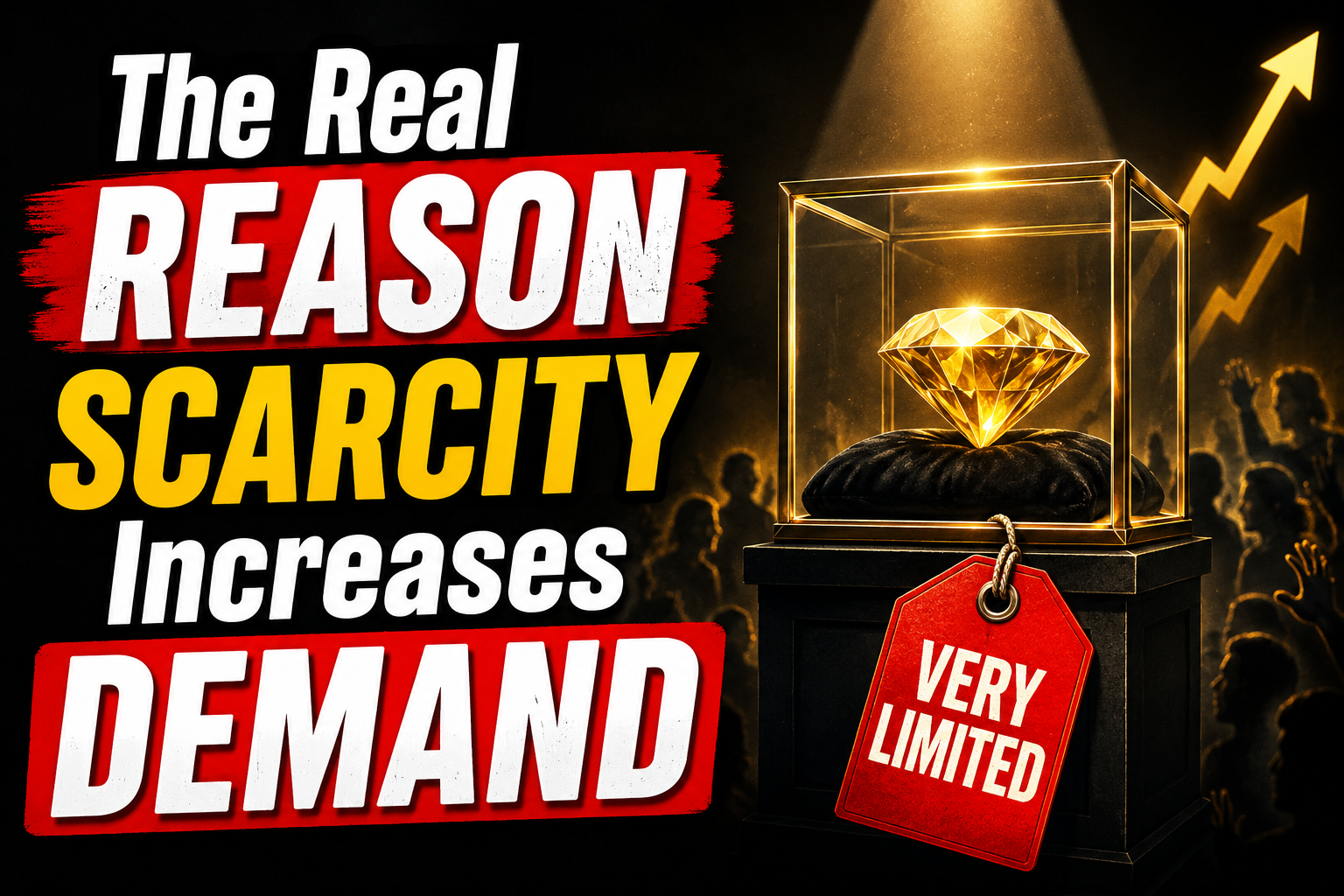
Real Reason Scarcity Increases Demand
Scarcity is one of the most powerful forces in economics, marketing, and human behavior. It influences what people buy, what they value, and how they make decisions. Whether it is a limited edition product, a rare collectible, a sold out event ticket, or even a shrinking supply of natural resources, scarcity has a unique ability to increase demand. The real reason scarcity increases demand goes far beyond simple economics. It is deeply connected to human psychology, perceived value, and the fear of missing out on opportunities.
At its core, scarcity exists when something is available in limited quantities relative to the desire people have for it. When a product, service, or opportunity becomes scarce, people often begin to value it more highly than they did when it was readily available. This reaction can seem irrational at first. After all, the object itself may not have changed. The quality may be the same, and its practical usefulness may remain unchanged. Yet the perception of limited availability suddenly makes it more desirable.
One reason scarcity increases demand is because people naturally place greater value on things that are difficult to obtain. Human beings have long associated rarity with importance. Throughout history, rare materials such as gold, diamonds, and precious gemstones have been highly sought after not only because they are useful but because they are difficult to find. The fact that something is rare often signals that it is special, unique, or valuable. This perception influences purchasing decisions every day.
Scarcity also triggers a psychological response known as loss aversion. Research in behavioral economics shows that people tend to fear losing opportunities more than they enjoy gaining them. When individuals believe they may miss out on something, they become more motivated to act. This is why phrases such as “limited stock available,” “while supplies last,” or “offer ends soon” are so effective in advertising. The possibility of losing access creates urgency, and urgency drives demand.
The fear of missing out, commonly known as FOMO, is another powerful factor behind scarcity-driven demand. People do not want to be excluded from experiences, products, or opportunities that others may enjoy. When a product becomes scarce, consumers often worry that they may never have another chance to acquire it. This emotional response can push people to make purchasing decisions much faster than they otherwise would.
Scarcity also affects how people perceive value. When an item is abundant, it is often taken for granted. Water provides a simple example. In many places, clean water is readily available, so people rarely think about its value. However, in areas facing drought or shortages, water becomes incredibly valuable because access is limited. The same principle applies to countless products and services. Scarcity changes perception, and perception influences demand.
Businesses have understood the power of scarcity for decades. Many companies intentionally create scarcity as part of their marketing strategies. Limited edition products, exclusive memberships, and time-sensitive offers are all designed to increase demand by reducing availability. Consumers often interpret these restrictions as signals that the product is desirable or valuable. As a result, demand rises even if the product itself remains unchanged.
The fashion industry provides a clear example of this phenomenon. Luxury brands frequently release products in limited quantities. By doing so, they create exclusivity and prestige. Consumers are not only purchasing the product itself but also the status associated with owning something that few others can obtain. Scarcity transforms ordinary products into symbols of distinction and social value.
Technology companies also use scarcity to generate excitement. New smartphones, gaming consoles, and electronic devices are often released with limited initial supply. Long lines, waiting lists, and sold out announcements create public attention. Even individuals who were not initially interested may begin to view the product as more desirable simply because others are competing to obtain it.
The relationship between scarcity and demand is not limited to physical goods. Opportunities themselves can become more attractive when they are scarce. Job openings, scholarships, investment opportunities, and exclusive events often generate intense competition because availability is limited. The fewer opportunities that exist, the more valuable each one appears.
Economists explain scarcity through the fundamental principle of supply and demand. When supply decreases while demand remains constant or increases, prices tend to rise. Higher prices reflect the increased competition among buyers for limited resources. This mechanism helps allocate scarce resources to those willing and able to pay the most. However, the economic explanation alone does not fully capture the emotional and psychological forces that drive human behavior.
Scarcity often creates a sense of urgency that encourages immediate action. Without scarcity, people may delay decisions indefinitely. They assume that opportunities will always be available in the future. Scarcity changes this calculation by introducing uncertainty. When future availability becomes questionable, people feel pressure to act now rather than later.
This urgency can be observed in everyday life. Concert tickets often sell out quickly because fans know that waiting could mean missing the event entirely. Holiday sales attract large crowds because shoppers understand that discounts may not last. Real estate markets can experience bidding wars when available properties become scarce. In each case, limited availability increases demand by motivating people to act quickly.
Social influence also plays a significant role in scarcity-driven demand. When people observe others competing for a scarce resource, they often assume that the resource must be valuable. This phenomenon creates a feedback loop. Increased interest attracts more attention, which generates even greater demand. Scarcity and social proof frequently work together to amplify consumer behavior.
Scarcity can even increase emotional attachment to possessions. Individuals tend to value items more highly when they believe those items are difficult to replace. This effect is evident in collectibles, antiques, and rare memorabilia. Owners often develop stronger emotional connections because the scarcity of the item enhances its perceived significance.
The concept of scarcity extends beyond economics and consumer behavior. Time itself is one of the scarcest resources people possess. Because time is limited, people often value experiences and relationships more as they recognize their finite nature. The awareness that opportunities may not last forever encourages individuals to appreciate them more deeply. In this sense, scarcity shapes not only markets but also human priorities and life decisions.
Scarcity can be beneficial because it helps people recognize value and make choices. However, it can also lead to irrational behavior. Consumers sometimes make impulsive purchases simply because an item appears scarce. Marketers understand this tendency and may use artificial scarcity to influence decision-making. As a result, individuals should remain aware of how scarcity affects their perceptions and judgments.
Understanding the real reason scarcity increases demand requires looking beyond simple supply limitations. The true driver lies in how human beings interpret scarcity. Limited availability signals value, exclusivity, urgency, and potential loss. These signals trigger emotional and psychological responses that influence behavior. People do not merely react to scarcity itself; they react to what scarcity represents.
In modern markets, scarcity remains one of the most effective tools for influencing demand. Businesses use it to increase sales, consumers respond to it when making purchasing decisions, and economies are built around the reality that resources are limited. The principle is universal because it reflects fundamental aspects of human nature.
Ultimately, scarcity increases demand because people place greater value on what they believe they might lose. The possibility of missing out creates urgency. Limited availability enhances perceived worth. Rarity signals importance. Together, these forces shape how individuals evaluate opportunities, products, and resources. The result is a powerful connection between scarcity and demand that continues to influence economic activity, business strategies, and everyday decision-making around the world.
The next time a product sells out, a limited offer expires, or a rare opportunity attracts intense competition, it is worth remembering that scarcity itself is not the entire story. The real reason scarcity increases demand lies in the way the human mind interprets rarity and responds to the possibility of losing access to something valuable. That psychological response has been shaping markets and human behavior for centuries, and it remains just as powerful today.

EarnSmartOnline.com.ng is dedicated to helping readers make smarter financial decisions through practical guides on online income, personal finance, technology, digital business, and wealth creation. Our goal is to provide reliable, easy-to-understand, and actionable content that empowers individuals to earn smarter, build sustainable income streams and achieve long-term financial success.
Recommended: Start Earning Online
- Ultimate Affiliate Marketing Program — learn affiliate marketing with a done-for-you sales system ($15). Check it out
- The Newbie Affiliate Guide — the beginner-friendly starter guide (~$6.68). Check it out
- Easy Dollar Maker — earn in dollars uploading AI images and videos from your phone ($17). Check it out
Disclosure: These are affiliate links. If you buy through them, I may earn a commission at no extra cost to you.



