
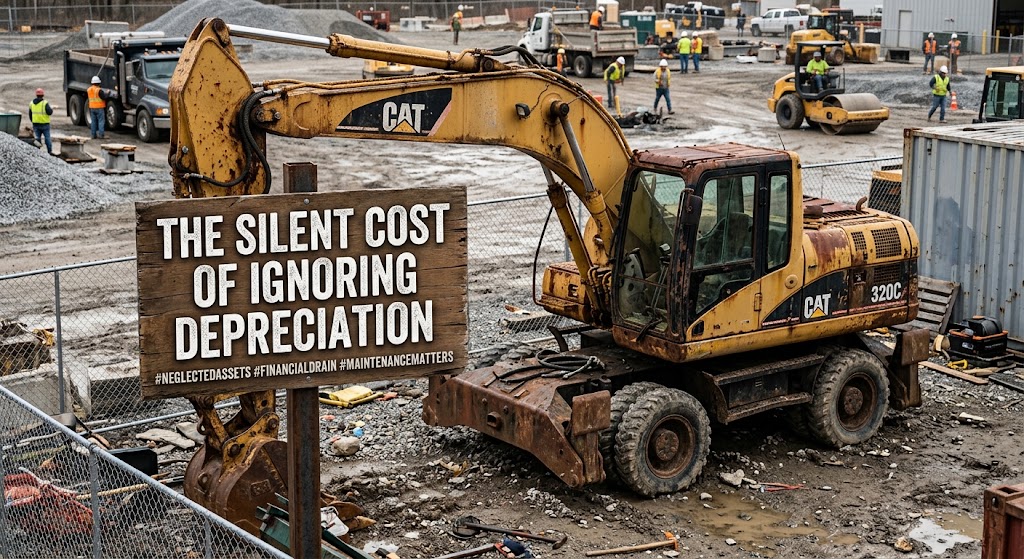
The Silent Cost of Ignoring Depreciation
Most people think financial success is simply about earning more money. They work harder, negotiate for higher salaries, expand their businesses and celebrate every increase in income. Yet many fail to notice one of the quietest forces working against their wealth every single day. It rarely makes headlines, hardly receives attention in everyday conversations, and often goes unnoticed until significant financial damage has already been done. That force is depreciation. Understanding the silent cost of ignoring depreciation is one of the most valuable lessons anyone can learn about personal finance, business management and long term wealth preservation.
Depreciation is more than an accounting term found in financial statements. It is an economic reality that affects everything people own. Every vehicle loses value. Every machine becomes older. Every electronic device moves closer to obsolescence. Every building requires maintenance. Every business asset eventually wears out. Even technology that seemed revolutionary only a few years ago can become outdated almost overnight.
Ignoring depreciation creates a false sense of financial security. A person may believe they own assets worth millions while failing to recognise that those same assets are steadily losing value each passing year. This gap between perception and reality has ruined businesses, delayed retirements and created financial stress for countless families around the world.
Imagine someone who purchases a brand new luxury vehicle. The day it leaves the dealership, its market value immediately drops. The owner still enjoys driving it and may even believe it is worth nearly what they paid for it. Unfortunately, the market thinks differently. Time, mileage, wear and changing consumer demand continue reducing its value. Years later, when the owner decides to sell it, the difference between expectation and reality often comes as an unpleasant surprise.
This same principle applies to business equipment, manufacturing machines, office furniture, computers, smartphones, cameras, industrial tools, agricultural equipment and countless other productive assets. While these items help generate income, they simultaneously lose value through use, age and technological advancement.
One of the greatest dangers of ignoring depreciation is that it creates inaccurate financial planning. People often calculate their net worth using original purchase prices instead of realistic market values. A business owner may proudly list expensive equipment purchased years ago without recognising that much of its original value has disappeared. Decisions based on inflated asset values often lead to poor borrowing choices, risky investments and unrealistic financial expectations.
Depreciation also affects replacement planning. Every productive asset eventually reaches the end of its useful life. A delivery company cannot expect its vehicles to last forever. A photographer cannot rely on ageing cameras indefinitely. A construction company must eventually replace worn machinery. A manufacturer must upgrade production equipment to remain competitive.
Businesses that ignore depreciation frequently find themselves facing unexpected financial emergencies. Equipment suddenly breaks down. Production stops. Customers experience delays. Revenue declines while replacement costs arrive all at once. Instead of gradually preparing for these inevitable expenses, owners scramble for emergency loans or postpone necessary replacements, often making the problem even worse.
Technology has made depreciation faster than ever before. A decade ago, computers remained useful for many years. Today, software requirements evolve rapidly, operating systems change, security threats increase and hardware quickly struggles to keep pace. Businesses that ignore this technological depreciation risk losing efficiency, productivity and competitiveness.
Smartphones provide another excellent example. Every year manufacturers release improved models with better cameras, faster processors, stronger batteries and enhanced security features. Older devices continue functioning, but their resale value steadily falls while repair costs gradually increase. Consumers who fail to understand depreciation often believe they own valuable technology when the market has already assigned much lower values.
Property owners sometimes assume that buildings automatically appreciate forever. While land in desirable locations may increase in value, the physical structure itself constantly experiences depreciation. Roofs age. Plumbing deteriorates. Electrical systems become outdated. Paint fades. Flooring wears down. Without regular maintenance and investment, buildings gradually lose functional value even if surrounding land becomes more expensive.
Ignoring maintenance accelerates depreciation dramatically. A well maintained vehicle may retain significantly more value than an identical vehicle neglected over the same period. Regular servicing, timely repairs and proper care slow depreciation and preserve both functionality and resale value. The same principle applies to homes, machinery, equipment and almost every physical asset people own.
Depreciation also influences investment decisions in subtle ways. Investors who focus only on purchase prices often misunderstand actual returns. Consider two businesses generating identical annual profits. One continually invests in maintaining modern equipment while the other postpones replacements to maximise short term profits. At first glance the second company appears more profitable. In reality, it may simply be ignoring future replacement costs that will eventually demand substantial capital.
This misunderstanding frequently misleads inexperienced investors. Financial statements include depreciation precisely because assets do not last forever. Removing depreciation from the equation creates an unrealistic picture of profitability. Businesses may appear healthier than they truly are, encouraging risky decisions based upon incomplete information.
The silent cost of ignoring depreciation extends beyond businesses into personal lifestyles. Families often purchase expensive furniture, appliances and electronics without considering eventual replacement. Years later multiple items fail around the same time, creating significant financial pressure. Had depreciation been acknowledged from the beginning, gradual savings could have prevented this stressful situation.
Many people underestimate how inflation interacts with depreciation. Not only do assets lose value over time, but replacement costs often increase because of rising prices. A machine purchased today may cost substantially more to replace ten years later. Someone who ignores depreciation while also ignoring inflation may discover that replacing ageing assets requires far more money than originally expected.
Entrepreneurs frequently make another costly mistake by withdrawing all available profits without reserving funds for future asset replacement. Their businesses appear successful because cash continues flowing in. Yet hidden beneath this apparent prosperity lies ageing equipment steadily approaching failure. When replacement becomes unavoidable, profits disappear into large capital expenditures that could have been anticipated years earlier.
This pattern explains why some profitable businesses unexpectedly collapse. Revenue alone does not guarantee sustainability. Long term success requires recognising that productive assets gradually consume themselves while generating income. Wise owners understand that part of today’s earnings belongs to tomorrow’s replacement fund.
Depreciation also affects borrowing decisions. Banks and lenders carefully evaluate asset values before approving loans. Borrowers who overestimate their assets may request financing based on unrealistic collateral values. When professional valuations reveal substantial depreciation, loan approvals may become smaller than expected or disappear altogether.
Insurance provides another overlooked perspective. Many policies distinguish between replacement value and actual cash value. Actual cash value often reflects depreciation, meaning payouts for damaged property may be significantly lower than original purchase prices. People who ignore depreciation sometimes discover after accidents or disasters that insurance settlements cannot fully replace what was lost because the insured assets had already depreciated considerably.
Depreciation is not always negative. Understanding it creates opportunities. Savvy buyers intentionally purchase quality used vehicles after the steepest depreciation has already occurred. Businesses acquire reliable second hand equipment at substantial discounts. Investors recognise when market prices overreact to depreciation and identify assets whose remaining productive value exceeds their current selling prices.
Knowledge transforms depreciation from an invisible threat into a strategic advantage. Instead of fearing declining values, financially educated individuals incorporate depreciation into every major purchasing decision. They ask how quickly an asset will lose value, what maintenance it requires, how long it will remain productive and what replacement costs might look like years into the future.
The silent cost of ignoring depreciation ultimately comes from pretending time does not affect assets. Every object humans create exists within a lifecycle. Some depreciate rapidly while others decline slowly. Understanding these patterns allows better budgeting, smarter investing and more accurate financial forecasting.
Financial freedom depends not only upon generating income but also upon preserving capital. Preserving capital requires recognising that assets continuously change in value. Those who ignore depreciation often confuse temporary ownership with permanent wealth. Those who understand depreciation make decisions grounded in economic reality rather than emotional attachment.
Many people become emotionally connected to possessions. They remember how much they paid rather than what the market currently values those possessions at. Unfortunately, markets do not recognise sentimental value. Buyers consider condition, age, functionality, demand and available alternatives. Emotional pricing almost never matches market pricing, leading to disappointment during sales or financial planning.
True wealth builders separate emotions from valuation. They appreciate possessions without allowing nostalgia to distort financial judgement. They accept that depreciation is neither unfair nor unusual. It is simply part of the economic life cycle of most physical assets.
Every financial decision becomes stronger when depreciation is acknowledged from the beginning rather than discovered at the end. Whether purchasing a vehicle, investing in business equipment, buying property, acquiring technology or managing household finances, recognising the gradual decline in asset value encourages wiser choices, better savings habits and stronger long term financial stability.
Ignoring depreciation may seem harmless because its effects appear slowly rather than suddenly. Yet this gradual nature is exactly what makes it dangerous. Small losses accumulate quietly until they become impossible to ignore. The people who consistently build lasting wealth are rarely those who avoid depreciation altogether because that is impossible. Instead, they are those who understand it, plan for it and allow it to guide smarter financial decisions throughout every stage of life. The silent cost of ignoring depreciation is not merely the loss of value in physical assets. It is the loss of opportunities, the increase in financial vulnerability and the false confidence that comes from believing yesterday’s prices still define today’s reality. Those who recognise this truth position themselves to preserve wealth, make better investments and build financial futures based on facts rather than assumptions.

EarnSmartOnline.com.ng is dedicated to helping readers make smarter financial decisions through practical guides on online income, personal finance, technology, digital business, and wealth creation. Our goal is to provide reliable, easy-to-understand, and actionable content that empowers individuals to earn smarter, build sustainable income streams and achieve long-term financial success.
Recommended: Start Earning Online
- Ultimate Affiliate Marketing Program — learn affiliate marketing with a done-for-you sales system ($15). Check it out
- The Newbie Affiliate Guide — the beginner-friendly starter guide (~$6.68). Check it out
- Easy Dollar Maker — earn in dollars uploading AI images and videos from your phone ($17). Check it out
Disclosure: These are affiliate links. If you buy through them, I may earn a commission at no extra cost to you.



