
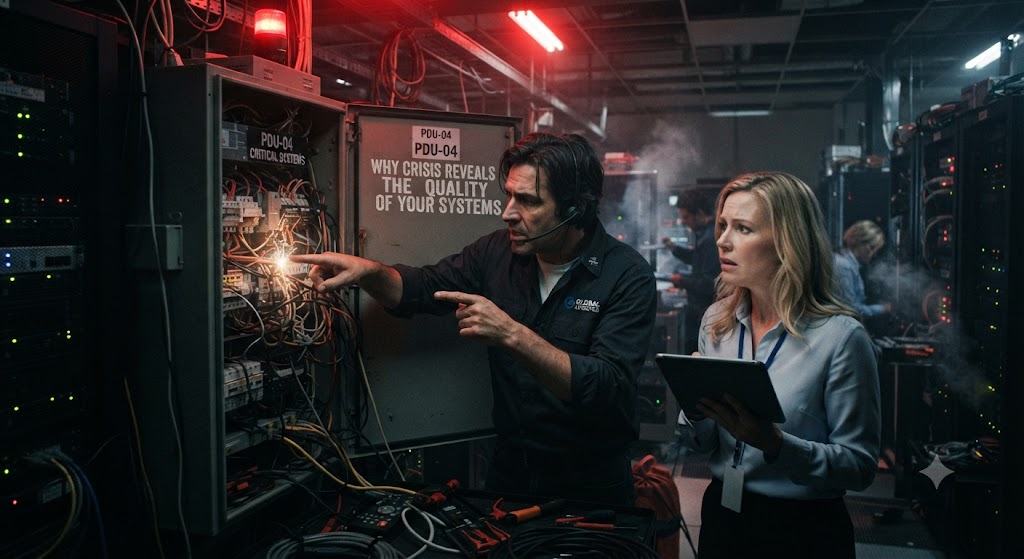
Why Crisis Reveals the Quality of Your Systems
Most people believe that a crisis creates problems, but the truth is that a crisis simply exposes the problems that were already there. Whether it is a financial emergency, a business setback, a health challenge, a family issue, or an unexpected global event, difficult moments have a unique way of revealing the strength or weakness of the systems that support our lives. That is why understanding why crisis reveals the quality of your systems is one of the most valuable lessons anyone can learn. Success is rarely determined by what happens when everything is going well. It is determined by how well your systems continue to function when everything begins to go wrong.
Many people confuse goals with systems. A goal is the destination you hope to reach, while a system is the process that gets you there repeatedly. Anyone can dream about financial freedom, career success, business growth, or personal development. The real difference lies in the systems they build every single day. During calm seasons, weak systems may appear to work because there is little pressure testing them. Once pressure arrives, however, every hidden weakness begins to surface. A business without proper financial records suddenly cannot manage cash flow during an economic downturn. A family without healthy communication struggles when conflict arises. A person who has ignored their health finds it difficult to recover from illness. The crisis did not create these weaknesses. It merely exposed them.
Think of a building standing tall during a sunny day. It is impossible to judge the true quality of its foundation until a powerful storm arrives. If the building survives heavy winds, flooding, and earthquakes, it proves that its foundation was properly designed. If it collapses, the storm is not entirely to blame. The real issue lies beneath the surface. Life works exactly the same way. The storms of life reveal what calm weather often hides.
This principle applies to individuals as much as it does to organisations. Many successful businesses appear unstoppable during periods of economic growth. Sales are increasing, customers are happy, and profits are rising. Yet the moment the economy slows down, some of these businesses collapse almost overnight. Others continue operating despite the difficult conditions. The difference is rarely luck. It usually comes down to the systems they built long before the crisis arrived. Businesses with strong financial planning, diversified income, efficient operations, and loyal customers are often better equipped to survive uncertainty than businesses that relied entirely on favourable conditions.
Personal finances provide another excellent example. Someone earning a high income may seem financially successful for years. Friends admire their expensive lifestyle, luxury purchases, and impressive social media posts. However, if they lose their job or face an unexpected emergency, their financial reality becomes obvious. Without savings, investments, emergency funds, or disciplined spending habits, financial pressure quickly exposes the weakness of their money management system. Another individual earning far less may survive the same crisis with far less stress because they quietly built a strong financial foundation over many years.
Relationships are also tested during difficult seasons. It is easy to enjoy each other’s company when everything is going well. Real strength becomes visible during disagreement, loss, disappointment, or hardship. Healthy relationships usually have systems built on trust, honesty, forgiveness, communication, and mutual respect. These qualities allow people to solve problems instead of allowing problems to destroy the relationship. Weak relationships often depend on favourable circumstances rather than strong principles, making them far more vulnerable when challenges arise.
One reason crises reveal the quality of your systems is because pressure removes distractions and exposes reality. During ordinary times, it is possible to ignore inefficiencies, delay important decisions, and cover mistakes with temporary solutions. Pressure eliminates those options. When time, money, or resources become limited, only effective systems continue to function efficiently. Every shortcut eventually reaches its limit.
This is why preparation matters far more than reaction. Many people spend their lives reacting to emergencies rather than preparing for them. They wait until they become ill before taking care of their health. They wait until they lose their income before learning about financial planning. They wait until relationships begin to fail before learning communication skills. They wait until their business struggles before creating proper systems. Unfortunately, building effective systems during a crisis is far more difficult than building them before one occurs.
The strongest organisations understand this principle. They conduct regular reviews, improve their processes, train their teams, and prepare contingency plans long before they are needed. They know that preparation is rarely exciting, but it often determines survival. Emergency savings may seem unnecessary until unexpected expenses appear. Regular exercise may feel inconvenient until poor health limits your opportunities. Continuous learning may appear optional until your industry changes completely. The benefits of strong systems are often invisible until difficult times arrive.
Another important lesson is that strong systems reduce dependence on emotions. During crises, emotions naturally become more intense. Fear, anxiety, frustration, and uncertainty influence decision-making. People without reliable systems often make impulsive choices because they rely entirely on their emotions. Those with well-designed systems continue following proven processes even when circumstances become uncomfortable. Their discipline protects them from making decisions they may later regret.
Leadership also becomes clearer during difficult times. A confident leader is not someone who never faces problems. A capable leader has systems that allow clear thinking, effective communication, and decisive action under pressure. Employees, family members, customers, and communities naturally look for stability during uncertain moments. Leaders who have invested in building dependable systems are better equipped to provide that stability.
Technology offers another valuable illustration. Computer systems rarely fail because of a single large problem. Most failures result from numerous small weaknesses that remained unnoticed until increased demand overwhelmed the system. Websites crash during peak traffic because they were never designed to handle large numbers of users. Supply chains fail because contingency plans were never established. Cybersecurity breaches occur because small vulnerabilities were ignored for years. Once again, the crisis reveals weaknesses rather than creating them.
This principle also applies to habits. Every daily habit contributes to a larger personal system. Reading regularly builds knowledge over time. Saving consistently builds financial security. Exercising frequently improves long-term health. Practising honesty strengthens relationships. Small actions repeated consistently become systems that either protect or weaken your future. During normal periods, these habits may seem insignificant. During crises, they often determine outcomes.
Many people admire resilience without understanding where it comes from. Resilience is not simply a personality trait. It is often the product of strong systems developed over many years. Someone who manages stress effectively has usually developed healthy routines. Someone who recovers financially has likely practised disciplined money management. Someone who adapts to change has often built a habit of continuous learning. What appears to be natural resilience is frequently the result of invisible preparation.
One common mistake is believing that success alone proves the quality of a system. Success can sometimes result from favourable conditions rather than effective processes. A booming economy can hide poor business management. A healthy body can temporarily hide unhealthy habits. Stable employment can conceal poor financial discipline. Only when circumstances change does the true quality of the underlying system become visible.
This is why reflection after every crisis is so valuable. Instead of simply celebrating survival, wise individuals examine what worked well and what failed. They ask difficult questions. Which systems protected us? Which systems broke down? What weaknesses became obvious? What improvements should be made before the next challenge arrives? Every crisis provides information that can strengthen future performance.
Adaptability also plays a major role in system quality. Strong systems are not rigid. They evolve when circumstances change. Businesses that refuse to innovate often struggle as industries transform. Individuals who refuse to learn new skills may find themselves left behind. Strong systems balance consistency with flexibility. They preserve core principles while adapting methods to meet changing conditions.
One overlooked advantage of building strong systems is reduced stress. People often believe confidence comes from positive thinking alone. In reality, confidence frequently comes from preparation. An athlete trains before competition. A pilot follows detailed checklists before take-off. A surgeon practises procedures repeatedly before operating. Their confidence is rooted in reliable systems rather than wishful thinking. The same principle applies to everyday life. Preparation reduces panic because dependable systems create stability.
History repeatedly demonstrates that organisations, governments, businesses, and individuals who invest in preparation generally recover faster from crises than those who rely solely on hope. They may still experience difficulties, but they possess structures that allow faster adaptation and recovery. Recovery is not accidental. It is usually built into the quality of the system itself.
Perhaps the greatest lesson is that systems should be strengthened during seasons of stability rather than during emergencies. When everything appears to be working well, it is tempting to become complacent. Yet those calm periods provide the best opportunity to identify weaknesses, improve processes, build reserves, acquire new knowledge, and prepare for future uncertainty. Waiting until pressure arrives often limits available options.
Ultimately, why crisis reveals the quality of your systems is because pressure removes illusions. It strips away appearances, exposes hidden weaknesses, highlights overlooked strengths, and reveals the true effectiveness of everything you have built. Crisis acts like a mirror, showing the reality beneath the surface. Although difficult experiences are rarely enjoyable, they often become powerful teachers because they reveal exactly where improvement is needed.
Instead of fearing every crisis, it is wiser to view each challenge as valuable feedback. Every obstacle contains lessons about preparation, discipline, planning, leadership, relationships, finances, health, and personal growth. Each one provides an opportunity to strengthen your systems before the next challenge arrives. People who embrace this mindset become stronger with every setback because they continuously improve the structures that support their lives.
The future will always contain uncertainty. Economic changes, technological disruption, personal setbacks, health challenges, and unexpected events are unavoidable parts of life. While no one can eliminate uncertainty completely, everyone can improve the systems that determine how they respond. Strong systems cannot prevent every crisis, but they dramatically increase the likelihood of surviving, adapting, and emerging stronger than before.
In the end, success is not measured only by how high you climb during favourable conditions. It is measured by how well your foundations hold when the winds become fierce. Every challenge asks the same question: were you relying on temporary circumstances, or did you invest in building systems strong enough to withstand pressure? Those who choose the second path discover that crises, while painful, become opportunities to reveal strengths, eliminate weaknesses, and build an even stronger future.
One overlooked truth is that strong systems are rarely built during moments of panic. They are created through countless ordinary decisions that seem insignificant at the time. Every time you choose to save instead of spend impulsively, organise your work instead of leaving it until the last minute, document an important process instead of relying on memory, or invest in learning instead of remaining comfortable, you are strengthening a system that may one day protect you from a serious crisis. These decisions often go unnoticed because they do not produce immediate rewards. Yet their true value becomes obvious when unexpected challenges appear and you discover that your preparation has given you options while others are struggling to find solutions.
This explains why two people can experience the same crisis and emerge with completely different outcomes. Imagine two business owners facing an economic recession. Both experience declining sales, increasing operating costs, and reduced consumer spending. One business closes within months because it relied on borrowed money, had no emergency reserve, failed to retain loyal customers, and lacked operational efficiency. The other survives because it maintained healthy cash reserves, invested in customer relationships, diversified its revenue sources, and monitored its expenses long before the recession began. The crisis affected both businesses equally, but the systems supporting each business were completely different.
The same pattern appears in personal careers. Professionals who continuously improve their skills, expand their networks, and stay informed about industry trends often recover much faster after losing a job than those who stopped learning years earlier. Their career system was designed for adaptability rather than comfort. They understand that employment security no longer depends solely on one employer but increasingly depends on remaining valuable in a changing marketplace. Their preparation gives them confidence because they know they possess skills that remain relevant regardless of changing circumstances.
Health provides another powerful example of how systems outperform temporary effort. Many people attempt dramatic lifestyle changes after receiving bad medical news, but lasting health is usually built through consistent routines rather than emergency reactions. Balanced nutrition, regular exercise, quality sleep, stress management, and preventive medical care form a system that protects the body over decades. During a health crisis, those habits often determine how quickly someone recovers and how well they cope with physical challenges. Again, the crisis exposes years of accumulated decisions rather than creating an entirely new reality.
Families also benefit enormously from intentional systems. Families that regularly communicate, solve disagreements respectfully, spend meaningful time together, and establish shared values often remain united during financial hardship, illness, or personal loss. Their strength does not come from avoiding problems but from creating habits that prepare them for life’s inevitable difficulties. Families without those foundations may find relatively small challenges becoming overwhelming because no reliable system exists to manage conflict, uncertainty, or emotional stress.
One of the greatest misconceptions about successful people is that they somehow avoid crises altogether. In reality, successful individuals experience disappointment, failure, rejection, economic downturns, competition, unexpected expenses, and personal setbacks just like everyone else. What often separates them is not the absence of problems but the presence of systems that enable faster recovery. They keep learning when others stop. They continue improving when others become complacent. They maintain discipline when others rely solely on motivation. Over time, these systems become their greatest competitive advantage.
Modern technology has made this lesson even more important. Businesses today operate in rapidly changing environments where customer preferences, artificial intelligence, automation, cybersecurity risks, and global competition evolve constantly. Organisations that review and improve their systems regularly are far more likely to survive than those relying on outdated methods. The companies that endure are usually those willing to question old assumptions, improve inefficient processes, and adapt before change becomes unavoidable.
Personal productivity follows the same principle. Many people feel overwhelmed not because they have too much work but because they lack systems for managing priorities. Without clear routines, calendars, task management, and effective planning, small responsibilities accumulate until they become overwhelming. Then, when an unexpected crisis arrives, there is no flexibility left. Every delay compounds existing pressure. A well-organised person may face exactly the same workload but cope far more effectively because their system creates order where others experience chaos.
There is also an important psychological dimension to this principle. People with dependable systems often experience greater emotional stability during uncertainty because they trust the processes they have built. They know they have emergency savings, reliable routines, supportive relationships, organised information, and practical plans. This confidence reduces panic and allows clearer thinking when difficult decisions must be made. In contrast, individuals without dependable systems often feel overwhelmed because every problem demands immediate improvisation.
Another valuable lesson is that systems create freedom. Many people assume systems are restrictive because they involve routines, structure, and consistency. In reality, the opposite is true. Good systems eliminate unnecessary decisions, reduce stress, improve efficiency, and create more time for meaningful work. Athletes follow training systems. Successful authors follow writing systems. Pilots rely on checklists. Hospitals operate through carefully designed procedures. These systems exist because consistency produces reliable results, especially under pressure.
History repeatedly shows that societies capable of surviving wars, economic recessions, natural disasters, and pandemics usually possess resilient institutions, effective leadership, strong infrastructure, and adaptable communities. These collective systems determine how quickly recovery occurs. Individuals can apply exactly the same lesson to their own lives. Strong personal systems become invisible forms of insurance against uncertainty.
Another reason crises are valuable is that they remove false confidence. During prosperous periods, people may believe their success comes entirely from intelligence, talent, or hard work. Difficult times reveal how much of that success depended upon external conditions. This is not meant to discourage ambition but to encourage humility. Recognising that favourable circumstances contribute to success motivates wise people to strengthen their systems instead of assuming good times will last forever.
Continuous improvement should therefore become a lifelong habit rather than an occasional project. Every few months it is worth examining every important area of life. Are your finances becoming stronger or weaker? Are your health habits improving or declining? Is your business becoming more efficient? Are your relationships healthier than they were last year? Are your professional skills keeping pace with industry changes? These questions help identify weaknesses before they become expensive problems.
Perhaps the greatest benefit of understanding why crisis reveals the quality of your systems is that it shifts your focus away from blaming circumstances and towards improving preparation. You cannot control every economic downturn, technological disruption, or unexpected life event. You can, however, control how well your systems prepare you for those realities. That shift in thinking is empowering because it places attention on what can actually be improved.
Every crisis eventually ends, but the lessons it provides can last a lifetime. Those who ignore those lessons often repeat the same mistakes when the next challenge arrives. Those who learn from them gradually become more resilient, more adaptable, and more capable of navigating uncertainty with confidence. Their systems evolve with every experience, making future crises less destructive and recovery more efficient.
Ultimately, life does not reward those who merely hope for the best. It rewards those who quietly prepare for uncertainty while everyone else assumes tomorrow will look exactly like today. Strong systems are built one decision at a time, one habit at a time, one improvement at a time. They may seem ordinary during peaceful seasons, but when adversity arrives, they become extraordinary assets. That is why crisis reveals the quality of your systems. It exposes what has been built beneath the surface, separating temporary success from lasting resilience and proving that the strongest foundations are not created in the middle of the storm but long before the first clouds ever appear.

EarnSmartOnline.com.ng is dedicated to helping readers make smarter financial decisions through practical guides on online income, personal finance, technology, digital business, and wealth creation. Our goal is to provide reliable, easy-to-understand, and actionable content that empowers individuals to earn smarter, build sustainable income streams and achieve long-term financial success.
Recommended: Start Earning Online
- Ultimate Affiliate Marketing Program — learn affiliate marketing with a done-for-you sales system ($15). Check it out
- The Newbie Affiliate Guide — the beginner-friendly starter guide (~$6.68). Check it out
- Easy Dollar Maker — earn in dollars uploading AI images and videos from your phone ($17). Check it out
Disclosure: These are affiliate links. If you buy through them, I may earn a commission at no extra cost to you.



