
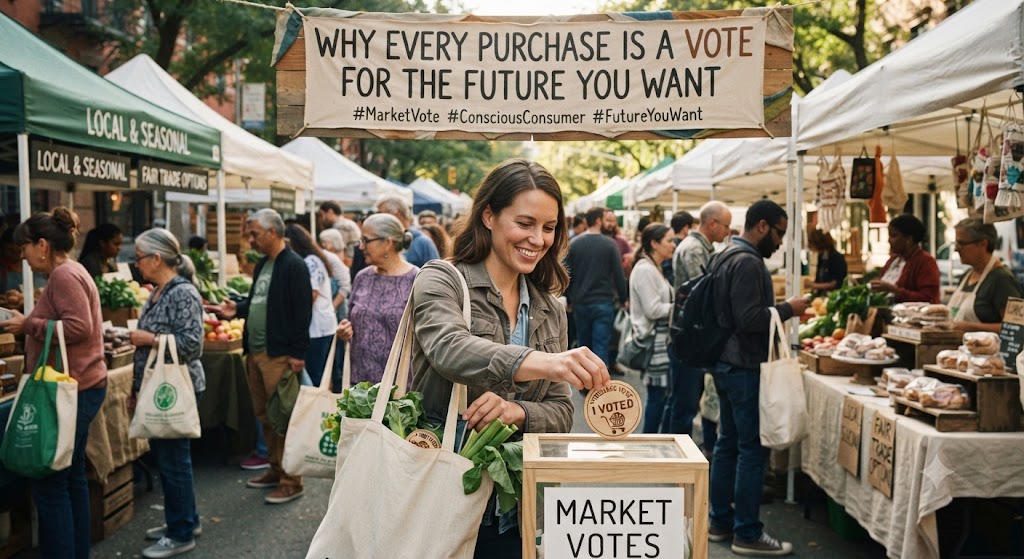
Why Every Purchase Is a Vote for the Future You Want
Every day, people make countless buying decisions without realizing that each purchase is more than a simple exchange of money for goods or services. Whether it is a cup of coffee, a new smartphone, a piece of clothing, or an online subscription, every transaction sends a powerful message. That message tells businesses what people value, what they want more of, and ultimately what kind of future they are helping to create. This is why every purchase is a vote for the future you want. While many people think their individual spending habits do not matter, history has repeatedly shown that consumer choices shape industries, influence innovation, reward ethical practices, and even determine which businesses survive and which disappear.
Money is one of the strongest forms of communication in the modern world. Every time you spend it, you are expressing your priorities without saying a single word. Companies pay close attention to consumer behavior because sales reveal far more than surveys or opinions. If customers continue buying a particular product, businesses invest more resources into producing it. If people stop buying something, companies eventually reduce production or discontinue it entirely. In this way, consumers collectively shape the direction of markets.
Many people believe that change begins with governments, corporations, or influential leaders, but significant change often starts with ordinary individuals making consistent purchasing decisions. A single purchase may seem insignificant, but millions of similar decisions can transform entire industries. When consumers began demanding healthier food options, grocery stores expanded their organic and natural food sections. When more people embraced online shopping, retailers invested heavily in e-commerce platforms. When customers started valuing digital convenience, countless businesses adapted by offering mobile applications, online payments, and home delivery services.
Understanding this reality changes the way we think about spending money. Instead of asking whether we can afford something, we should also ask what our purchase supports. Every product has a story behind it. It represents a company, a production process, employees, suppliers, marketing strategies, and long-term business goals. By purchasing a product, consumers indirectly encourage those systems to continue operating. That means every purchase supports a specific way of doing business.
This perspective becomes even more important when considering quality. Many people choose products solely because they are inexpensive, without considering long-term value. While saving money is important, consistently purchasing poor-quality products often creates greater costs over time. Cheap products frequently require replacement, repairs, or additional maintenance. On the other hand, investing in durable, well-made products often reduces waste while delivering greater satisfaction and better financial value. Choosing quality is not simply spending more money. It is voting for businesses that prioritize excellence over shortcuts.
Technology provides another excellent example of how purchasing decisions influence the future. Every new gadget, software subscription, or online service that gains widespread adoption encourages further investment in similar innovations. Companies direct research and development budgets toward products that generate strong customer demand. This means consumers play a direct role in determining which technologies receive continued improvement and which eventually disappear. Every download, subscription, and purchase shapes tomorrow’s technological landscape.
Small businesses especially depend on consumer votes. Unlike multinational corporations with enormous financial reserves, local businesses often survive only because loyal customers choose to support them. Every time someone purchases from a neighborhood bakery, family-owned restaurant, local bookstore, independent mechanic, or community entrepreneur, they help preserve jobs, encourage local investment, and strengthen their community’s economy. These seemingly ordinary decisions create ripple effects that extend far beyond a single transaction.
The same principle applies to digital creators, educators, writers, musicians, software developers, and independent entrepreneurs. Purchasing their products, subscribing to their services, or supporting their work enables them to continue creating valuable content. Without customer support, many innovative creators would be unable to sustain their work. Every purchase becomes an investment in future creativity and innovation.
Financially successful people often understand that spending is not merely consumption but resource allocation. Every naira, dollar, euro, or pound directed toward one product is money that cannot be spent elsewhere. Economists refer to this as opportunity cost. Choosing one option always means giving up another. Recognizing this encourages more thoughtful spending habits because every purchase reflects what we truly value rather than what we merely desire in the moment.
Marketing constantly encourages impulsive buying by appealing to emotions rather than logic. Limited-time offers, flash sales, influencer endorsements, and attractive advertising campaigns often create artificial urgency. Many purchases happen not because they improve people’s lives but because they trigger emotional reactions. Learning to pause before buying allows consumers to make intentional decisions that align with their long-term goals rather than temporary feelings.
One useful habit is asking simple questions before making any purchase. Does this solve a genuine problem? Will it still provide value next year? Does buying this support businesses whose values I respect? Is this purchase moving me closer to the future I want or further away from it? These questions transform shopping from an automatic routine into a deliberate exercise in building a better future.
Personal finances also improve when spending becomes intentional. Many financial struggles are not caused solely by low income but by repeated small purchases that seem harmless individually but become significant collectively. Daily spending habits often determine whether someone builds wealth or remains trapped in financial stress. Every purchase either strengthens or weakens financial stability over time.
This concept extends beyond money into personal identity. People gradually become what they repeatedly support. Someone who consistently purchases books invests in knowledge. Someone who pays for educational courses invests in personal growth. Someone who supports fitness programs, healthy food, and wellness services invests in better health. These spending patterns shape habits, habits shape character, and character ultimately shapes destiny.
Businesses understand customer loyalty because repeat purchases provide predictable revenue. However, loyalty should never be automatic. Consumers should regularly evaluate whether companies continue earning their support through quality products, excellent service, ethical practices, and genuine value. Blind loyalty benefits businesses regardless of performance, while informed loyalty encourages continuous improvement.
The digital economy has expanded consumer influence even further. Today, purchasing decisions happen instantly across the globe. A small software company can become internationally successful because enough individuals decide its product deserves support. Likewise, large corporations can quickly lose market share when consumers collectively shift toward better alternatives. The internet has amplified the power of every individual purchase, making each spending decision more influential than ever before.

EarnSmartOnline.com.ng is dedicated to helping readers make smarter financial decisions through practical guides on online income, personal finance, technology, digital business, and wealth creation. Our goal is to provide reliable, easy-to-understand, and actionable content that empowers individuals to earn smarter, build sustainable income streams and achieve long-term financial success.
Recommended: Start Earning Online
- Ultimate Affiliate Marketing Program — learn affiliate marketing with a done-for-you sales system ($15). Check it out
- The Newbie Affiliate Guide — the beginner-friendly starter guide (~$6.68). Check it out
- Easy Dollar Maker — earn in dollars uploading AI images and videos from your phone ($17). Check it out
Disclosure: These are affiliate links. If you buy through them, I may earn a commission at no extra cost to you.



