
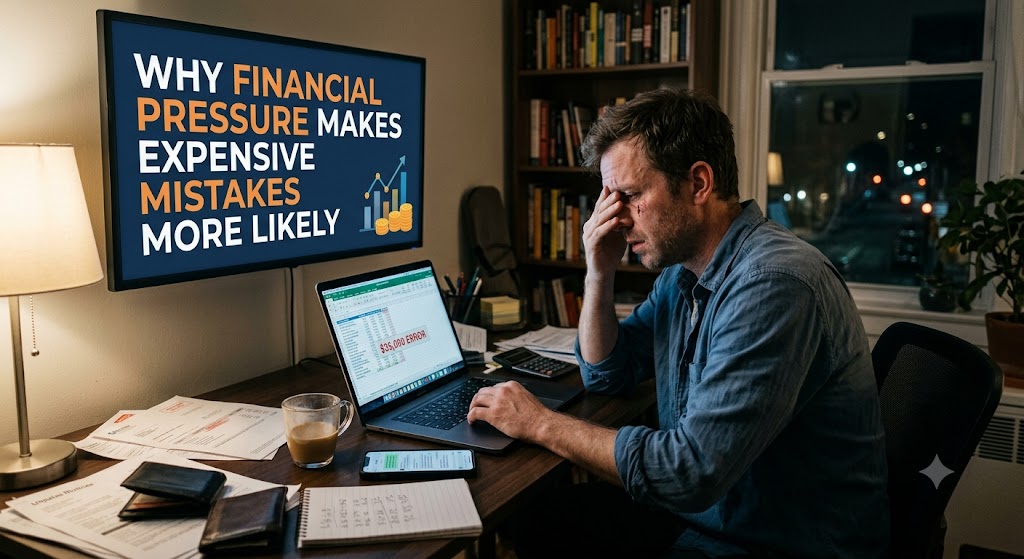
Why Financial Pressure Makes Expensive Mistakes More Likely
Financial pressure is one of the most powerful forces that can influence human behaviour. It changes the way people think, the way they make decisions, and the way they react to opportunities and risks. While many people assume that money problems only affect bank accounts, the reality is that financial pressure reaches much deeper. It affects emotions, relationships, health, productivity, confidence, and judgment. Perhaps the most damaging effect of financial pressure is that it often causes people to make expensive mistakes that create even bigger financial problems in the future.
Understanding why financial pressure makes expensive mistakes more likely is essential for anyone who wants to build long-term financial stability. Whether someone is struggling to pay bills, dealing with unexpected emergencies, trying to repay debt, or simply living from one payday to another, the psychological effects of financial stress can cloud good judgment. Instead of making rational decisions based on facts and long-term goals, people often begin reacting emotionally, choosing whatever seems to provide immediate relief, even if the decision carries severe consequences later.
Financial pressure narrows attention. When someone constantly worries about overdue bills, rent, school fees, medical expenses, loan repayments, or daily survival, the brain naturally shifts its focus toward solving immediate problems. This survival mode is useful in genuine emergencies because it encourages quick action, but it becomes dangerous when financial problems last for weeks, months, or even years. Long-term financial pressure causes people to concentrate almost entirely on today’s problem while ignoring tomorrow’s consequences.
This explains why many people accept extremely high-interest loans without carefully reading the terms. The immediate need for money becomes far more important than understanding how much the loan will eventually cost. Unfortunately, what begins as a temporary solution often develops into a long-term financial burden that becomes much harder to escape.
Stress also reduces mental clarity. Scientific research has consistently shown that chronic stress affects the brain’s ability to process information, solve problems, and evaluate risks. Under financial pressure, people become mentally exhausted. They may struggle to compare alternatives, calculate long-term costs, or recognize hidden dangers. Decisions that would normally seem obvious suddenly become difficult.
Imagine someone who has been awake all night worrying about unpaid bills. The next morning, they receive an offer promising fast money with almost no effort. Under normal circumstances, they might recognize the warning signs of a scam. Under financial pressure, however, hope often replaces caution. The desire for immediate relief becomes stronger than the ability to think critically.
This is exactly why scammers deliberately target financially stressed individuals. Fraudsters understand that desperation weakens skepticism. They promise unrealistic investment returns, miracle business opportunities, fake job offers, cryptocurrency schemes, lottery winnings, romance scams, and advance-fee fraud because they know desperate people are more likely to overlook obvious warning signs.
Financial pressure also encourages impulsive decisions. Instead of comparing options carefully, people often act quickly simply to reduce anxiety. Unfortunately, speed rarely improves financial decision-making. Large purchases are made without research. Businesses are started without planning. Investments are entered without understanding the risks. Expensive loans are accepted without comparing alternatives. Jobs are abandoned without securing another source of income.
Every impulsive decision increases the probability of making an expensive mistake.
Another hidden danger is emotional spending. Many people assume financial pressure automatically reduces spending, but the opposite sometimes happens. Stress encourages emotional behaviour, and shopping temporarily creates feelings of happiness, control, or escape. Although these emotional rewards disappear quickly, the financial consequences remain.
Someone who feels overwhelmed by money problems may convince themselves they deserve an expensive meal, a luxury gadget, fashionable clothing, or unnecessary entertainment because it briefly relieves emotional discomfort. Unfortunately, this temporary comfort often creates additional financial pressure, beginning another cycle of stress and poor decision-making.
Financial pressure also changes people’s perception of risk. Normally cautious individuals may suddenly become willing to gamble with their savings because they believe they have nothing left to lose. This explains why many financially struggling people become victims of gambling addiction, speculative investments, pyramid schemes, or unrealistic business opportunities promising overnight wealth.
Ironically, financial pressure often causes people to pursue the highest-risk opportunities precisely when they can least afford failure.
Another common mistake involves selling valuable assets too quickly. When immediate cash becomes necessary, people often sell land, vehicles, equipment, family businesses, investments, or inherited property below market value simply because they need money urgently. Buyers who specialize in distressed sales understand this perfectly. They know desperate sellers accept lower prices because waiting is no longer an option.
Years later, many people regret these rushed decisions after realizing the asset they sold would have appreciated significantly in value.
Financial pressure can also damage professional judgment. Employees experiencing serious financial difficulties may become distracted at work, reducing productivity and increasing costly mistakes. Business owners under financial stress may lower product quality, ignore customer service, delay maintenance, or cut important investments simply to preserve cash flow. While these decisions may reduce immediate expenses, they often damage long-term profitability.
Entrepreneurs facing financial pressure frequently make another expensive mistake by accepting every customer regardless of profitability. Instead of focusing on sustainable growth, they become desperate for immediate cash. This may result in underpricing services, accepting difficult clients, extending excessive credit, or taking projects beyond their capabilities. Although revenue increases temporarily, profitability often declines.
Financial stress can also encourage poor negotiation. Someone desperate for income is less likely to negotiate salary, contract terms, or business agreements confidently. Employers, clients, and experienced negotiators often recognize desperation. When one party urgently needs money, the other party gains significant bargaining power.
This is one reason why maintaining emergency savings is so valuable. Financial stability allows people to negotiate from a position of strength rather than desperation.
Relationships also suffer under financial pressure. Money-related stress frequently leads to arguments between spouses, family members, business partners, and friends. During emotionally charged disagreements, people often make expensive legal, business, or personal decisions that they later regret. Divorce settlements, business dissolutions, broken partnerships, and family disputes frequently become more expensive because financial stress intensifies conflict.
Parents experiencing financial pressure may also make emotional decisions regarding their children. Out of guilt, they may overspend on gifts they cannot afford or sacrifice long-term financial security to satisfy short-term emotional needs. Although motivated by love, these decisions sometimes delay financial recovery.
Financial pressure encourages short-term thinking. Long-term investments, retirement planning, insurance coverage, education, and preventive healthcare often become low priorities because immediate expenses feel more urgent. Unfortunately, delaying these important financial responsibilities usually creates much larger expenses later.
Skipping routine medical checkups to save money can eventually lead to expensive treatments. Ignoring vehicle maintenance may result in major repairs. Delaying insurance premiums may expose families to devastating financial losses. Postponing education or skill development may reduce future earning potential.
Small savings today sometimes produce enormous costs tomorrow.
Many people also underestimate how financial pressure affects physical health. Chronic stress increases the risk of high blood pressure, heart disease, depression, anxiety, insomnia, and weakened immune function. Poor health reduces productivity, increases medical expenses, limits earning capacity, and creates additional financial pressure. The relationship becomes a vicious cycle where financial stress damages health, and declining health worsens financial problems.
Sleep deprivation deserves special attention. People facing serious financial difficulties often struggle to sleep well. Lack of sleep significantly reduces concentration, memory, emotional regulation, and decision-making ability. A tired brain becomes much more likely to overlook important details, make calculation errors, forget deadlines, or underestimate risks.
Financial pressure can even distort opportunity evaluation. Under normal conditions, someone might patiently compare several business opportunities before investing. Under severe financial stress, however, urgency often replaces careful analysis. The first opportunity that appears promising receives immediate attention without proper research.
This explains why financially pressured individuals sometimes invest in businesses they barely understand or partner with people they barely know. They hope rapid action will solve their problems quickly, but insufficient due diligence often produces costly disappointments.
Another expensive mistake involves borrowing from the wrong people. Financial desperation sometimes causes individuals to accept loans from predatory lenders, dishonest acquaintances, or criminal organizations charging excessive interest rates. These arrangements frequently create long-term dependency and even greater financial hardship.
Business owners experiencing financial pressure sometimes stop investing in marketing, employee development, innovation, or technology because these expenses appear optional. Ironically, these are often the very investments capable of improving future profitability. Eliminating growth investments may temporarily preserve cash but reduce future competitiveness.
Fear also plays an important role. Financial pressure amplifies fear of loss. Instead of making balanced decisions, people become excessively defensive. They avoid calculated investments, refuse beneficial opportunities, or keep all their money idle because they fear making another mistake. While caution is valuable, excessive fear can become just as expensive as reckless behaviour.
Confidence suffers significantly under financial pressure. Repeated financial setbacks may convince individuals that they are incapable of making good decisions. This reduced confidence causes hesitation, missed opportunities, and dependence on others for important financial choices. Unfortunately, relying blindly on other people’s advice without independent research creates additional risks.
Social pressure further complicates financial decision-making. People experiencing financial difficulties often try to maintain appearances. Instead of adjusting their lifestyle, they continue spending beyond their means to avoid embarrassment. Expensive weddings, luxury clothing, premium smartphones, unnecessary celebrations, and costly holidays may continue despite worsening finances because people fear social judgment.
Maintaining appearances is one of the most expensive financial habits anyone can develop.
Another overlooked consequence of financial pressure is decision fatigue. Every day requires dozens of financial choices regarding food, transportation, bills, debt payments, family needs, work expenses, and emergencies. Over time, continuous decision-making drains mental energy. As mental fatigue increases, the quality of decisions declines.
People begin choosing whatever option requires the least effort rather than the option producing the best long-term outcome.
Successful investors often emphasize the importance of avoiding decisions during periods of intense emotional stress. This advice applies equally to personal finance. Major financial decisions involving investments, property purchases, business expansion, resigning from employment, or taking on significant debt should ideally be made after emotions have settled rather than during moments of desperation.
Building financial resilience therefore involves much more than increasing income. It requires creating systems that reduce the influence of emotional decision-making. Emergency savings provide time to think clearly before making major choices. Insurance reduces the financial impact of unexpected disasters. Budgeting increases awareness of spending habits. Diversified income reduces dependence on a single source of earnings. Continuous education improves financial judgment. Strong professional relationships create support during difficult periods.
Financial planning also reduces uncertainty. When people know exactly how much they earn, spend, save, invest, and owe, financial problems become easier to understand and solve. Uncertainty magnifies fear, while clarity improves confidence.
Seeking advice before making important financial decisions is another valuable habit. Trusted financial advisers, experienced mentors, accountants, business consultants, or knowledgeable family members may notice risks overlooked by someone under intense financial pressure. An outside perspective often provides objectivity when emotions become overwhelming.
Perhaps the most important lesson is recognizing that financial pressure is temporary, but many financial decisions produce permanent consequences. Selling appreciating assets below value, accepting predatory loans, investing in fraudulent schemes, damaging professional relationships, abandoning valuable careers, or accumulating unnecessary debt may create problems lasting many years after the original financial pressure disappears.
Learning to pause before making important financial decisions is therefore an essential wealth-building skill. Even during difficult periods, asking simple questions can prevent expensive mistakes. What are the long-term consequences of this decision? Is there a less expensive alternative? Am I reacting emotionally or logically? Have I compared multiple options? Have I sought independent advice? What happens if this decision fails?
These questions encourage thoughtful decision-making instead of emotional reactions.
Ultimately, financial pressure is not merely a test of income but a test of judgment. Nearly everyone experiences financial challenges at some point in life. The difference between those who recover successfully and those who sink deeper into financial hardship often lies not in how much money they earn, but in the quality of the decisions they make while under pressure.
Money problems naturally create stress, but allowing stress to control financial decisions often transforms temporary setbacks into long-lasting difficulties. Every thoughtful choice made during difficult times strengthens future financial stability. Every emotional decision made in desperation increases the likelihood of expensive mistakes.
Financial wisdom is therefore not demonstrated during seasons of abundance. It is revealed during seasons of pressure. Those who learn to remain patient, think clearly, seek reliable advice, evaluate risks carefully, and focus on long-term outcomes are far more likely to protect both their finances and their future. The pressure may be temporary, but the habits developed during those difficult moments often determine whether someone merely survives financially or eventually achieves lasting financial freedom.

EarnSmartOnline.com.ng is dedicated to helping readers make smarter financial decisions through practical guides on online income, personal finance, technology, digital business, and wealth creation. Our goal is to provide reliable, easy-to-understand, and actionable content that empowers individuals to earn smarter, build sustainable income streams and achieve long-term financial success.
Recommended: Start Earning Online
- Ultimate Affiliate Marketing Program — learn affiliate marketing with a done-for-you sales system ($15). Check it out
- The Newbie Affiliate Guide — the beginner-friendly starter guide (~$6.68). Check it out
- Easy Dollar Maker — earn in dollars uploading AI images and videos from your phone ($17). Check it out
Disclosure: These are affiliate links. If you buy through them, I may earn a commission at no extra cost to you.



