
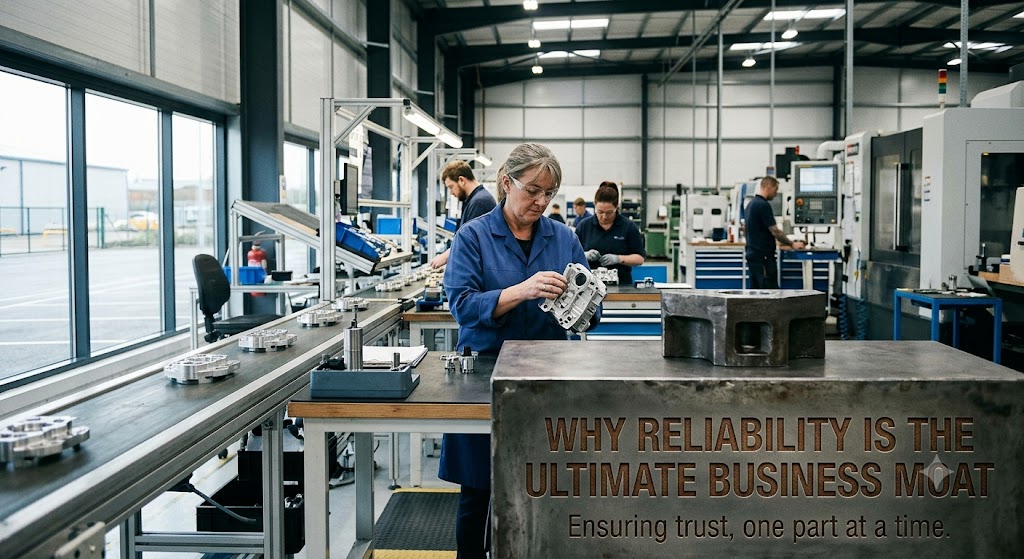
Why Reliability Is the Ultimate Business Moat
In a world where businesses are constantly chasing the next big innovation, many entrepreneurs overlook one of the most powerful competitive advantages ever created. While companies spend fortunes trying to become more creative, more disruptive, or more technologically advanced, customers continue rewarding businesses that simply do what they promised they would do. That simple quality is reliability. It is not flashy. It rarely trends on social media. It does not usually generate headlines. Yet it quietly builds companies that survive economic downturns, outlast competitors, and create loyal customers who willingly return year after year. Reliability is the ultimate business moat because it is one of the hardest qualities to consistently maintain and one of the easiest for customers to recognise.
Every business competes in some way. Some compete on price. Others compete on quality, innovation, speed, convenience, branding, or customer experience. These advantages certainly matter, but they can often be copied. A competitor can lower prices, imitate your product, redesign their packaging, launch aggressive advertising campaigns, or even hire away your employees. Technology spreads rapidly, and what seems revolutionary today often becomes standard tomorrow. Reliability, however, cannot be copied overnight because it is built through repeated actions over long periods of time. It is the result of discipline rather than inspiration.
Customers rarely expect perfection. They understand that mistakes happen. What they struggle to tolerate is inconsistency. A restaurant that serves outstanding meals one day and disappointing meals the next eventually loses trust. An online store that delivers within two days one week but takes three weeks the following month creates uncertainty. A freelancer who responds immediately to one client but ignores another for several days damages their professional reputation. People naturally seek certainty because certainty reduces risk. Businesses that consistently reduce uncertainty become trusted choices.
Trust has enormous economic value. Every purchasing decision involves some level of risk. Customers wonder whether the product will work, whether the service will be worth the money, whether support will be available if problems arise, and whether the company will still be around in the future. Reliability answers all those questions before they are even asked. It quietly tells customers that they are making a safe decision. Once people begin seeing your business as the safe choice, they stop comparing every alternative available in the market.
Think about why certain brands dominate industries despite charging higher prices. Many consumers willingly pay more because they believe the experience will be predictable. They know what to expect. They know the product will likely perform as advertised. They know customer support will respond. That confidence becomes part of the value customers purchase. They are not just buying a product. They are buying peace of mind.
Business owners often assume customers leave because competitors offer lower prices. While price certainly influences buying decisions, inconsistent service destroys far more businesses than expensive pricing ever does. A customer who receives reliable service develops an emotional attachment that often outweighs moderate price differences. They stop viewing the transaction purely through the lens of money. Instead, they value convenience, certainty, familiarity, and confidence.
Reliability creates habits. Human beings naturally prefer routines because routines reduce mental effort. Once customers trust a business, they stop researching alternatives before every purchase. They simply return. This behavioural pattern dramatically reduces customer acquisition costs because loyal customers require less convincing than new prospects. Instead of constantly spending on advertisements to replace dissatisfied customers, reliable businesses enjoy steady repeat business.
One of the greatest misconceptions in entrepreneurship is believing that growth comes primarily from attracting new customers. Sustainable growth often comes from keeping existing ones. Acquiring new customers is generally far more expensive than retaining current ones. Every satisfied returning customer increases lifetime value while lowering marketing costs. Reliability strengthens customer retention because trust compounds over time.
Word of mouth remains one of the most effective forms of marketing ever invented. People enthusiastically recommend businesses they trust because recommendations reflect on their own credibility. Nobody wants to recommend an unreliable company to friends or family. When customers consistently receive dependable service, they naturally become ambassadors. These referrals often convert better than paid advertisements because they arrive with built-in trust.
The internet has amplified the importance of reliability. Before purchasing, consumers now read reviews, browse testimonials, watch videos, compare ratings, and examine customer experiences. Every reliable interaction leaves behind digital evidence. Positive reviews accumulate. Reputation strengthens. Search engines notice consistent customer satisfaction. Over time, reliability contributes to stronger online visibility and better brand perception without requiring constant promotional campaigns.
Many entrepreneurs obsess over making a powerful first impression while neglecting the thousands of small interactions that shape long-term relationships. Customers remember whether emails were answered promptly, whether deadlines were respected, whether promises were honoured, and whether issues were resolved professionally. These seemingly ordinary moments quietly determine whether customers stay or leave.
Reliability is closely connected to discipline. Businesses rarely become dependable accidentally. Dependability requires systems, processes, accountability, training, documentation, and continuous improvement. Successful companies create standard operating procedures because they understand that relying solely on individual talent produces inconsistent outcomes. Systems create consistency even when employees change.
This explains why some small businesses struggle to grow. The founder personally handles everything, ensuring excellent quality while the business remains manageable. As demand increases, they hire employees but fail to establish reliable systems. Customer experiences become inconsistent because each employee works differently. Without documented processes, quality depends on individual personalities rather than organisational standards.
Companies that build systems instead of depending on heroic effort create scalable reliability. Every customer receives similar treatment regardless of which employee serves them. This consistency strengthens brand identity because customers know exactly what they will experience each time they engage with the business.
Reliability also strengthens internal culture. Employees thrive when expectations are clear and leadership consistently follows through on commitments. Managers who frequently change priorities, break promises, or communicate inconsistently create confusion and frustration. Reliable leadership builds confidence throughout the organisation. Employees become more productive because they spend less energy adapting to unpredictable management decisions.
Business partnerships depend heavily on reliability. Suppliers prioritise companies that pay invoices on time. Investors support entrepreneurs who consistently meet milestones. Banks prefer borrowers with dependable financial histories. Contractors appreciate clients who communicate clearly and honour agreements. Reliability strengthens every business relationship because trust reduces perceived risk.
During economic uncertainty, reliability becomes even more valuable. Customers become cautious when money is tight. They prefer businesses with proven track records because failed purchases become more costly during difficult times. Companies known for dependable service often maintain stronger customer loyalty during recessions while unreliable competitors struggle to survive.
Reliability also reduces operational costs. Mistakes require refunds, replacements, corrections, apologies, additional labour, customer support, and damaged reputation management. Businesses that consistently deliver quality spend less fixing preventable problems. This operational efficiency improves profitability while simultaneously enhancing customer satisfaction.
Many entrepreneurs confuse speed with reliability. Fast service certainly matters, but consistent service matters more. Customers generally prefer realistic deadlines that are always met over ambitious promises that are frequently broken. Under-promising and over-delivering builds confidence. Over-promising and under-delivering destroys credibility.
One late delivery rarely ruins a business. Repeated late deliveries create expectations of disappointment. Reliability is not determined by isolated incidents but by consistent patterns. Customers forgive occasional mistakes when businesses have established histories of dependable performance. Years of reliability create goodwill that cushions temporary setbacks.
Technology can support reliability but cannot replace it. Automated reminders, customer relationship management software, inventory management systems, scheduling platforms, and analytics all improve consistency when implemented effectively. However, technology alone cannot create a culture of reliability. Human commitment remains essential.
Some businesses invest heavily in appearance while neglecting operational excellence. Beautiful websites, expensive branding, impressive offices, and polished marketing campaigns create strong first impressions. Yet customers ultimately judge businesses by execution. If the product arrives damaged, customer support disappears, or commitments remain unfulfilled, attractive branding quickly loses credibility.
Reliability also enhances pricing power. Customers willingly pay premiums for certainty because uncertainty carries hidden costs. Choosing an unreliable supplier may require additional follow-up, delayed projects, lost opportunities, and emotional frustration. Reliable businesses eliminate these hidden costs, making higher prices easier to justify.
Professional service providers understand this principle particularly well. Lawyers, accountants, consultants, designers, developers, and marketers often compete in crowded markets where technical skills appear similar. Reliability frequently becomes the deciding factor. Clients continue working with professionals who communicate clearly, deliver on schedule, and remain accessible throughout projects.
Reliability creates emotional comfort. Customers appreciate businesses that remove anxiety from purchasing decisions. Instead of wondering whether problems will arise, they relax because previous experiences have established confidence. This emotional security becomes part of the product itself.
Building reliability requires attention to small details. Returning phone calls promptly, confirming appointments, updating customers when delays occur, maintaining accurate inventory, responding respectfully to complaints, and meeting agreed deadlines all contribute to long-term trust. None of these actions individually seem extraordinary, but together they create powerful reputations.
Consistency in communication deserves particular attention. Customers dislike uncertainty more than bad news. Informing customers about delays before they ask demonstrates professionalism and respect. Silence often damages trust more than the original problem itself. Honest communication preserves credibility even during difficult situations.
Reliable businesses also acknowledge mistakes openly. Attempting to hide failures usually creates larger problems than the original issue. Customers appreciate transparency because honesty signals integrity. A company that admits errors, apologises sincerely, and resolves problems promptly often strengthens customer loyalty rather than weakening it.
Many entrepreneurs underestimate how long reliability takes to establish. Trust develops slowly because customers naturally remain cautious. Every fulfilled promise strengthens confidence. Every broken promise weakens it. Years of dependable performance can be undermined surprisingly quickly by repeated negligence. Protecting reliability therefore requires constant vigilance.
The most successful organisations often possess cultures where employees understand that every interaction influences reputation. Receptionists, delivery drivers, sales representatives, customer support staff, warehouse workers, and executives all contribute to the same promise. Reliability is never the responsibility of one department alone. It becomes an organisational identity.
Businesses operating online face unique reliability challenges. Website uptime, secure payment systems, accurate product descriptions, prompt shipping, responsive customer service, and transparent return policies all influence trust. Since customers cannot physically inspect online businesses before purchasing, reliability becomes even more important.
Subscription-based businesses particularly depend on reliability because recurring revenue requires ongoing satisfaction. Customers renew subscriptions only when they continue receiving consistent value. Reliability therefore directly influences monthly revenue stability and long-term business growth.
The same principle applies to content creators, bloggers, YouTubers, podcasters, and educators. Audiences develop loyalty when creators publish consistently, provide dependable quality, and maintain authenticity. Sporadic publishing schedules often weaken audience engagement because reliability influences audience habits.
Reliability strengthens employer branding as well. Companies known for treating employees fairly attract stronger talent. Skilled professionals seek workplaces where salaries arrive on time, promotions follow transparent criteria, leadership communicates honestly, and commitments are honoured. Reliable employers experience lower staff turnover, reducing recruitment and training expenses.
Investors also evaluate reliability carefully. Financial performance certainly matters, but predictable execution often matters even more. Businesses that consistently achieve realistic objectives inspire greater confidence than companies producing dramatic but inconsistent results. Reliability signals competent management.
One overlooked aspect of reliability involves decision-making. Businesses that frequently change direction confuse customers, employees, and partners. Strategic flexibility remains important, but constant unpredictability undermines confidence. Reliable organisations communicate changes thoughtfully while maintaining their core commitments.
Brand identity extends beyond logos and slogans. True branding represents expectations formed through repeated experiences. If customers consistently receive outstanding service, reliability becomes embedded within brand perception. Eventually, the brand itself communicates trust before any purchase occurs.
Small businesses sometimes assume reliability matters less because customers know they have limited resources. In reality, small businesses often gain competitive advantages precisely because they provide more dependable personal service than larger corporations. Consistently answering messages, remembering customer preferences, and delivering personalised experiences can outperform expensive advertising campaigns.
Entrepreneurs frequently ask what separates ordinary businesses from extraordinary ones. The answer is often surprisingly simple. Extraordinary businesses repeatedly accomplish ordinary tasks exceptionally well. They answer calls. They keep appointments. They honour warranties. They communicate clearly. They respect customers’ time. They fulfil promises. None of these actions attract headlines, yet together they create organisations that survive for generations.
Reliability compounds just like interest. Each satisfied customer increases future opportunities through repeat purchases, referrals, positive reviews, stronger reputation, higher search visibility, improved partnerships, and enhanced employee morale. These advantages accumulate gradually until competitors find them extremely difficult to overcome.
This compounding effect explains why reliability functions as a business moat. Economic moats protect companies from competitive threats. While patents expire, technologies become obsolete, and marketing trends evolve, deeply established trust remains remarkably resilient. Competitors cannot simply purchase decades of dependable performance.
Business history repeatedly demonstrates this principle. Countless companies introduced revolutionary products only to disappear because they failed operationally. Others offered relatively ordinary products yet dominated industries through dependable execution. Innovation attracts attention, but reliability sustains success.
Customers rarely remember every advertisement they see. They do remember businesses that consistently solved problems without creating new ones. They remember companies that respected deadlines, honoured guarantees, responded politely, and treated them fairly. These memories influence future purchasing decisions far more than clever marketing slogans.
For entrepreneurs beginning new ventures, reliability should become a foundational value rather than an afterthought. Establish clear processes early. Document expectations. Measure performance. Gather customer feedback. Correct recurring problems quickly. Celebrate consistency rather than occasional brilliance. These habits create businesses capable of long-term success.
Business owners should regularly ask themselves a simple question. If every competitor disappeared tomorrow, would customers describe their company as dependable? The answer reveals whether reliability has truly become part of the organisation’s identity or merely an occasional achievement.
Ultimately, customers are not searching for perfect businesses. They are searching for businesses they can trust. They want confidence that their money, time, and expectations will be respected. Reliability satisfies this universal human desire for certainty. It transforms first-time buyers into lifelong customers, employees into committed ambassadors, partners into loyal allies, and brands into institutions.
Markets will continue changing. Technologies will continue evolving. Consumer preferences will continue shifting. New competitors will always emerge. Yet one principle remains remarkably constant across every industry and every generation. Businesses that consistently keep their promises earn trust, and trust remains one of the most valuable assets any organisation can possess. Reliability is more than good customer service. It is more than operational efficiency. It is more than professionalism. It is the invisible foundation upon which enduring businesses are built. While others chase trends that fade with time, businesses committed to reliability build reputations that grow stronger with every fulfilled promise. That is why reliability is not merely another competitive advantage. It is the ultimate business moat.

EarnSmartOnline.com.ng is dedicated to helping readers make smarter financial decisions through practical guides on online income, personal finance, technology, digital business, and wealth creation. Our goal is to provide reliable, easy-to-understand, and actionable content that empowers individuals to earn smarter, build sustainable income streams and achieve long-term financial success.
Recommended: Start Earning Online
- Ultimate Affiliate Marketing Program — learn affiliate marketing with a done-for-you sales system ($15). Check it out
- The Newbie Affiliate Guide — the beginner-friendly starter guide (~$6.68). Check it out
- Easy Dollar Maker — earn in dollars uploading AI images and videos from your phone ($17). Check it out
Disclosure: These are affiliate links. If you buy through them, I may earn a commission at no extra cost to you.



