
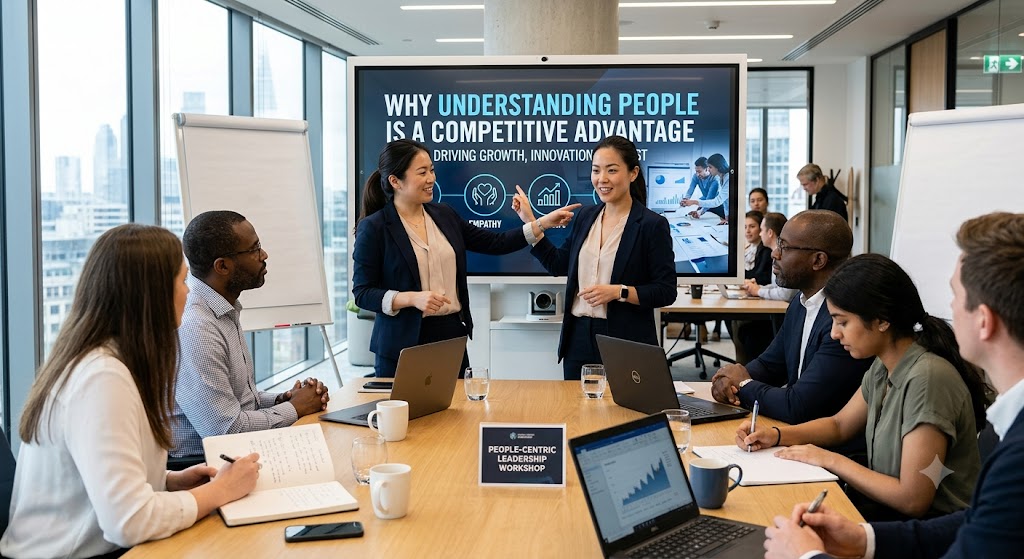
Why Understanding People Is a Competitive Advantage
Success is often described as the result of intelligence, hard work, talent, timing, or luck. While all of these factors have their place, one powerful advantage consistently separates individuals and businesses that thrive from those that struggle. That advantage is understanding people. Technology changes. Markets shift. Industries evolve. Consumer behavior adapts. But one thing remains remarkably consistent throughout history. Every business, career, organization, and relationship depends on people. The person who understands how people think, what motivates them, what they fear, what they desire, and how they make decisions possesses an advantage that cannot easily be copied.
Understanding people is not about manipulation. It is about awareness. It is the ability to recognize emotions, predict reactions, identify needs, solve problems effectively, and communicate in ways that build trust. Whether you are an entrepreneur, employee, content creator, salesperson, manager, freelancer, teacher, politician, investor, or student, your ability to understand human behavior influences nearly every opportunity that comes your way.
Many people spend years learning technical skills but very little time learning how people actually think. They understand software better than customers. They know products better than buyers. They understand data better than emotions. Yet every purchase, every partnership, every promotion, every recommendation, and every business transaction is ultimately made by human beings. Understanding people is therefore not an optional soft skill. It is one of the strongest competitive advantages available in the modern world.
Businesses that dominate their industries rarely succeed because they have the most advanced technology alone. They succeed because they understand their customers better than their competitors do. They know what frustrations customers experience. They know what customers secretly desire. They understand what makes customers trust one brand over another. They recognize that people rarely buy products simply because of features. They buy because they expect those products to improve their lives.
Think about why some companies inspire fierce customer loyalty while others constantly struggle for attention. The difference often lies in emotional understanding. Successful brands create experiences that make customers feel valued, respected, understood, and appreciated. They solve problems people actually care about rather than problems companies assume exist.
Understanding people also transforms communication. Two individuals may possess the exact same knowledge, yet one consistently persuades others while the other struggles to be heard. The difference usually comes down to understanding the audience. Effective communicators recognize that information alone rarely changes minds. People respond to stories, emotions, relevance, and clarity. They tailor their message based on who is listening instead of delivering identical information to everyone.
Leaders who understand people inspire loyalty rather than demanding obedience. Employees are more likely to remain committed when they feel respected and understood. Customers stay loyal when they feel appreciated instead of treated like transactions. Friends remain close when they feel heard rather than judged. Families become stronger when members understand one another’s emotional needs instead of simply expressing their own opinions.
One of the greatest misconceptions in business is that competition is only about offering better products. In reality, competition is often about understanding people better. Imagine two companies selling nearly identical services. One listens carefully to customer complaints, improves continuously, responds quickly, communicates clearly, and anticipates customer concerns. The other focuses only on technical improvements while ignoring customer experience. Over time, the first company usually earns stronger loyalty because customers remember how they were treated long after they forget product specifications.
Understanding people also improves decision making. Every decision creates consequences for someone. Leaders who understand human behavior anticipate how employees will react to policy changes. Marketers predict customer responses before launching campaigns. Investors evaluate the emotions influencing market behavior. Negotiators understand motivations beyond stated positions. Parents recognize emotional needs behind children’s actions. This awareness reduces unnecessary conflict and produces better long-term outcomes.
Emotional intelligence has become increasingly valuable because automation continues replacing routine technical work. Artificial intelligence can analyze data faster than humans. Software can automate repetitive tasks. Machines can perform calculations with incredible accuracy. Yet empathy, emotional awareness, relationship building, persuasion, conflict resolution, and trust remain uniquely human strengths. As technology advances, understanding people becomes even more valuable rather than less.
Many successful sales professionals are not the most persuasive speakers. They are the best listeners. They ask thoughtful questions before presenting solutions. They understand customer fears before discussing product benefits. They identify hidden concerns that customers themselves may struggle to express. Instead of forcing sales, they guide conversations toward genuine solutions. Customers appreciate this approach because they feel understood rather than pressured.
Listening is one of the most underrated competitive advantages in business and life. Most conversations involve people waiting impatiently for their turn to speak. Few genuinely listen to understand. Active listening reveals valuable information that others completely miss. Customers reveal frustrations. Employees share concerns. Partners express expectations. Competitors expose weaknesses. Opportunities often appear through careful observation rather than constant talking.
Understanding people requires curiosity instead of assumptions. Many conflicts arise because individuals assume they already know what others think or feel. They interpret behavior without gathering enough information. Curiosity replaces judgment with questions. Why did this customer react negatively? Why is this employee losing motivation? Why are sales declining despite strong advertising? Why are competitors attracting loyal customers? Curiosity uncovers answers that assumptions overlook.
Trust represents another area where understanding people creates enormous advantages. Trust cannot be demanded. It must be earned through consistent behavior. People trust individuals who demonstrate competence, honesty, reliability, and genuine concern. Businesses that repeatedly deliver on promises gradually build reputations that competitors struggle to match. Trust reduces friction in every relationship because people feel confident about future interactions.
Reputation develops from countless small interactions rather than isolated moments. Every email answered professionally, every promise fulfilled, every complaint resolved respectfully, and every honest conversation contributes to long-term credibility. Understanding how these experiences shape public perception allows individuals and businesses to strengthen relationships continuously.
Conflict becomes easier to resolve when people understand underlying motivations instead of focusing only on visible disagreements. Most arguments are not actually about surface issues. They involve unmet expectations, emotional needs, misunderstandings, fear, insecurity, or communication failures. Addressing root causes instead of symptoms creates lasting solutions.
Negotiation also depends heavily upon understanding people. Successful negotiators recognize that both sides seek value, security, recognition, or fairness. Rather than viewing negotiations as battles with winners and losers, skilled negotiators search for mutually beneficial outcomes. They understand priorities beyond stated demands, making agreements easier to achieve.
Marketing provides countless examples of the importance of human understanding. Companies often spend enormous amounts promoting features while customers care more about outcomes. A customer buying a mattress wants restful sleep. Someone purchasing insurance seeks peace of mind. People buying security systems desire safety for their families. Consumers purchasing educational courses hope for better opportunities. Products matter because of the transformations they promise rather than their technical specifications.
Understanding emotions helps explain purchasing behavior far better than demographics alone. Two individuals earning identical incomes may make completely different buying decisions because their priorities differ. One values convenience. Another prioritizes prestige. Someone else seeks reliability. Another emphasizes affordability. Successful marketers understand these emotional drivers rather than assuming identical customers behave identically.
Content creators who understand people consistently produce material audiences eagerly consume. They answer real questions, solve meaningful problems, inspire hope, reduce confusion, entertain effectively, or challenge existing beliefs thoughtfully. They understand audience struggles deeply enough to create genuinely valuable content rather than publishing material solely for search engines.
Understanding people also improves hiring decisions. Technical competence matters, but character, adaptability, communication, and emotional maturity frequently determine long-term success within organizations. Managers who recognize these qualities build stronger teams capable of solving complex problems together.
Adaptability becomes easier when people understand changing human needs. Consumer preferences evolve. Workplace expectations shift. Communication styles change across generations. Businesses that pay attention to these changes remain relevant while others become outdated. Remaining competitive requires continuous observation rather than rigid attachment to past assumptions.
Empathy should not be confused with agreement. Understanding someone does not require approving every opinion or behavior. It simply means recognizing perspectives accurately before responding. This distinction allows productive discussions even when disagreements remain significant.
Self-awareness also contributes significantly to understanding others. Individuals unaware of their own emotions often misinterpret everyone else’s behavior. Recognizing personal biases, assumptions, fears, and emotional triggers improves objectivity during conversations. Self-awareness reduces defensive reactions and encourages thoughtful responses.
Patience strengthens interpersonal understanding because meaningful insights rarely emerge instantly. Relationships develop gradually. Trust accumulates over time. Customer loyalty grows through repeated positive experiences. Teams become effective after learning how members communicate and collaborate. Competitive advantages built upon human understanding therefore compound steadily rather than appearing overnight.
Business history repeatedly demonstrates that companies ignoring customer needs eventually lose relevance. Many once-dominant organizations declined because they focused inward instead of outward. They became experts on themselves while losing touch with the people they served. Competitors willing to listen more carefully eventually replaced them.
Entrepreneurs especially benefit from understanding people because every business exists to solve human problems. The bigger the problem solved, the greater the opportunity often becomes. Entrepreneurs obsessed with products frequently struggle. Those obsessed with customers frequently innovate successfully because they continuously discover unmet needs.
Networking also changes dramatically when approached through genuine understanding rather than self-promotion. People remember those who show sincere interest, provide value generously, and build authentic relationships. Networking becomes less about collecting contacts and more about creating meaningful professional connections built upon mutual respect.
In the workplace, employees who understand colleagues collaborate more effectively, reduce misunderstandings, and contribute positively to organizational culture. Managers who recognize individual strengths assign responsibilities more intelligently. Teams become more productive because communication improves and unnecessary conflict decreases.
Understanding people enhances leadership because influence depends upon credibility rather than authority alone. Employees willingly follow leaders they respect and trust. Customers remain loyal to businesses they believe genuinely care about their satisfaction. Communities support organizations that consistently demonstrate integrity.
The digital age has made understanding people simultaneously easier and more difficult. Businesses have access to unprecedented amounts of customer data, yet numbers alone rarely explain emotions. Analytics reveal what happened, but conversations often explain why it happened. Combining data with genuine human interaction produces deeper understanding than relying exclusively on either approach.
Social media provides another example. Many organizations chase engagement metrics without understanding the emotions driving audience behavior. Viral content succeeds because it resonates emotionally. People share material that educates, entertains, inspires, surprises, or validates their experiences. Understanding these motivations improves communication effectiveness far more than simply increasing posting frequency.
Customer service remains one of the clearest demonstrations of competitive advantage through human understanding. Problems inevitably occur in every business. The difference lies in how companies respond. Organizations that treat complaints as opportunities to strengthen relationships frequently transform dissatisfied customers into loyal advocates. Customers remember respectful treatment long after specific problems disappear.
Understanding cultural differences also becomes increasingly important as businesses operate globally. Communication styles, expectations, negotiation approaches, and purchasing behaviors vary significantly across cultures. Respecting these differences strengthens international relationships while reducing misunderstandings.
Perhaps the greatest benefit of understanding people is its lasting relevance. Technologies become obsolete. Industries evolve. Business models change. Economic conditions fluctuate. Yet human beings will always seek trust, respect, security, belonging, recognition, convenience, hope, and meaningful solutions. Anyone who understands these timeless motivations possesses an advantage that survives changing markets.
Competitive advantages based solely upon products eventually disappear because competitors can copy features. Prices can be matched. Technologies can be replicated. Marketing strategies can be imitated. However, organizations deeply committed to understanding people develop cultures, relationships, reputations, and customer loyalty that prove much harder to duplicate.
Ultimately, every successful business serves people. Every career depends upon people. Every opportunity comes through people. Every recommendation originates from people. Every partnership requires people. Every sale involves people. Every innovation solves a human problem. This reality explains why understanding people consistently creates opportunities unavailable to those who focus only on products, technology, or processes.
The future will undoubtedly bring new technologies, changing industries, and unexpected economic shifts, but one principle will remain remarkably stable. Those who invest time learning how people think, communicate, decide, trust, cooperate, and solve problems will continue enjoying a competitive advantage in every area of life. Understanding people is not merely a useful interpersonal skill. It is one of the most valuable investments anyone can make because every meaningful achievement ultimately begins and ends with human relationships.

EarnSmartOnline.com.ng is dedicated to helping readers make smarter financial decisions through practical guides on online income, personal finance, technology, digital business, and wealth creation. Our goal is to provide reliable, easy-to-understand, and actionable content that empowers individuals to earn smarter, build sustainable income streams and achieve long-term financial success.
Recommended: Start Earning Online
- Ultimate Affiliate Marketing Program — learn affiliate marketing with a done-for-you sales system ($15). Check it out
- The Newbie Affiliate Guide — the beginner-friendly starter guide (~$6.68). Check it out
- Easy Dollar Maker — earn in dollars uploading AI images and videos from your phone ($17). Check it out
Disclosure: These are affiliate links. If you buy through them, I may earn a commission at no extra cost to you.



