
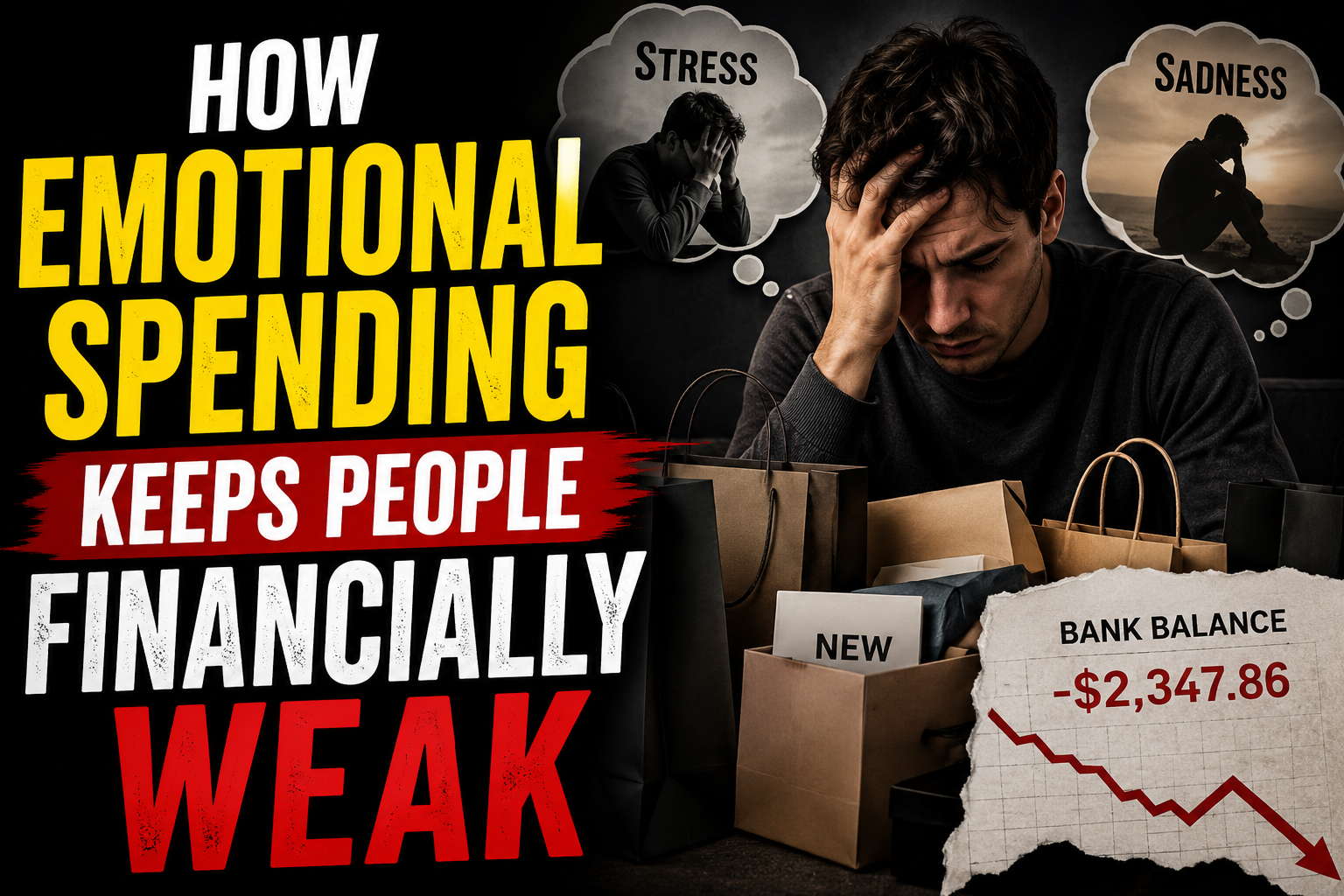
How Emotional Spending Keeps People Financially Weak
Many people believe financial weakness is caused only by low income, unemployment, or economic hardship, but one of the biggest hidden destroyers of financial stability is emotional spending. Emotional spending happens when people use money to respond to feelings instead of actual needs. It is the habit of buying things because of sadness, stress, loneliness, pressure, excitement, insecurity, frustration, depression, or even temporary happiness. Over time, this behavior quietly weakens people financially and keeps them trapped in cycles of struggle without them fully understanding why their money disappears so quickly.
In today’s world, emotional spending has become more common than ever. Social media, peer pressure, economic stress, and the desire to look successful have created an environment where many people spend emotionally almost every day. Some people shop when they are sad because buying something gives them temporary excitement. Others spend money when they feel insecure because they believe expensive items will make them feel more respected or accepted. Some people overspend after receiving salary because they feel they “deserve enjoyment” after working hard all month. The problem is that emotional spending rarely solves the real issue. Instead, it creates financial pressure that eventually leads to regret, anxiety, and long term financial weakness.
One dangerous thing about emotional spending is that it often feels harmless in the moment. Buying food online after a stressful day may not seem serious. Purchasing expensive clothes to impress friends may feel normal. Ordering unnecessary gadgets because others have them may seem like motivation. But repeated emotional purchases slowly damage financial stability. Small emotional spending habits repeated consistently can destroy savings, delay investments, increase debt, and make financial growth almost impossible. Many people are not broke because they earn too little. They are broke because emotions control their spending habits more than discipline does.
Social media has made emotional spending even worse. Every day, people see influencers, celebrities, and even friends displaying expensive lifestyles online. Constant exposure to luxury creates pressure to keep up appearances. Many people begin spending money they cannot afford just to feel socially relevant. Someone who originally planned to save money suddenly buys expensive phones, designer clothes, or unnecessary accessories simply because they want validation from others. This cycle creates financial weakness because money is being used to satisfy emotional insecurity instead of building long term stability.
Another major cause of emotional spending is stress. Financial stress itself often leads people into more reckless spending habits. Some people eat excessively, gamble, shop impulsively, or spend on entertainment whenever they feel overwhelmed. The temporary pleasure distracts them from their problems for a short time, but the financial consequences remain afterward. Many people know the painful feeling of checking their account balance after emotional spending and immediately regretting their decisions. Unfortunately, regret alone does not stop the cycle because the emotional triggers still exist.
Many salary earners struggle financially because of emotional spending immediately after payday. Instead of planning wisely, they begin spending based on excitement and emotional release. They buy unnecessary things because they feel temporarily rich. Expensive outings, impulse purchases, and random spending become common within the first few days after salary arrives. Before the month is halfway gone, financial pressure returns. This repeated pattern keeps many hardworking people trapped in paycheck to paycheck living for years.
Emotional spending also destroys savings culture. Saving money requires patience, discipline, and delayed gratification. Emotional spending works against all three. People who spend emotionally often find it difficult to maintain consistent savings because emotions constantly convince them to prioritize temporary pleasure over long term goals. Someone may save money for months, but one emotional moment can destroy the discipline completely. A person may suddenly withdraw savings to buy unnecessary luxury items, fund social activities, or satisfy emotional desires. Over time, this weakens financial growth and prevents wealth accumulation.
Another dangerous effect of emotional spending is debt accumulation. Many people borrow money not because of emergencies but because of emotional desires. They take loans to impress others, organize lavish events, maintain fake lifestyles, or satisfy cravings for material possessions. Debt created through emotional spending becomes especially dangerous because the purchases often lose value quickly while the debt remains. A person may finish paying for an item long after the excitement of owning it has disappeared. This creates financial frustration and keeps people financially trapped.
Emotional spending also affects relationships and family stability. Many homes experience financial conflict because one or both partners struggle with uncontrolled spending habits. Some people hide purchases from their partners because they know the spending was unnecessary. Others continue buying things impulsively despite financial responsibilities at home. Children can also suffer when parents prioritize emotional spending over proper financial planning. School fees, rent, healthcare, and essential needs may become difficult because money was repeatedly wasted on emotional purchases.
One reason emotional spending is difficult to control is because it often feels connected to self worth and identity. Many people use material possessions to measure success or social acceptance. Expensive items become emotional symbols instead of practical needs. Some individuals believe owning luxury products will make them feel more confident, respected, or attractive. Others use spending to escape feelings of failure or inadequacy. Unfortunately, material possessions rarely provide lasting emotional satisfaction. The happiness fades quickly, and new emotional cravings soon appear again.
Advertising companies understand emotional spending very well. Most advertisements are designed to target emotions rather than logic. Businesses know that emotional buyers spend faster than rational buyers. This is why advertisements often focus on feelings such as happiness, success, beauty, confidence, or status. Limited time offers, flashy promotions, and influencer marketing are carefully designed to trigger emotional reactions. Many people spend money impulsively because they react emotionally to marketing without thinking deeply about long term financial consequences.
One powerful way to overcome emotional spending is self awareness. People must begin identifying the emotions that trigger their spending habits. Some people spend when stressed. Others spend when lonely, angry, excited, or insecure. Understanding emotional triggers helps people gain control over their decisions. Instead of reacting impulsively, they can pause and evaluate whether a purchase is truly necessary or simply emotional.
Creating a financial plan is another important solution. People who budget properly are less likely to spend emotionally because their money already has direction and structure. A good budget creates boundaries that help control impulse spending. Financial goals also strengthen discipline because people become more focused on future rewards rather than temporary emotional satisfaction. Someone saving for a business, investment, or financial freedom is more likely to resist emotional spending temptations.
Learning delayed gratification is also essential for financial strength. Many financially successful people developed the ability to sacrifice temporary pleasure for long term stability. Emotional spending thrives on instant gratification. The desire to feel good immediately often overrides logical thinking. People who master patience usually make better financial decisions because they focus on future benefits rather than temporary excitement.
Avoiding comparison is another major step toward financial freedom. Comparison destroys contentment and encourages emotional spending. Many people buy things not because they truly need them but because they see others doing the same. Social comparison creates pressure to constantly upgrade lifestyles even when income does not support it. Financially wise people understand that real wealth is not about appearances. It is about stability, security, investments, and freedom from financial stress.
Building healthy emotional coping mechanisms can also reduce emotional spending significantly. Instead of shopping impulsively during emotional moments, people can develop healthier alternatives such as exercise, reading, learning skills, praying, resting, or spending time with supportive people. Emotional healing should not depend on spending money unnecessarily. Long term peace comes from emotional balance, not material possessions.
Financial discipline may feel difficult at first, but it becomes easier with consistency. Small changes in spending habits can produce powerful long term results. Someone who controls emotional spending today may eventually build savings, investments, emergency funds, and financial independence. On the other hand, someone who continues spending emotionally may remain financially weak regardless of income increases.
One painful truth many people eventually realize is that earning more money alone does not solve financial problems. Without discipline, higher income often leads to higher emotional spending. This is why some high earners still struggle financially despite making far more money than average workers. Financial strength depends more on behavior than income level. A disciplined low income earner can eventually become financially stable, while an emotional high spender may remain trapped in debt and instability.
At its core, emotional spending is not just a money problem. It is deeply connected to mindset, self control, insecurity, stress management, and emotional awareness. People who learn to separate emotions from financial decisions gain a major advantage in life. They make wiser choices, avoid unnecessary debt, build stronger savings habits, and gradually create financial security for themselves and their families.
The journey toward financial strength begins with honesty. People must admit when emotions are controlling their spending decisions. Once awareness develops, change becomes possible. Every controlled purchase, every avoided impulse, and every disciplined financial decision strengthens long term stability. Financial freedom is not built through emotional reactions. It is built through intentional choices, patience, discipline, and consistent wise management of money over time.

EarnSmartOnline.com.ng is dedicated to helping readers make smarter financial decisions through practical guides on online income, personal finance, technology, digital business, and wealth creation. Our goal is to provide reliable, easy-to-understand, and actionable content that empowers individuals to earn smarter, build sustainable income streams and achieve long-term financial success.
Recommended: Start Earning Online
- Ultimate Affiliate Marketing Program — learn affiliate marketing with a done-for-you sales system ($15). Check it out
- The Newbie Affiliate Guide — the beginner-friendly starter guide (~$6.68). Check it out
- Easy Dollar Maker — earn in dollars uploading AI images and videos from your phone ($17). Check it out
Disclosure: These are affiliate links. If you buy through them, I may earn a commission at no extra cost to you.



