
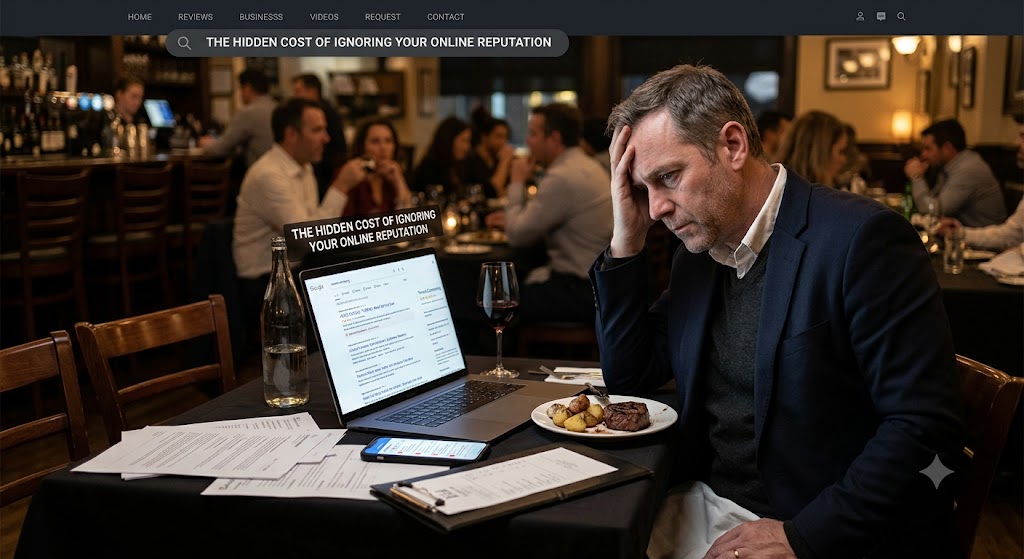
The Hidden Cost of Ignoring Your Online Reputation
Your online reputation is one of the most valuable assets you own, whether you realize it or not. Every search result, social media profile, customer review, comment, shared photograph, published article, and digital interaction contributes to a public image that can influence opportunities long before anyone speaks to you. In today’s connected world, people rarely meet a person, hire a professional, partner with a business, or purchase a product without first searching online. What they find often determines what happens next. This is why the hidden cost of ignoring your online reputation is far greater than many people imagine. While the consequences may not be immediately visible, they accumulate quietly over time until they begin affecting your finances, relationships, credibility, career, and future opportunities.
Many individuals still believe that online reputation only matters to celebrities, politicians, multinational companies, or social media influencers. That assumption could not be further from reality. Students applying for scholarships, job seekers sending applications, entrepreneurs launching startups, freelancers looking for clients, authors publishing books, musicians releasing songs, and even ordinary individuals using social media all leave digital footprints. Those footprints become permanent records that strangers use to form opinions. In many situations, people decide whether to trust you before you even have the chance to introduce yourself.
The internet has transformed the way people evaluate credibility. Years ago, a handshake, a referral, or a personal meeting was often enough to build trust. Today, a quick search engine query frequently replaces those first conversations. Employers review social media accounts before scheduling interviews. Customers read online reviews before making purchases. Investors examine company histories before committing capital. Landlords search prospective tenants. Universities research applicants. Even potential friends and romantic partners often search each other’s names online before meeting in person. Ignoring this reality means surrendering control over one of the most influential aspects of modern life.
One of the greatest hidden costs of neglecting your online reputation is the silent loss of opportunities you never even know existed. Most people assume rejection always comes with an explanation, but that is rarely true. A recruiter may quietly remove your application after finding inappropriate posts online. A client may hire your competitor because their digital presence appears more trustworthy. A conference organiser may invite another speaker whose online profile demonstrates greater professionalism. Since nobody is obligated to explain why they chose someone else, these invisible losses accumulate without your knowledge.
Trust has become one of the world’s most valuable currencies, and online reputation serves as the foundation of digital trust. Every review, testimonial, recommendation, article, or professional profile contributes to that trust. Likewise, every unanswered complaint, outdated profile, offensive comment, or misleading piece of information weakens it. Building trust often requires years of consistent effort, yet damaging it can happen within minutes. That imbalance explains why reputation management deserves continuous attention rather than occasional concern.
Search engines have become the first impression for millions of people every single day. When someone searches your name or business, the results they see create immediate assumptions. Positive articles, professional websites, educational content, interviews, awards, customer testimonials, and active social profiles generally strengthen credibility. On the other hand, outdated information, unanswered negative reviews, controversial comments, poor-quality websites, or inactive profiles create uncertainty. Human beings naturally avoid uncertainty because trust reduces perceived risk. Whenever uncertainty increases, opportunities often disappear.
Businesses experience these consequences on an even larger scale. Consumers have unprecedented access to information, making purchasing decisions heavily dependent upon online research. Before spending money, people compare businesses, read reviews, explore websites, check ratings, and examine social media activity. A company with excellent products but a neglected online presence frequently loses customers to competitors with stronger digital reputations. Product quality alone no longer guarantees success because perception influences buying behaviour almost as much as reality.
Customer reviews illustrate this principle perfectly. A single dissatisfied customer sharing a detailed experience may influence hundreds or even thousands of potential buyers. Positive reviews encourage confidence, while unresolved complaints create hesitation. Interestingly, customers often judge how businesses respond to criticism more than the criticism itself. Companies that acknowledge mistakes, apologise sincerely, and provide practical solutions frequently strengthen their reputation despite occasional negative feedback. Businesses that ignore complaints communicate something far more damaging: indifference.
Individuals face similar challenges through social media. Platforms originally designed for personal communication have gradually become public portfolios. Every photograph, opinion, argument, joke, and shared article contributes to an evolving personal brand. Many users forget that privacy settings change, screenshots exist forever, and deleted posts may survive in archives or someone else’s device. A moment of emotional frustration expressed online can continue influencing professional relationships years later.
Employers increasingly recognise that technical skills alone cannot predict workplace behaviour. Digital footprints often reveal communication style, emotional maturity, professionalism, consistency, and judgment. While everyone deserves personal freedom, public behaviour inevitably influences professional perception. The internet rarely separates private identity from professional identity as neatly as people expect.
Entrepreneurs encounter even greater responsibility because their personal reputation often becomes inseparable from their businesses. Customers rarely distinguish between a founder and the company they represent. Every interview, social media interaction, public statement, and customer response shapes both identities simultaneously. A founder known for honesty, expertise, transparency, and professionalism attracts confidence that directly benefits the business. Conversely, repeated public controversies may discourage partnerships regardless of product quality.
Ignoring online reputation also creates significant financial consequences. Poor reviews reduce conversion rates. Negative search results discourage investors. Weak credibility increases customer acquisition costs because businesses must spend more money on advertising to overcome trust deficits. Professionals with damaged reputations frequently accept lower-paying opportunities simply because premium clients prefer trusted alternatives. Over time, these hidden financial losses often exceed the cost of maintaining a strong online presence.
Another overlooked cost involves networking. Professional relationships increasingly begin online through websites, business directories, social platforms, podcasts, webinars, articles, and industry forums. People frequently decide whether to initiate conversations after reviewing someone’s digital presence. A well-maintained online reputation encourages introductions, collaborations, speaking invitations, and media opportunities. Neglected profiles quietly discourage these valuable connections before conversations even begin.
Many people mistakenly believe reputation management means hiding criticism. Effective reputation management actually focuses on transparency, consistency, authenticity, and responsiveness. Everyone makes mistakes. Customers understand that businesses occasionally disappoint clients. Employers recognise that individuals experience challenges. What matters most is how those situations are handled. Honest communication often strengthens credibility more effectively than attempting to appear flawless.
Content creation plays a powerful role in shaping online reputation. Publishing thoughtful articles, educational videos, professional insights, helpful tutorials, and meaningful discussions gradually builds authority within specific industries. Search engines reward valuable content because users appreciate information that solves real problems. Over time, consistent publishing allows positive, relevant material to dominate search results, reducing the visibility of outdated or less favourable information.
Professional websites remain essential despite the popularity of social media. Social platforms change algorithms, suspend accounts, and modify policies beyond users’ control. A personal or business website provides stability, ownership, and credibility. It serves as a central location where visitors can learn about expertise, services, achievements, testimonials, contact information, and published work without distractions created by competing content.
Consistency across digital platforms further strengthens reputation. Matching names, biographies, contact details, branding, photographs, and messaging reduce confusion while reinforcing authenticity. Inconsistent information creates uncertainty that weakens trust. Customers appreciate clarity because clarity signals professionalism.
Online reputation also affects search engine visibility. Businesses with strong reviews, active websites, consistent information, valuable content, and positive engagement frequently receive better visibility in search results. Increased visibility generates more website traffic, more enquiries, more customers, and ultimately more revenue. Reputation therefore contributes indirectly to search engine optimisation by strengthening trust signals across multiple platforms.
Security represents another overlooked aspect of online reputation. Neglected websites, abandoned social media accounts, weak passwords, and outdated software create opportunities for hackers. Once compromised, attackers may publish fraudulent content, scam customers, spread malware, or damage credibility within hours. Recovering from such incidents often requires substantial financial investment and public communication. Preventative maintenance remains significantly cheaper than repairing damaged trust.
Small businesses sometimes assume reputation management belongs exclusively to large corporations with dedicated marketing departments. In reality, smaller businesses often benefit even more because local customers depend heavily on reviews and recommendations. One outstanding reputation within a community can generate years of referrals without expensive advertising campaigns. Likewise, repeated negative experiences spread rapidly among local networks where word-of-mouth remains extremely influential.
The psychology behind online reputation explains its extraordinary influence. Human beings naturally seek shortcuts when making decisions. Evaluating every product, professional, or company from scratch requires too much time. Reviews, testimonials, ratings, articles, certifications, and visible expertise simplify decision-making by reducing uncertainty. A strong online reputation therefore functions as social proof, allowing strangers to trust before personal relationships develop.
Reputation management also requires monitoring. Many people never search their own names or businesses, leaving inaccurate information undiscovered for years. Regularly reviewing search engine results, business listings, review platforms, news mentions, and social media conversations helps identify emerging issues before they become significant problems. Early intervention often prevents minor misunderstandings from developing into lasting reputation damage.
False information presents another modern challenge. Incorrect business details, fake reviews, impersonation accounts, misleading articles, or outdated records occasionally appear online. Ignoring these issues allows misinformation to spread unchecked. Taking reasonable steps to request corrections, verify official accounts, update business information, and communicate accurate facts protects both credibility and customers.
Reputation extends beyond individual achievements because associations matter. Businesses carefully choose partners whose values align with their own. Professionals evaluate organisations before accepting employment. Consumers increasingly support companies reflecting ethical behaviour, environmental responsibility, transparency, and customer care. Every partnership therefore influences perception through association.
Patience remains essential because strong reputations rarely develop overnight. Trust accumulates gradually through repeated positive experiences. Publishing valuable content consistently, responding respectfully to customers, maintaining accurate information, delivering quality service, and demonstrating integrity create compounding benefits over months and years. Eventually, reputation begins generating opportunities independently because satisfied customers, readers, colleagues, and partners recommend trusted individuals to others.
The hidden cost of ignoring online reputation becomes especially apparent during crises. Businesses with established trust often recover more quickly from unexpected setbacks because loyal customers extend the benefit of the doubt. Individuals known for honesty receive greater understanding during misunderstandings. Strong reputations function like reserves built during good times that provide resilience when challenges emerge.
Young professionals entering competitive industries should view online reputation as an investment rather than an afterthought. Every helpful article published, every respectful interaction shared, every professional profile completed, and every satisfied client acknowledged contributes toward long-term credibility. Those seemingly small actions compound into meaningful advantages unavailable to individuals who neglect their digital presence.
Educational institutions increasingly encourage students to develop digital professionalism because future employers evaluate more than academic qualifications. Communication skills, online conduct, leadership activities, volunteer work, published projects, and community involvement collectively shape employability. Students who understand reputation management early often enter the workforce with significant advantages over equally qualified peers.
Ultimately, online reputation is not merely about appearing successful. It is about consistently demonstrating reliability, competence, honesty, professionalism, and value in places where people naturally search for information. The internet remembers far longer than human memory, making every digital interaction part of an evolving public record. While perfection remains impossible, intentional reputation management dramatically increases the likelihood that future employers, customers, partners, investors, colleagues, and friends encounter an accurate reflection of your character and capabilities.
Ignoring your online reputation may save a little time today, but the long-term cost can be enormous. Missed opportunities, lost income, weakened credibility, damaged relationships, reduced visibility, declining customer trust, and diminished professional influence rarely happen all at once. Instead, they accumulate quietly, often unnoticed, until their combined effect becomes impossible to ignore. Those who actively build and protect their online reputation position themselves for greater trust, stronger relationships, better career prospects, increased business growth, and lasting digital credibility. In an era where first impressions are frequently formed before the first conversation, your online reputation is no longer optional. It is one of the most valuable investments you can make in your future.

EarnSmartOnline.com.ng is dedicated to helping readers make smarter financial decisions through practical guides on online income, personal finance, technology, digital business, and wealth creation. Our goal is to provide reliable, easy-to-understand, and actionable content that empowers individuals to earn smarter, build sustainable income streams and achieve long-term financial success.
Recommended: Start Earning Online
- Ultimate Affiliate Marketing Program — learn affiliate marketing with a done-for-you sales system ($15). Check it out
- The Newbie Affiliate Guide — the beginner-friendly starter guide (~$6.68). Check it out
- Easy Dollar Maker — earn in dollars uploading AI images and videos from your phone ($17). Check it out
Disclosure: These are affiliate links. If you buy through them, I may earn a commission at no extra cost to you.



