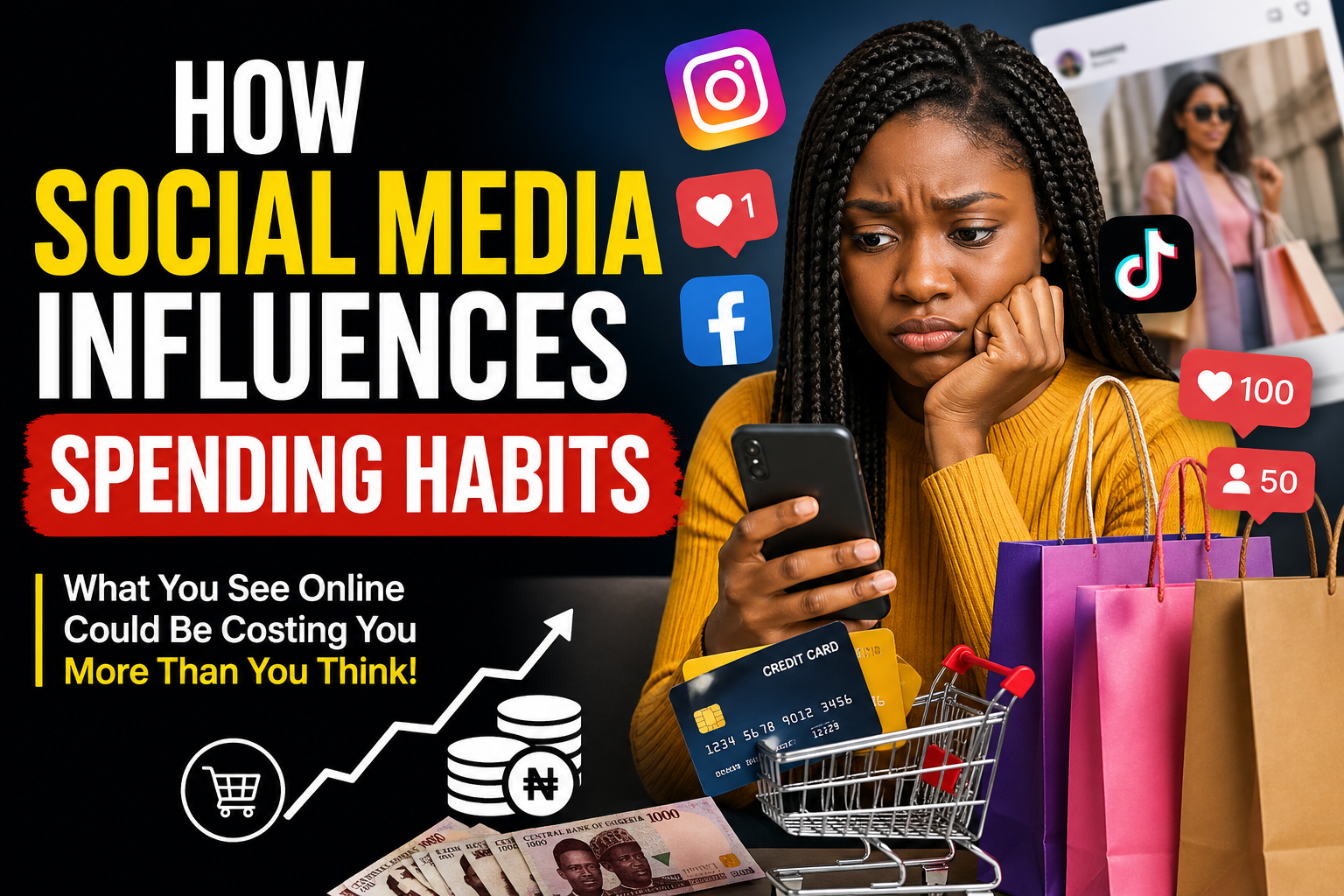
How Social Media Influences Spending Habits
Social media doesn’t just entertain, it quietly reshapes how people think about money, value, and spending. For many Nigerians (and globally), platforms like Instagram, TikTok, and Facebook have become powerful drivers of financial behavior, often without users realizing it. Here’s a clear breakdown of how social media influences spending habits and what it means for your financial life.
The Illusion of “Normal” Lifestyle
On social media, you’re constantly exposed to:
Luxury lifestyles
Frequent travel
Designer fashion
Expensive gadgets
Over time, this creates a false sense of what is “normal.” What used to feel like a luxury now feels like a basic standard.
The result?
People begin to spend money trying to “match” a lifestyle that may not even be real.
The Comparison Trap
Humans naturally compare, but social media amplifies it.
You see:
Your friend buying a new iPhone
Someone your age driving a car
Influencers living “soft life”
This triggers subtle pressure:
“I should be doing this too.”
That emotional pressure often leads to:
Impulse buying
Unplanned upgrades
Financial overreach
Influencer Marketing and Hidden Persuasion
Many influencers are paid to promote products, but it doesn’t always look like advertising.
You’ll see:
“My daily routine” videos
“Things I can’t live without”
Product recommendations
These feel personal, but they’re strategic.
This creates trust-based spending, where people buy not because they need something, but because someone they follow uses it.
Instant Gratification Culture
Social media thrives on speed:
Fast content
Quick trends
Instant rewards
This mindset spills into spending behavior.
Instead of:
Saving first
Planning purchases
People now:
Buy immediately
Upgrade frequently
Spend emotionally
This weakens long-term financial discipline.
The Rise of “Soft Life” Spending
In Nigeria especially, the “soft life” culture has influenced spending patterns heavily.
People now prioritize:
Comfort over savings
Appearance over financial stability
Enjoyment over planning
While there’s nothing wrong with enjoying life, the problem starts when:
Spending replaces strategy.
Targeted Ads and Algorithm Pressure
Social media platforms track:
What you like
What you watch
What you search
Then they show you exactly what you’re likely to buy.
This means:
You’re constantly exposed to tempting products
Your weaknesses are targeted
Your spending triggers are exploited
You’re not just browsing, you’re being strategically influenced.
Fear of Missing Out (FOMO)
Limited-time offers, trends, and viral products create urgency.
You’ll see:
“Only 24 hours left!”
“Everyone is buying this!”
“Don’t miss out!”
This leads to:
Panic spending
Buying things you didn’t plan for
Regret purchases later
Social Validation Spending
Some purchases are no longer about need, they’re about validation.
People spend to:
Get likes
Impress others
Maintain a certain image
This leads to:
Living above your means
Prioritizing appearance over financial health
How to Protect Yourself
You don’t need to quit social media, but you need control.
1. Be aware of influence
Recognize when content is trying to sell you something.
2. Delay purchases
Give yourself 24–72 hours before buying anything online.
3. Set a monthly spending plan
Decide what you can afford before social media decides for you.
4. Unfollow triggers
If certain pages make you overspend, mute or unfollow them.
5. Focus on real financial goals
Savings, investments, and stability matter more than online impressions.
Social media is not the problem, uncontrolled influence is.
If you don’t control your attention, it will control your spending.
The people who build wealth are not the ones who avoid social media entirely, but the ones who understand how it works and refuse to let it dictate their financial decisions.

EarnSmartOnline.com.ng is dedicated to helping readers make smarter financial decisions through practical guides on online income, personal finance, technology, digital business, and wealth creation. Our goal is to provide reliable, easy-to-understand, and actionable content that empowers individuals to earn smarter, build sustainable income streams and achieve long-term financial success.
Recommended: Start Earning Online
- Ultimate Affiliate Marketing Program — learn affiliate marketing with a done-for-you sales system ($15). Check it out
- The Newbie Affiliate Guide — the beginner-friendly starter guide (~$6.68). Check it out
- Easy Dollar Maker — earn in dollars uploading AI images and videos from your phone ($17). Check it out
Disclosure: These are affiliate links. If you buy through them, I may earn a commission at no extra cost to you.