
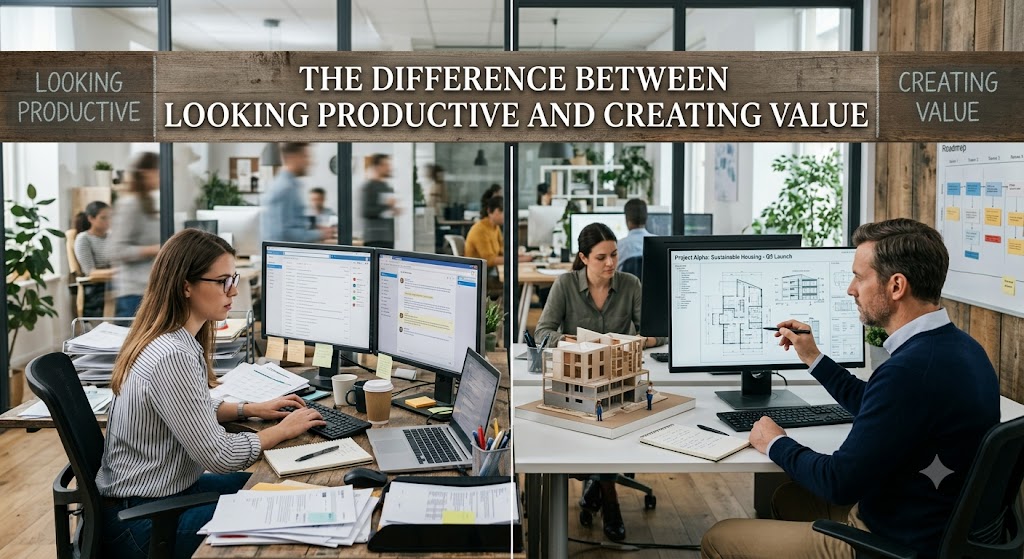
The Difference Between Looking Productive and Creating Value
In a world that celebrates busyness, it has become increasingly difficult to distinguish between people who appear productive and those who consistently create real value. Modern life rewards visibility. Social media rewards activity. Workplaces often reward those who seem constantly occupied. Friends admire those with packed schedules. Yet beneath all this movement lies a powerful truth that many people discover far too late. Looking productive and creating value are not the same thing. One creates the illusion of progress while the other produces results that matter. Understanding this difference can completely change the way you approach your work, business, career and personal life.
Many people wake up early, answer dozens of emails, attend several meetings, update multiple spreadsheets, reply to every message instantly and spend the entire day moving from one task to another. By evening they are exhausted, yet nothing significant has actually changed. Their business has not grown. Their income has not increased. Their customers are not happier. Their skills have not improved. Their goals remain exactly where they were yesterday. They confuse activity with achievement, and because they are constantly busy, they convince themselves they are making progress.
Creating value operates on an entirely different principle. Instead of measuring success by how much effort is expended, value measures success by the impact produced. A single idea that saves customers thousands of pounds or dollars creates more value than a week spent attending unnecessary meetings. One article that genuinely helps readers solve a difficult problem creates more value than fifty shallow posts published simply to maintain consistency. One excellent product that improves people’s lives creates more value than dozens of mediocre products nobody remembers.
This distinction becomes even clearer in business. Imagine two entrepreneurs. The first spends every day redesigning their website, adjusting logos, changing colours, replying to every social media comment within seconds and constantly announcing that exciting things are coming soon. They appear extremely productive. Their followers see constant updates, behind the scenes videos and daily activity. However, months pass without a meaningful product launch or significant customer growth.
The second entrepreneur spends most of their time researching customer problems, improving their product, testing new ideas, listening carefully to feedback and refining their service until customers happily recommend it to others. They rarely post online. They are not constantly visible. From the outside they may appear inactive, but behind the scenes they are creating enormous value. Eventually they launch a product that solves genuine problems and quickly builds a loyal customer base. The first entrepreneur looked productive. The second entrepreneur created value.
This pattern repeats itself across every profession. Students often spend hours highlighting textbooks with colourful markers, organising notes into attractive folders and purchasing expensive stationery. These activities feel productive because they resemble studying. Yet many of these students struggle during examinations because they never challenged themselves to understand the material deeply. Meanwhile another student spends less time making beautiful notes but more time solving difficult problems, explaining concepts aloud and testing their understanding. Their study sessions may look less impressive, but they produce better results because they focus on creating knowledge rather than creating the appearance of studying.
The workplace offers countless examples of this misunderstanding. Some employees are masters of appearing busy. They always seem occupied. They walk quickly through the office carrying folders. They send emails late at night to demonstrate commitment. Their calendars remain completely full. They volunteer for numerous committees and projects. Yet when managers evaluate actual contributions, these employees often struggle to identify measurable improvements they have delivered.
Other employees quietly solve important problems. They simplify complicated systems. They reduce costs. They improve customer satisfaction. They automate repetitive tasks. They mentor colleagues. Their calendars may contain fewer meetings because they reserve time for deep work. They may not attract constant attention, but their organisations become stronger because of the value they create.
Technology has made this confusion even more dangerous. Smartphones, instant messaging, social media notifications and endless streams of digital information create the feeling of productivity without necessarily producing meaningful outcomes. Every notification feels urgent. Every message demands attention. Every trending topic appears important. Many people spend entire days switching rapidly between tasks, believing they are accomplishing more because they remain constantly connected.
Scientific research consistently shows that frequent interruptions reduce concentration, increase mistakes and make complex thinking more difficult. Deep work requires uninterrupted focus, yet modern digital environments encourage the exact opposite. As attention becomes fragmented, people complete numerous small activities without making meaningful progress on their most valuable work. They mistake responsiveness for productivity.
Value creation demands focus because meaningful achievements rarely emerge from scattered attention. Writing an exceptional book, designing innovative software, developing a successful business strategy, conducting important research or mastering a difficult skill all require sustained concentration. These activities may appear slow from the outside because progress is not immediately visible, but they generate results that continue producing benefits long after the work is completed.
Many professionals fall into what psychologists sometimes describe as the completion trap. Completing tasks provides a satisfying sense of accomplishment regardless of whether those tasks contribute significantly to larger objectives. Crossing items off a to do list releases positive feelings. Unfortunately, not every completed task deserves equal importance. Answering twenty routine emails may feel satisfying, yet finishing one proposal that secures a major client creates exponentially more value.
This explains why successful people often ask different questions before beginning work. Instead of asking what they should do next, they ask what creates the greatest value. Instead of asking how they can stay busy, they ask what produces meaningful impact. Instead of measuring success by hours worked, they evaluate outcomes achieved.
The difference becomes especially important for entrepreneurs building online businesses. Many beginners become obsessed with appearances. They purchase expensive office furniture before earning their first customer. They spend weeks selecting fonts, logos and business cards. They continually redesign websites instead of attracting visitors. They buy productivity software they barely use. They fill notebooks with ambitious plans but delay actually serving customers.
Meanwhile experienced entrepreneurs understand that customers rarely care how organised your office appears. They care whether you solve their problems effectively. Value creation begins when real people receive real benefits. A beautifully designed website without useful products generates less value than a simple website offering solutions customers genuinely need.
Content creators face the same challenge. Publishing daily does not automatically create value. Producing endless articles filled with recycled information may increase activity but contribute little to readers. One carefully researched article that genuinely helps thousands of people solve important problems creates lasting value. Readers remember usefulness more than frequency. Search engines increasingly reward content that demonstrates expertise, authority and trustworthiness because users ultimately seek solutions rather than quantity.
This principle also explains why some businesses with smaller marketing budgets outperform competitors spending millions on advertising. Advertising creates awareness, but genuine value creates loyalty. Customers return because products consistently solve problems, save time, reduce costs or improve experiences. Marketing may attract attention temporarily, but value sustains long term success.
Many organisations unknowingly reward visible effort rather than valuable contribution. Employees who stay late receive praise even when poor planning caused unnecessary overtime. Meetings multiply because participation appears productive. Reports become longer because length suggests thoroughness. Approval processes grow increasingly complicated because complexity creates the illusion of importance.
Over time these habits create cultures where appearances overshadow outcomes. Innovation slows because employees prioritise looking busy instead of solving problems creatively. Talented individuals become frustrated when genuine contributions receive less recognition than visible activity. Organisations gradually lose competitiveness because energy becomes consumed by maintaining appearances rather than generating value.
History repeatedly demonstrates that extraordinary achievements often emerge from people willing to ignore appearances. Inventors spend years experimenting privately before introducing revolutionary products. Authors rewrite manuscripts countless times before publication. Scientists conduct thousands of unsuccessful experiments before making important discoveries. Athletes perform repetitive training sessions unseen by spectators before winning championships. Their greatest work occurs away from public attention because value develops through deliberate effort rather than constant visibility.
Personal finance provides another powerful illustration. Many people work longer hours hoping to increase income while neglecting opportunities to increase value. Higher earnings frequently come from solving bigger problems rather than working more hours. Professionals who develop specialised expertise create greater value because their knowledge becomes increasingly difficult to replace. Businesses generating unique solutions command higher prices because customers recognise the benefits provided.
This explains why continuous learning remains one of the highest value investments anyone can make. Acquiring valuable skills increases your ability to solve increasingly complex problems. Communication, leadership, technical expertise, critical thinking, negotiation and creativity all enhance value creation because they enable you to contribute more effectively wherever you work.
Looking productive often focuses on inputs. How many hours were worked? How many emails were sent? How many meetings were attended? How many tasks were completed? Creating value focuses on outputs. How many customers benefited? How much revenue increased? What problems were solved? What improvements lasted? These questions produce entirely different behaviours because they measure different definitions of success.
The most valuable professionals constantly simplify rather than complicate. They remove unnecessary processes. They automate repetitive work. They eliminate confusion. They improve efficiency without sacrificing quality. Simplicity itself creates value because it saves time, reduces errors and makes experiences more enjoyable for everyone involved.
Unfortunately, simplicity rarely appears impressive. Complicated presentations, lengthy reports and elaborate procedures often receive more admiration than elegant solutions requiring fewer steps. Yet genuine expertise frequently expresses itself through simplicity. The best teachers explain difficult concepts clearly. The best software feels intuitive. The best customer experiences eliminate unnecessary friction.
Another major difference involves time horizons. Looking productive often delivers immediate satisfaction because activity receives instant recognition. Colleagues notice busy schedules. Social media rewards frequent posting. Managers observe visible effort. Creating value sometimes requires patience because meaningful outcomes develop gradually. Investments compound over years. Relationships strengthen through consistent trust. Brands earn reputations through repeated excellence. Skills mature through deliberate practice.
This difference explains why many people abandon valuable projects too early. They seek immediate evidence that effort matters. When recognition fails to appear quickly, they shift towards activities providing faster feedback even if those activities generate less value. Long term success frequently belongs to individuals capable of delaying gratification while consistently investing in meaningful work.
The concept of leverage further separates productivity from value. Leverage means creating results that continue producing benefits beyond the original effort. Writing software used by millions creates enormous leverage. Publishing educational resources helping readers for years creates leverage. Training employees who later improve entire organisations creates leverage. Designing systems that automate repetitive work creates leverage.
People focused solely on productivity often overlook leverage because they remain occupied completing routine tasks. Value creators actively seek opportunities where one effort generates multiple future benefits. They build assets instead of constantly exchanging time for money. They develop systems rather than repeatedly solving identical problems. They teach others instead of becoming permanent bottlenecks.
Leadership also depends more on value creation than visible productivity. Great leaders do not simply work harder than everyone else. They enable entire teams to perform better. They remove obstacles preventing success. They communicate clear visions. They develop future leaders. Their impact multiplies because they create environments where others succeed.
Relationships reflect the same principle. Looking like a caring friend differs from genuinely adding value to someone’s life. Frequent social media interactions cannot replace sincere conversations during difficult moments. Expensive gifts cannot substitute for trust, honesty and reliability. Lasting relationships grow through meaningful contributions rather than impressive appearances.
Parents experience this challenge daily. Spending money on children does not necessarily create value. Time invested teaching principles, encouraging curiosity, building confidence and demonstrating integrity often creates far greater lifelong benefits. Value frequently emerges from intentional presence rather than visible activity.
Even health illustrates this distinction. Purchasing expensive fitness equipment, wearing fashionable exercise clothing and posting workout photos may create the appearance of commitment. Actual value comes from consistent healthy habits maintained over months and years. Real progress occurs through disciplined nutrition, regular exercise, adequate sleep and sustainable routines rather than occasional bursts of visible enthusiasm.
One reason people confuse productivity with value involves social comparison. Visible activities receive attention while valuable thinking often remains invisible. Nobody sees the hours spent analysing difficult problems, learning new skills or refining important ideas. Consequently people imitate observable behaviours instead of underlying processes producing meaningful outcomes.
Successful creators understand that much of their most important work occurs internally. Thinking deeply, questioning assumptions, connecting unrelated ideas and carefully evaluating alternatives may appear unproductive because little external movement occurs. Yet these invisible activities frequently determine whether future actions succeed or fail.
Businesses capable of surviving economic uncertainty usually prioritise value over appearances. During difficult times customers become increasingly selective. They spend money where genuine benefits justify costs. Companies relying primarily on image struggle because superficial advantages disappear when budgets tighten. Organisations consistently solving important problems retain loyal customers because value remains relevant regardless of economic conditions.
Artificial intelligence and automation make this distinction even more significant. Routine activities increasingly become automated. Simple repetitive tasks require less human involvement. Future opportunities belong to individuals capable of creating unique value through creativity, judgement, empathy, innovation and complex problem solving. Looking busy will become less valuable while producing meaningful outcomes becomes increasingly important.
This shift requires individuals to rethink how they organise daily work. Instead of filling calendars completely, they should protect uninterrupted time for high value activities. Instead of measuring success through completed tasks alone, they should evaluate meaningful progress towards important objectives. Instead of reacting constantly to external demands, they should proactively invest attention where it produces lasting benefits.
One practical exercise involves reviewing everything accomplished during the previous week. Separate activities into two categories. The first category contains tasks that merely maintained existing operations. The second contains activities creating measurable improvements, stronger relationships, increased knowledge, higher revenue, better customer experiences or long term assets. Many people discover surprising imbalances between movement and meaningful progress.
Correcting this imbalance requires courage because value creation often feels uncomfortable. Solving difficult problems demands concentration. Learning unfamiliar skills requires humility. Building original ideas involves uncertainty. Visible busyness offers psychological safety because activity itself feels reassuring. Genuine progress frequently requires confronting challenging questions without immediate answers.
Another useful habit involves asking before every significant task whether it creates value or merely creates activity. This simple question encourages better prioritisation. Some routine work remains necessary, but recognising its purpose prevents routine from consuming every available hour. High value work deserves deliberate protection because interruptions constantly compete for attention.
Organisations benefit when leaders reward outcomes alongside effort. Employees become more innovative when measured by problems solved rather than hours observed. Meetings become shorter when objectives matter more than attendance. Customers receive better experiences when teams focus on delivering meaningful improvements rather than maintaining internal appearances.
Education systems also improve when emphasising understanding over memorisation. Students develop lasting capabilities when encouraged to think critically, solve real problems and apply knowledge practically. These experiences create value extending far beyond examination results because they prepare learners for changing professional environments.
Ultimately the difference between looking productive and creating value determines the trajectory of careers, businesses and lives. Looking productive impresses people temporarily. Creating value changes circumstances permanently. One seeks approval while the other seeks impact. One measures movement while the other measures transformation. One exhausts energy maintaining appearances while the other invests energy producing meaningful results.
Every day presents countless opportunities to choose between activity and impact. Every email answered, every meeting attended, every project accepted and every hour invested reflects priorities. Those priorities gradually shape reputations, opportunities and achievements. People eventually become known either for being perpetually busy or for consistently delivering results that matter.
The world does not remember individuals simply because they looked occupied. History celebrates those who solved important problems, improved lives, introduced innovations, inspired others and created lasting contributions. Their schedules may have looked ordinary. Their methods may have appeared quiet. Their progress may have seemed slow. Yet their value endured because genuine contribution always outlasts temporary appearances.
The next time you finish a long day feeling exhausted, pause before assuming productivity equals progress. Ask yourself what changed because of your effort. Who benefited? What problem became easier? What opportunity was created? What lasting improvement now exists that did not exist yesterday? These questions reveal whether your energy produced visible motion or genuine value.
Choosing value over appearance is rarely the easiest path, but it remains one of the most rewarding. It transforms careers from endless busyness into meaningful contribution. It turns businesses from attention seeking enterprises into trusted solution providers. It changes personal growth from collecting achievements into developing character and capability. Most importantly, it ensures that your time, talents and opportunities leave behind something genuinely worthwhile. Looking productive may impress observers for a moment, but creating value builds a legacy that continues making a difference long after the appearance of busyness has faded.

EarnSmartOnline.com.ng is dedicated to helping readers make smarter financial decisions through practical guides on online income, personal finance, technology, digital business, and wealth creation. Our goal is to provide reliable, easy-to-understand, and actionable content that empowers individuals to earn smarter, build sustainable income streams and achieve long-term financial success.
Recommended: Start Earning Online
- Ultimate Affiliate Marketing Program — learn affiliate marketing with a done-for-you sales system ($15). Check it out
- The Newbie Affiliate Guide — the beginner-friendly starter guide (~$6.68). Check it out
- Easy Dollar Maker — earn in dollars uploading AI images and videos from your phone ($17). Check it out
Disclosure: These are affiliate links. If you buy through them, I may earn a commission at no extra cost to you.



