
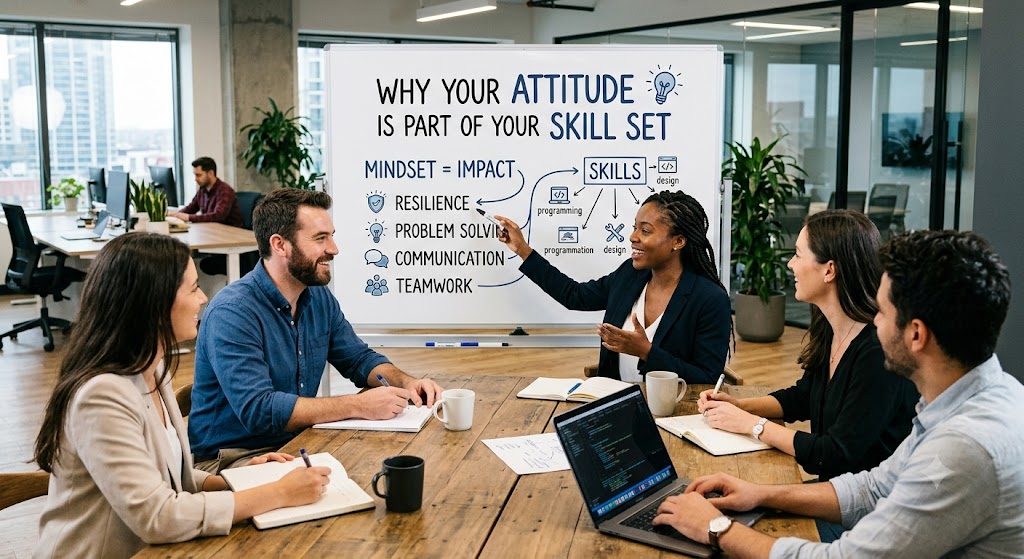
Why Your Attitude Is Part of Your Skill Set
Attitude is one of the most underestimated factors behind long term success. Most people spend years improving technical abilities, collecting certificates, watching tutorials, attending seminars and gaining experience, yet they overlook the one quality that quietly influences every opportunity they receive. Skills may get your foot through the door, but attitude often determines whether you are invited to stay. This is why your attitude is not separate from your skill set. It is an essential part of it.
Many people think of skills as the practical things they can perform. A programmer writes code. A designer creates graphics. A mechanic repairs engines. A teacher explains concepts. A doctor diagnoses illnesses. While these are certainly skills, they are only part of what employers, clients and business partners evaluate. They also pay close attention to how you communicate, how you respond under pressure, how you treat people, whether you are dependable, whether you can solve problems without unnecessary drama and whether you bring positive energy into every interaction.
Imagine two people with exactly the same qualifications. They attended the same university, earned similar grades, completed the same professional training and have nearly identical work experience. One is respectful, eager to learn, accepts feedback gracefully, arrives on time, keeps promises and encourages those around them. The other complains constantly, blames others for mistakes, resists correction, misses deadlines and creates unnecessary conflict. Even though their technical skills are equal, very few employers would choose the second person over the first. Their attitude has become part of their professional value.
This happens every day in businesses around the world. Companies invest significant resources in recruiting talented people, but many dismiss employees not because they lack technical knowledge but because they possess poor attitudes. Being difficult to work with, refusing responsibility, disrespecting customers or resisting teamwork eventually becomes more expensive than any technical mistake. A great attitude reduces friction. It creates trust, improves communication and strengthens relationships. These qualities are valuable in every profession.
One reason attitude matters so much is because technical skills can often be taught faster than character. It is generally easier to train someone on a new software application than it is to teach them humility. It is easier to explain a business process than to change years of negative thinking. Employers understand this reality. Many hiring managers openly admit they hire for attitude and train for skill because they know knowledge can be developed while mindset often takes much longer to change.
People who understand this gain a significant advantage throughout their careers. They realise that every conversation is part of their reputation. Every response to criticism reveals emotional maturity. Every challenge presents an opportunity to demonstrate resilience. Every interaction with customers becomes a reflection of professionalism. Over time these seemingly small behaviours become powerful indicators of trustworthiness.
Attitude also determines how quickly you improve your existing skills. Two people can take the same online course and receive completely different results. The person with a positive learning attitude asks questions, practises consistently, accepts mistakes as lessons and continues despite frustration. The other gives up after the first obstacle, complains about the difficulty and concludes they simply are not talented enough. Their different attitudes produce different outcomes even though they had access to the same educational resources.
This explains why some individuals appear to learn faster than others. Their advantage is often not greater intelligence but greater persistence. They approach learning with curiosity instead of fear. They are willing to look inexperienced temporarily because they understand growth requires discomfort. Their attitude accelerates the development of their skills.
Confidence also grows from attitude rather than ability alone. Many people assume confidence comes after becoming highly skilled, but in reality confidence often begins with believing improvement is possible. A positive attitude encourages people to attempt difficult tasks, volunteer for responsibilities and embrace opportunities others avoid. As they gain experience, their confidence naturally increases. Without the right attitude they may never take the first step.
Attitude becomes even more important in customer facing roles. Customers rarely judge businesses solely by the quality of the final product. They remember how they were treated throughout the experience. A restaurant may serve excellent food, but rude service leaves a lasting negative impression. A web developer may create an outstanding website, but poor communication frustrates the client. A consultant may possess exceptional knowledge, but arrogance damages trust. Professional success depends on combining technical excellence with emotional intelligence.
Business owners especially cannot afford to ignore attitude. Every employee becomes an ambassador for the company. One negative interaction can damage a reputation that took years to build. Customers often assume an employee’s behaviour reflects the company’s culture. This is why successful organisations invest heavily in developing positive workplace attitudes alongside technical competence.
Attitude influences leadership as well. People naturally follow individuals who remain calm during uncertainty, communicate honestly and encourage collaboration. Technical expertise may earn respect, but attitude inspires loyalty. Leaders who remain approachable, humble and accountable create environments where people perform at their best. Employees become more willing to contribute ideas, admit mistakes and pursue innovation because they feel psychologically safe.
The opposite is equally true. Leaders with negative attitudes create cultures filled with fear, blame and hesitation. Employees spend more energy protecting themselves than solving problems. Creativity declines because people fear criticism. Productivity suffers because communication becomes strained. Eventually even highly skilled employees seek opportunities elsewhere simply to escape the unhealthy environment.
One remarkable characteristic of attitude is that it multiplies the effectiveness of every other skill you possess. Imagine communication skills combined with patience. Negotiation skills combined with empathy. Technical expertise combined with humility. Sales ability combined with honesty. Creativity combined with resilience. These combinations make professionals exceptionally valuable because people enjoy working with them repeatedly.
Networking provides another example. Many individuals focus exclusively on meeting influential people while ignoring the impression they leave behind. Relationships are rarely built on qualifications alone. They grow through reliability, kindness, generosity and professionalism. Someone may forget your impressive presentation, but they will remember whether you treated them with respect. Positive attitudes often create opportunities that formal applications never could.
Attitude becomes particularly visible during difficult situations. Anyone can remain cheerful when everything is going well. Real character emerges when projects fail, deadlines become stressful, customers complain or unexpected setbacks occur. People who maintain composure, accept responsibility and focus on solutions distinguish themselves from those who panic, complain or assign blame. Employers remember these moments because they reveal who can be trusted during future challenges.
Many entrepreneurs discover this lesson after launching their businesses. Running a business involves constant uncertainty. Sales fluctuate. Unexpected expenses appear. Competitors emerge. Technology changes. Customers have different expectations. Without resilience and optimism, these pressures become overwhelming. Entrepreneurs who survive long enough to succeed usually possess attitudes that allow them to persist despite repeated disappointments.
Attitude also affects innovation. Curious people constantly ask how things can improve. They seek feedback instead of avoiding it. They remain open to different perspectives. This willingness to learn fuels creativity because innovation often begins with questioning existing assumptions. Negative attitudes, on the other hand, encourage rigid thinking. Individuals become resistant to new ideas simply because change feels uncomfortable.
In today’s rapidly changing economy, adaptability has become one of the most valuable professional qualities. Entire industries evolve within a few years. Artificial intelligence continues transforming workplaces. New technologies appear regularly. Professionals who maintain flexible attitudes embrace continuous learning rather than fearing change. They understand that remaining valuable requires ongoing development. Their attitude protects their future employability.
Humility deserves special attention because it is often misunderstood. Some people believe humility means undervaluing yourself. Genuine humility is actually the willingness to recognise there is always more to learn. Highly skilled professionals remain teachable because they understand expertise is never complete. This mindset allows them to continue improving while others become stagnant through overconfidence.
Feedback provides another clear example of attitude at work. Constructive criticism can either become a stepping stone or a stumbling block depending on how it is received. Professionals with healthy attitudes listen carefully, evaluate suggestions objectively and implement improvements where appropriate. Those with defensive attitudes interpret every suggestion as a personal attack. Consequently, one continues growing while the other remains limited by pride.
Time management also reflects attitude more than many people realise. Meeting deadlines demonstrates respect for other people’s time. Being punctual communicates reliability. Following through on commitments builds trust. These behaviours require discipline, but they also reveal a mindset that values responsibility. Over time reliability becomes part of a person’s professional identity.
Attitude affects collaboration because no meaningful achievement happens entirely in isolation. Even freelancers depend on clients, suppliers, partners or audiences. Every successful organisation depends on cooperation among individuals with different personalities and strengths. Respectful communication, willingness to compromise and genuine appreciation for others’ contributions strengthen these relationships. Technical brilliance loses much of its impact when accompanied by constant conflict.
Many professionals unknowingly limit their own careers through subtle negative attitudes. Some assume certain tasks are beneath them. Others refuse to help colleagues because it is not officially part of their job description. Some reject new responsibilities because they fear failure. Others constantly compare themselves with co workers instead of improving themselves. These habits gradually shape reputations that close doors long before individuals recognise the consequences.
Positive attitudes do not require pretending life is perfect. They involve choosing constructive responses even when circumstances are difficult. Optimistic professionals acknowledge problems while actively seeking solutions. They remain realistic without becoming cynical. They encourage others without ignoring challenges. This balance creates credibility because people trust those who combine honesty with hope.
Attitude is especially important for freelancers and business owners because every interaction influences future referrals. Clients often recommend professionals who made the working relationship enjoyable, not merely those who delivered acceptable results. Clear communication, patience, responsiveness and professionalism create memorable experiences. These qualities transform one time customers into loyal advocates.
The digital age has made attitude even more visible. Emails, online meetings, social media interactions and customer reviews all reflect personal character. A careless message written in frustration can damage relationships instantly. Conversely, respectful communication during disagreements often earns admiration. Digital professionalism has become an essential extension of attitude.
Young professionals entering the workforce sometimes believe impressive qualifications alone guarantee success. While education remains valuable, employers increasingly seek individuals who can collaborate effectively, communicate clearly and demonstrate emotional maturity. Technical knowledge opens opportunities, but interpersonal attitudes often determine promotions and leadership responsibilities.
Successful teams intentionally cultivate positive attitudes because they understand collective behaviour influences overall performance. Encouragement increases motivation. Gratitude strengthens relationships. Accountability improves results. Respect reduces unnecessary conflict. Teams where these attitudes flourish generally outperform equally talented groups burdened by negativity and distrust.
Another overlooked aspect of attitude is integrity. Honest professionals admit mistakes rather than hiding them. They honour commitments even when inconvenient. They choose ethical decisions despite short term disadvantages. Over time integrity becomes one of the strongest professional assets because trust cannot be purchased. Once earned, it attracts opportunities that technical competence alone may never achieve.
Self awareness also contributes significantly to professional attitude. Individuals who recognise their strengths and weaknesses make better decisions about learning and collaboration. They know when to seek help, when to lead and when to listen. This balance prevents arrogance while encouraging continuous improvement.
Gratitude may seem unrelated to professional success, yet it profoundly shapes attitude. Grateful individuals appreciate opportunities rather than feeling permanently entitled. They acknowledge support from colleagues, mentors and clients. This appreciation strengthens relationships because people naturally enjoy working with those who value their contributions.
Patience represents another powerful professional attitude. Significant achievements rarely happen overnight. Careers develop gradually. Businesses require time to build trust. Expertise emerges through consistent practice. Patient individuals remain committed during slow progress because they understand meaningful success often involves delayed rewards.
Curiosity deserves equal recognition. Curious professionals constantly explore better methods, emerging technologies and alternative perspectives. They ask thoughtful questions instead of assuming they already possess every answer. Their openness enables innovation while keeping their skills relevant in changing industries.
Courage also belongs within the broader concept of attitude. Many opportunities require stepping beyond familiar routines. Speaking at conferences, applying for leadership roles, launching businesses or learning challenging technologies all involve uncertainty. Courageous attitudes transform fear into action. While fear never completely disappears, it no longer controls important decisions.
Respect remains one of the simplest yet most influential attitudes anyone can develop. Treating receptionists with the same courtesy shown to executives demonstrates genuine character. Listening carefully before responding communicates value. Acknowledging others’ perspectives encourages productive conversations even when disagreements exist. Respect consistently strengthens professional reputations.
Generosity creates surprising career benefits as well. Professionals who willingly share knowledge often become recognised experts because teaching reinforces their own understanding while expanding their networks. Helping colleagues solve problems builds goodwill that frequently returns through unexpected opportunities.
Resilience perhaps defines long term success more than any single technical skill. Every career includes disappointments. Job applications are rejected. Business proposals fail. Products receive criticism. Economic conditions change unexpectedly. Individuals who recover quickly continue progressing while others abandon promising paths prematurely. Resilience transforms temporary setbacks into valuable experience.
Personal responsibility represents another attitude that separates exceptional professionals. Instead of blaming circumstances, they ask what they can improve. Instead of waiting for perfect conditions, they make the best use of available resources. This proactive mindset accelerates growth because energy remains focused on solutions rather than excuses.
One common misconception is that attitude cannot be changed. In reality, attitudes evolve through intentional daily choices. Choosing gratitude over entitlement, learning over defensiveness, responsibility over blame and persistence over surrender gradually reshapes behaviour. Like any valuable skill, positive attitudes strengthen through consistent practice.
Parents, teachers and mentors should remember this lesson when guiding young people. Encouraging curiosity, responsibility, kindness and perseverance may ultimately contribute more to lifelong success than memorising information alone. Academic excellence matters, but combining knowledge with healthy attitudes prepares individuals for sustainable achievement.
Every interview, meeting, presentation and conversation silently communicates your attitude before anyone fully evaluates your technical abilities. Your willingness to listen, your respect for others, your preparation, your honesty and your enthusiasm all become part of your professional identity. These behaviours influence decisions in ways that certificates alone never can.
The most accomplished professionals rarely succeed because they possess extraordinary talent alone. They consistently demonstrate reliability, humility, resilience, curiosity, discipline and integrity. These attitudes amplify every technical skill they acquire throughout their careers. They become trusted advisors, respected leaders and dependable collaborators because people know exactly what to expect from them.
Your attitude accompanies every skill you develop. It influences how quickly you learn, how effectively you communicate, how successfully you collaborate and how consistently you perform under pressure. It determines whether people recommend you, trust you and choose to work with you again. While technical knowledge may become outdated as industries evolve, positive attitudes remain valuable across every profession and every generation.
The next time you think about improving yourself professionally, do not focus exclusively on acquiring another certificate or mastering another software application. Continue developing those valuable abilities, but give equal attention to your mindset. Become more dependable. Become more teachable. Become more patient. Become more respectful. Become more resilient. Become more accountable. These qualities are not merely personality traits. They are professional assets that increase the value of every other skill you possess.
Ultimately, your attitude is not an optional extra added to your abilities after everything else is complete. It is woven into every conversation you have, every challenge you face, every opportunity you pursue and every relationship you build. People may initially notice what you know, but they remember how you made them feel, how consistently you delivered and how professionally you conducted yourself. That is why your attitude is not separate from your skill set. It is one of the most powerful skills you will ever develop, and investing in it may produce greater returns than any qualification you ever earn.

EarnSmartOnline.com.ng is dedicated to helping readers make smarter financial decisions through practical guides on online income, personal finance, technology, digital business, and wealth creation. Our goal is to provide reliable, easy-to-understand, and actionable content that empowers individuals to earn smarter, build sustainable income streams and achieve long-term financial success.
Recommended: Start Earning Online
- Ultimate Affiliate Marketing Program — learn affiliate marketing with a done-for-you sales system ($15). Check it out
- The Newbie Affiliate Guide — the beginner-friendly starter guide (~$6.68). Check it out
- Easy Dollar Maker — earn in dollars uploading AI images and videos from your phone ($17). Check it out
Disclosure: These are affiliate links. If you buy through them, I may earn a commission at no extra cost to you.



