
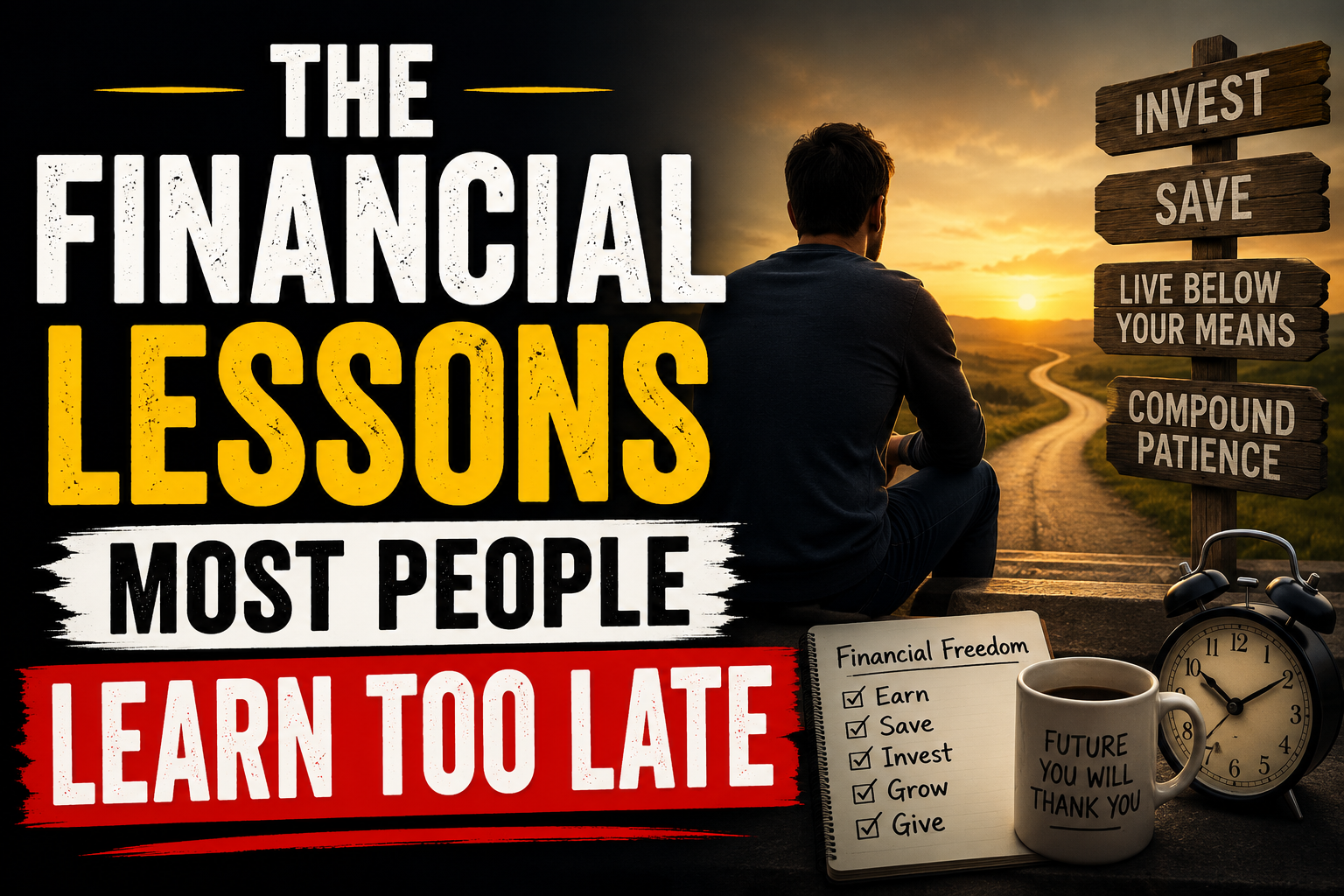
The Financial Lessons Most People Learn Too Late
Money affects almost every part of human life, yet many people spend years chasing it without truly understanding how it works. Some people work hard for decades only to realize later that effort alone is not enough to create financial stability. Others earn huge amounts of money but still remain trapped in stress, debt, and constant struggle. The painful truth is that many of the most important financial lessons are often learned too late, usually after years of mistakes, missed opportunities, and unnecessary suffering.
One of the biggest financial lessons people learn late is that income and wealth are not the same thing. Many people spend their entire lives trying to increase their salary without realizing that wealth is built through proper money management, discipline, and long term financial planning. A person can earn a massive income and still be financially unstable if they spend everything they make. Another person with a modest income may quietly build financial security through saving, investing, and controlled spending. The difference is not always about how much money enters your account but how wisely you manage what you already have.
Another painful lesson many people discover late is that lifestyle inflation is dangerous. The moment many people begin earning more money, their expenses immediately rise. They move into more expensive houses, buy newer cars, spend more on entertainment, and start trying to impress people who are not paying their bills. Instead of using increased income to build investments or emergency savings, they create a more expensive lifestyle that traps them financially. Years later, they realize they have been working harder only to maintain appearances instead of building real freedom.
Most people also learn too late that debt can quietly destroy their future. Debt often begins with small decisions that appear harmless. A person borrows money to buy things they cannot truly afford, believing they will pay it back easily. Over time, interest grows, financial pressure increases, and stress becomes constant. Many people become trapped in cycles where they are working only to pay old debts while creating new ones at the same time. The emotional damage caused by financial pressure is something many people never anticipate until they experience it themselves.
Another financial lesson people discover late is that financial emergencies are not rare events. Many individuals live as though unexpected problems will never happen to them. They spend every paycheck without preparing for difficult times. Then suddenly, a job loss, medical issue, economic crisis, or family emergency appears and exposes how fragile their finances truly are. An emergency fund may seem unnecessary during comfortable periods, but during difficult moments it becomes the difference between survival and complete financial collapse.
Many people also learn too late that financial freedom requires patience. Modern society encourages instant gratification. People are constantly surrounded by advertisements and social media content pushing them to buy more, spend more, and live luxuriously immediately. Very few people are taught the value of delayed gratification. Building wealth is often slow, repetitive, and sometimes boring. It requires consistency over many years. Unfortunately, many people abandon financial discipline because they expect fast results. They later discover that true financial security is usually the product of long term habits rather than quick success.
Another harsh lesson is that financial ignorance is expensive. Many people spend years in school learning subjects they may never use while receiving little or no practical education about money management, investing, taxes, savings, or business. Because of this, countless adults enter the real world completely unprepared for financial responsibility. Some people sign terrible loan agreements without understanding interest rates. Others waste years avoiding investments simply because nobody explained them properly. Financial ignorance creates fear, and fear often prevents people from making decisions that could improve their lives.
People also learn late that trying to impress others is one of the fastest ways to remain broke. Society rewards appearances. Expensive phones, luxury fashion, flashy cars, and public displays of wealth often receive admiration and attention. Many individuals become addicted to maintaining an image even when they are struggling privately. They spend money they do not have to create lifestyles they cannot sustain. Years later, they realize many of the people they tried to impress were never truly concerned about their well being in the first place.
Another financial lesson most people learn late is the importance of multiple streams of income. Depending entirely on one source of income can be dangerous. Jobs can disappear unexpectedly, businesses can fail, and economic conditions can change rapidly. People who rely on a single paycheck often discover how vulnerable they are during financial crises. Multiple income streams provide stability, flexibility, and protection against uncertainty. Unfortunately, many people wait until they face hardship before understanding the importance of diversification.
Many people also realize too late that small financial habits shape their future more than occasional big decisions. A person may believe wealth is built through one major opportunity, but in reality daily habits often matter more. Consistent saving, avoiding unnecessary spending, investing regularly, and maintaining discipline over time can completely transform a person’s financial situation. In the same way, small negative habits such as constant impulse buying, gambling, overspending, or ignoring budgets can quietly destroy financial progress over the years.
Another painful lesson is that time is one of the most valuable financial assets in existence. Young people often underestimate the power of starting early. Investing small amounts consistently over many years can create enormous financial growth because of compound interest. However, many people delay saving and investing because retirement feels far away. Years later, they realize they cannot recover the time they wasted. Money lost can sometimes be earned again, but lost time can never be replaced.
People also learn late that emotions and money are deeply connected. Emotional spending is one of the hidden causes of financial instability. Some people spend money when they are stressed, lonely, depressed, or seeking validation. Others make impulsive financial decisions based on excitement, fear, or pressure from others. Financial success often requires emotional discipline as much as intellectual knowledge. A person who cannot control their emotions may struggle financially regardless of how much they earn.
Another lesson many individuals discover too late is that not everyone who looks successful is financially secure. Social media has created a culture where people constantly compare themselves to carefully edited versions of other people’s lives. Expensive vacations, designer clothing, luxury cars, and glamorous lifestyles are often presented as evidence of success. However, appearances can be misleading. Some people are deeply in debt while trying to maintain the illusion of prosperity. Comparing your financial journey to others can create unnecessary pressure and poor decisions.
Many people also realize late that financial freedom is closely tied to personal responsibility. It is easy to blame governments, family backgrounds, economic systems, or bad luck for financial struggles. While external factors certainly matter, personal choices still play a massive role in shaping financial outcomes. Spending habits, discipline, consistency, education, and decision making all influence financial stability. Some people spend years waiting for external rescue while ignoring the importance of personal accountability.
Another important lesson is that financial success often requires sacrifice. Many people want wealth without discomfort. They want success without discipline. However, financial growth usually demands difficult choices. It may require avoiding unnecessary luxury, reducing entertainment spending, waking up earlier, learning new skills, or working extra hours temporarily. Sacrifice is uncomfortable, which is why many people avoid it. Unfortunately, avoiding short term sacrifice often leads to long term struggle.
People also learn late that financial stress affects mental and emotional health. Constant financial pressure can damage relationships, increase anxiety, reduce confidence, and create emotional exhaustion. Money problems can quietly affect sleep, happiness, and overall quality of life. Many individuals spend years underestimating the emotional weight of poor financial management until stress begins affecting every area of their lives.
Another lesson many people discover late is that opportunities rarely wait forever. Some people spend years procrastinating because they believe there will always be another chance. They delay investing, starting businesses, learning valuable skills, or taking financial risks that could improve their future. Over time, opportunities disappear, industries change, and regret begins to grow. Fear of failure often prevents people from taking action, but fear itself can become one of the greatest financial obstacles.
Many individuals also learn too late that financial independence creates freedom beyond money itself. Financial stability gives people choices. It allows individuals to leave toxic jobs, avoid desperate decisions, support loved ones, and live with greater peace of mind. Without financial control, many people remain trapped in situations they dislike simply because they cannot afford alternatives. Money alone does not guarantee happiness, but financial instability can create enormous suffering.
Another harsh lesson is that wealth building is more about consistency than perfection. Some people avoid starting because they believe they need perfect conditions. They wait for higher salaries, ideal opportunities, or complete certainty before taking financial action. Meanwhile, years pass without progress. Financial improvement usually begins with small consistent steps rather than dramatic overnight success. People who make gradual improvements over time often achieve far more than those who constantly wait for the perfect moment.
In the end, the financial lessons most people learn too late are usually connected to discipline, patience, responsibility, and long term thinking. Many people spend years chasing temporary pleasure while ignoring permanent consequences. Others sacrifice their future trying to maintain appearances for strangers. Some work endlessly without understanding how to build real wealth, while others postpone important financial decisions until time is no longer on their side.
The painful reality is that financial mistakes can follow people for years, but the good news is that awareness can change everything. A person who understands these lessons early has a greater chance of avoiding unnecessary struggle and building a more secure future. Financial wisdom is not reserved for the wealthy or highly educated. It is available to anyone willing to learn, remain disciplined, and think beyond immediate satisfaction.
At the end of life, many people realize too late that money itself was never the ultimate goal. The real goal was freedom, peace of mind, security, and the ability to live without constant fear of financial collapse. Those who understand this early often make better decisions, avoid unnecessary distractions, and create lives built on stability rather than illusion.

EarnSmartOnline.com.ng is dedicated to helping readers make smarter financial decisions through practical guides on online income, personal finance, technology, digital business, and wealth creation. Our goal is to provide reliable, easy-to-understand, and actionable content that empowers individuals to earn smarter, build sustainable income streams and achieve long-term financial success.
Recommended: Start Earning Online
- Ultimate Affiliate Marketing Program — learn affiliate marketing with a done-for-you sales system ($15). Check it out
- The Newbie Affiliate Guide — the beginner-friendly starter guide (~$6.68). Check it out
- Easy Dollar Maker — earn in dollars uploading AI images and videos from your phone ($17). Check it out
Disclosure: These are affiliate links. If you buy through them, I may earn a commission at no extra cost to you.



