
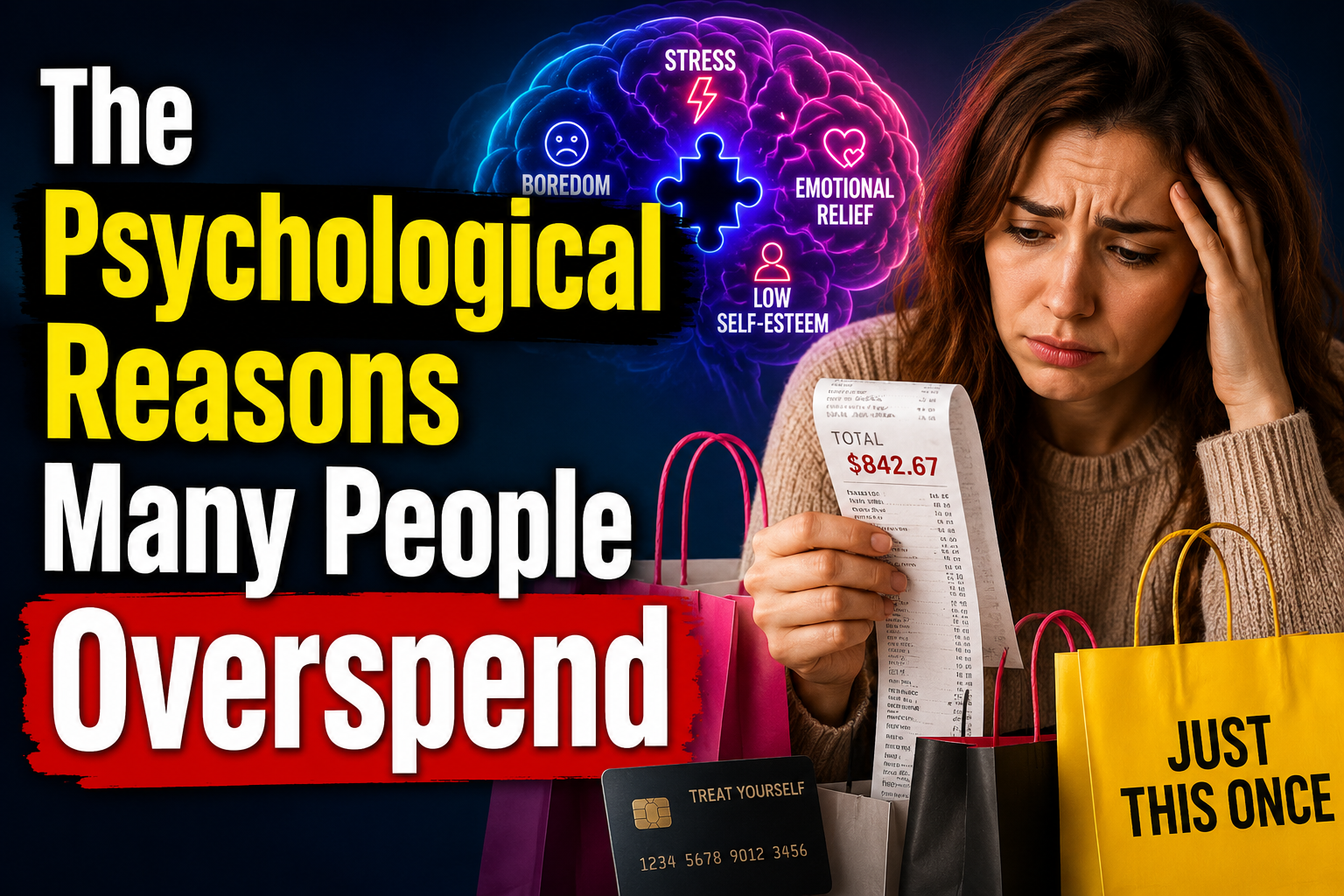
The Psychological Reasons Many People Overspend
Money has always been deeply connected to human emotions, behavior, insecurity, and identity. Many people believe overspending happens simply because someone lacks discipline, but the truth is far more complicated. Overspending is often rooted in psychology rather than income level alone. Some people earn very little and still manage money wisely, while others earn huge salaries yet remain trapped in debt and financial stress. This proves that spending habits are not controlled only by how much money enters a person’s account, but also by the emotional and psychological forces influencing financial decisions every day.
One major psychological reason many people overspend is emotional compensation. Human beings naturally look for ways to feel better whenever they experience sadness, stress, loneliness, frustration, or disappointment. For many people, buying things creates temporary emotional relief. Shopping gives the brain a short burst of excitement and satisfaction, making people feel happier for a moment. This is why some individuals buy unnecessary clothes, gadgets, shoes, food, or luxury items immediately after going through emotional pain or stress. The purchase becomes a form of escape from reality. Unfortunately, the emotional satisfaction usually disappears quickly, leaving the person with regret, guilt, or financial pressure afterward. This cycle repeats itself because the brain remembers the temporary pleasure associated with spending money.
Another powerful psychological factor behind overspending is social comparison. Human beings naturally compare themselves with others, especially in modern society where social media constantly exposes people to carefully edited lifestyles. Every day, millions of people see pictures of vacations, expensive cars, luxury apartments, designer clothing, and extravagant lifestyles online. Even when people know that social media is often exaggerated, the pressure still affects them emotionally. Many individuals begin to feel left behind, unsuccessful, or inferior when they compare their own lives with others. This emotional discomfort pushes them to spend money trying to “keep up” with friends, colleagues, celebrities, or influencers. Instead of buying things because they genuinely need them, they buy things to maintain appearances and gain social approval.
Low self esteem is another hidden psychological reason many people overspend. Some individuals believe expensive possessions increase their value or make them appear more important. When people feel insecure about themselves internally, they sometimes try to use material possessions to create confidence externally. This is why some people buy expensive phones they cannot comfortably afford, wear designer brands while struggling financially, or spend heavily on appearances while ignoring savings and investments. Deep down, the spending behavior is often connected to a desire for validation, acceptance, or recognition from others. The problem is that external possessions rarely solve internal insecurity permanently, so the spending continues endlessly.
Childhood experiences also play a huge role in shaping spending habits later in life. People who grew up in extreme lack sometimes develop unhealthy relationships with money once they start earning. Some become overly fearful and refuse to spend reasonably, while others begin spending excessively because they never had access to certain things growing up. A person who was denied many pleasures during childhood may unconsciously overcompensate as an adult by buying excessively whenever they have money. In some cases, people who witnessed financial instability in their homes develop emotional attachment to spending because it gives them a temporary feeling of control or comfort.
Another important psychological reason behind overspending is instant gratification. Human beings naturally prefer immediate pleasure over long term rewards. The brain enjoys receiving quick satisfaction now rather than waiting patiently for future benefits. Saving money, investing wisely, and building financial stability require patience and delayed gratification, which many people struggle with psychologically. It feels easier to buy something immediately than to wait months or years for long term financial growth. This explains why some individuals keep spending impulsively even when they know the financial consequences may hurt them later. The excitement of immediate reward often overpowers logical financial thinking in the moment.
Marketing and advertising also exploit human psychology heavily. Modern businesses understand emotional triggers extremely well. Companies spend billions studying how people think, feel, and behave. Advertisements are carefully designed to create emotional desire rather than logical need. People are constantly exposed to messages suggesting happiness, success, attractiveness, confidence, and social status can be achieved through buying products. Limited time offers, discounts, flash sales, and luxury branding create psychological urgency that pushes consumers to spend impulsively. Many people end up purchasing things not because they truly need them, but because clever marketing manipulated their emotions and perception.
Another psychological factor that contributes to overspending is financial denial. Some people avoid facing the reality of their financial situation because it creates anxiety or discomfort. Instead of budgeting carefully or reviewing expenses honestly, they continue spending recklessly while hoping things somehow improve later. This behavior often comes from fear, shame, or emotional avoidance. Looking at bank balances, debt levels, or financial mistakes forces people to confront uncomfortable truths, so some individuals unconsciously escape through more spending rather than discipline. Unfortunately, this creates deeper financial problems over time.
Stress and mental exhaustion also influence spending behavior significantly. Many people make poor financial decisions when they are emotionally drained or mentally overwhelmed. After stressful workdays or difficult personal experiences, the brain seeks comfort and reward. Shopping, ordering expensive meals, or making impulse purchases becomes a coping mechanism. This explains why some people spend more during emotionally difficult periods in their lives. Financial discipline requires mental energy, and when people are emotionally exhausted, their self control weakens considerably.
Another common psychological reason for overspending is the fear of missing out. People often spend money because they fear being excluded socially or missing experiences others are enjoying. This fear has become even stronger in the digital age where trends spread rapidly online. Whether it is fashion trends, gadgets, entertainment, vacations, or social events, many people spend beyond their means because they do not want to feel left out. The emotional discomfort of feeling excluded sometimes becomes stronger than the desire for financial stability.
Identity and personal image also influence spending patterns heavily. Many individuals attach their identity to what they own. Society often judges people based on appearance, lifestyle, and possessions, causing many individuals to believe they must maintain certain standards to be respected. Some people spend excessively to project success, intelligence, class, or influence. In reality, this creates a dangerous financial cycle because maintaining appearances often becomes more important than building real wealth. Many financially struggling individuals look wealthy externally while secretly battling debt and financial pressure internally.
Poor financial education is another major contributor to overspending. Many people were never taught healthy money management skills growing up. Schools often focus heavily on academic subjects while ignoring practical financial education. As a result, many adults enter the workforce without understanding budgeting, saving, investing, debt management, or financial planning. Without proper financial knowledge, people become vulnerable to emotional spending, bad financial habits, and poor decision making. Financial ignorance combined with emotional pressure creates dangerous spending behavior that becomes difficult to control.
Another psychological issue connected to overspending is reward conditioning. People often train themselves to associate spending with reward or celebration. After achieving something small, they immediately feel the need to buy something as a reward. While rewarding oneself occasionally is normal, excessive reward spending creates unhealthy habits over time. The brain starts linking happiness and achievement directly to material purchases, making it difficult to feel satisfied without spending money frequently.
Some people also overspend because they believe money is meant to be enjoyed immediately before life changes unexpectedly. This mindset sometimes develops after experiencing hardship, loss, uncertainty, or seeing others struggle suddenly. While enjoying life is important, this mentality can become dangerous when it eliminates financial planning entirely. Individuals begin prioritizing temporary enjoyment over long term stability, leaving themselves financially vulnerable during emergencies or difficult periods.
Peer pressure remains another major psychological influence on spending behavior. Friends, family members, colleagues, and social circles often shape financial habits indirectly. When people surround themselves with individuals constantly spending on luxury lifestyles, expensive outings, or unnecessary trends, they may feel pressured to match that lifestyle even when their income cannot sustain it comfortably. Humans naturally seek belonging and acceptance, which makes social influence extremely powerful financially.
Overspending can also become addictive psychologically. The excitement associated with buying new things activates pleasure centers in the brain similarly to other addictive behaviors. Over time, some people begin depending on shopping or spending for emotional stimulation. They constantly seek the emotional “high” associated with buying something new. Unfortunately, like many addictions, the satisfaction becomes temporary, leading to repeated behavior and increasing financial damage.
The modern digital economy has also made overspending easier than ever before. Mobile banking, online shopping, credit systems, and instant payment platforms remove the physical feeling of losing money during transactions. In the past, handing over physical cash created stronger emotional awareness while spending. Today, many people spend digitally without fully processing how much money is leaving their accounts. This psychological distance from money encourages careless spending behavior.
Breaking free from overspending requires more than simply earning more money. It requires deep self awareness, emotional control, financial education, and behavioral change. People must learn to identify the emotional triggers influencing their spending habits. Instead of using money to solve emotional problems temporarily, healthier coping mechanisms should be developed. Budgeting, delayed gratification, goal setting, and conscious spending habits help build stronger financial discipline over time.
Financial freedom is not controlled only by income level. Many high income earners remain trapped financially because emotional spending destroys their progress. At the same time, some low income earners gradually build stability because they understand discipline and self control. The real battle is often psychological rather than financial. Once individuals understand the emotional and mental forces driving their spending behavior, they gain greater power to control their finances wisely and build a more secure future.

EarnSmartOnline.com.ng is dedicated to helping readers make smarter financial decisions through practical guides on online income, personal finance, technology, digital business, and wealth creation. Our goal is to provide reliable, easy-to-understand, and actionable content that empowers individuals to earn smarter, build sustainable income streams and achieve long-term financial success.
Recommended: Start Earning Online
- Ultimate Affiliate Marketing Program — learn affiliate marketing with a done-for-you sales system ($15). Check it out
- The Newbie Affiliate Guide — the beginner-friendly starter guide (~$6.68). Check it out
- Easy Dollar Maker — earn in dollars uploading AI images and videos from your phone ($17). Check it out
Disclosure: These are affiliate links. If you buy through them, I may earn a commission at no extra cost to you.



