
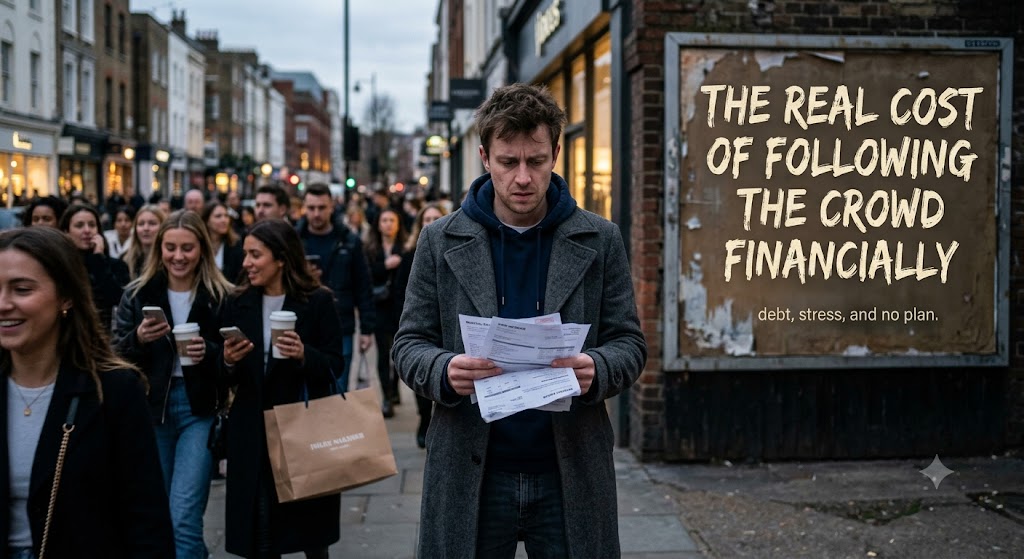
The Real Cost of Following the Crowd Financially
It is easy to believe that if millions of people are doing the same thing, then it must be the right thing to do. Human beings naturally seek acceptance, belonging, and security. From childhood, we learn by observing others. We copy how people speak, dress, think, and behave. While this instinct helps us fit into society, it becomes dangerous when it controls our financial decisions. One of the biggest reasons many people remain trapped in financial struggles is not because they lack intelligence or opportunity but because they spend their entire lives following the financial habits of the crowd. The real cost of following the crowd financially is much higher than most people imagine. It quietly steals opportunities, delays wealth, creates unnecessary debt, and keeps generations trapped in cycles that seem impossible to escape.
Many people assume that if everyone around them is living a certain way, then that lifestyle must be normal. If everyone borrows money for expensive weddings, they believe borrowing is acceptable. If everyone upgrades their phone every year, they feel they should do the same. If everyone rushes to buy luxury items they cannot comfortably afford, they feel left behind if they refuse. This silent pressure influences countless financial decisions every single day. Unfortunately, the crowd is often not moving toward financial freedom. It is simply moving together toward financial stress.
One of the greatest financial myths is that popularity equals wisdom. History repeatedly proves the opposite. During financial bubbles, crowds rush into investments they barely understand. During economic uncertainty, crowds panic and make emotional decisions. During periods of consumer excitement, crowds spend recklessly. Those who simply follow without thinking usually pay the highest price once reality catches up.
Financial success rarely comes from copying average behaviour. If average financial habits produced extraordinary wealth, financial independence would be common. Instead, statistics around the world continue to show rising personal debt, increasing dependence on loans, insufficient retirement savings, and growing financial anxiety. If the majority are struggling financially, blindly following their habits cannot logically produce different results.
One of the hidden costs of following the crowd is the loss of independent thinking. Every financial decision begins in the mind before it appears in the wallet. When people stop asking questions and simply imitate others, they surrender control over their financial future. Instead of asking whether a purchase adds value, they ask whether everyone else owns it. Instead of asking whether an investment fits their goals, they ask whether everyone is talking about it. Instead of building personal financial strategies, they copy lifestyles that were never designed for their income, responsibilities, or future plans.
Social media has amplified this problem beyond anything previous generations experienced. Every day people scroll through carefully edited photos showing luxury holidays, expensive cars, designer clothing, beautiful homes, and extravagant celebrations. Very few people display the loans, credit card debt, financial stress, sleepless nights, or sacrifices behind those images. The result is a dangerous illusion that everyone is living comfortably except the viewer. This illusion fuels unnecessary spending and encourages people to chase appearances instead of financial stability.
Many people work harder simply because they spend more, not because they are building wealth. There is a major difference between earning money and creating financial freedom. Someone earning a modest income while living below their means and investing consistently may become financially independent before someone earning five times as much but spending everything to impress others. The crowd often celebrates income while ignoring wealth. Income is what you earn. Wealth is what you keep and grow.
Following the crowd financially also creates opportunity costs that most people never notice. Every unnecessary purchase represents money that could have been invested. Every impulsive expense delays future financial growth. Small financial decisions repeated over many years create enormous differences in outcomes. The money spent trying to impress strangers today could have become the investment that funds future education, starts a business, purchases property, or creates passive income. Unfortunately, because opportunity costs are invisible, people rarely appreciate what they are sacrificing.
Consumer culture constantly encourages comparison. Advertisements rarely sell products alone. They sell identity, status, confidence, success, beauty, popularity, and happiness. The message is simple. Buy this and become someone people admire. This marketing strategy succeeds because people naturally want acceptance. Businesses understand that emotional spending is often stronger than logical spending. As a result, many consumers purchase feelings instead of value.
The crowd also teaches dangerous definitions of success. Many people assume success means driving expensive vehicles, wearing luxury brands, dining at expensive restaurants, or living in large houses regardless of affordability. In reality, these visible symbols often reveal nothing about financial health. Some wealthy individuals live modestly because they understand the importance of preserving capital. Some people who appear wealthy are actually overwhelmed by debt and financial obligations. Appearance and financial reality are often completely different.
One reason following the crowd is expensive is because trends constantly change. Fashion changes. Technology changes. Cars change. Interior designs change. Lifestyle expectations change. Those chasing trends find themselves spending endlessly because the finish line never exists. As soon as one trend becomes popular, another replaces it. The crowd continues running while financial stability moves further away.
Financial independence usually requires doing what feels uncomfortable in the short term. Saving money while friends spend freely may feel difficult. Investing while others consume may seem boring. Driving an older vehicle while colleagues upgrade theirs may invite criticism. Refusing unnecessary luxury purchases may attract unwanted opinions. Yet these uncomfortable decisions often produce comfortable futures. Meanwhile, today’s comfortable spending frequently creates tomorrow’s financial discomfort.
Peer pressure affects adults just as much as teenagers. The pressure simply changes form. Adults compare homes, careers, children’s schools, holidays, gadgets, clothing, weddings, birthdays, and even retirement lifestyles. Much of this comparison has little connection to genuine happiness. Instead, it becomes an endless competition where nobody truly wins because there will always be someone with more.
Financial discipline often requires learning to disappoint people. Friends may invite expensive outings that exceed your budget. Family members may expect financial contributions you cannot afford. Society may expect celebrations beyond your financial capacity. Choosing long-term financial health over short-term approval requires courage. Those who always seek approval often sacrifice their financial future without realising it.
One of the biggest mistakes people make is assuming that debt is simply part of modern life. While certain forms of borrowing can be strategic, unnecessary consumer debt often results from trying to match lifestyles that exceed personal income. Monthly payments become permanent companions. Interest quietly transfers wealth from borrowers to lenders. Financial flexibility disappears because future income has already been committed to yesterday’s purchases.
Following the crowd also discourages financial education. When everyone behaves similarly, few people question whether better alternatives exist. They never learn about investing, budgeting, entrepreneurship, compound growth, tax efficiency, or wealth preservation because the people around them rarely discuss these topics. Instead, conversations revolve around salaries, shopping, entertainment, and complaints about rising costs. The crowd normalises financial struggle rather than financial growth.
Many people believe earning more money will solve their financial problems. Higher income certainly helps, but without changing financial habits, increased earnings often lead to increased spending. This phenomenon, known as lifestyle inflation, traps many professionals. Every promotion creates bigger expenses instead of bigger investments. As income rises, financial freedom remains surprisingly distant because spending rises at the same pace.
Children often inherit financial habits more than financial knowledge. When parents consistently follow the crowd, children learn to repeat those patterns. They observe emotional spending, poor budgeting, lack of investing, and constant comparison with others. These behaviours become normal. Breaking generational financial cycles requires someone willing to think differently and make decisions independent of social pressure.
Another hidden cost of following the crowd financially is delayed dreams. Many people postpone starting businesses because everyone around them chooses traditional employment. Others delay investing because nobody in their social circle understands it. Some abandon creative ideas because they fear standing out. Years later they wonder what life might have looked like if they had trusted their own judgement instead of waiting for group approval.
The crowd usually reacts emotionally while successful investors often respond rationally. During market declines, fearful crowds sell valuable assets at low prices. During periods of excitement, enthusiastic crowds buy assets at inflated prices. Emotional decision-making repeatedly transfers wealth from impatient people to patient people. Financial history consistently rewards those who maintain discipline while others panic.
Building wealth often requires delayed gratification, a concept increasingly unpopular in a world built around instant results. Everything today encourages immediate satisfaction. Instant shopping. Instant entertainment. Instant food delivery. Instant loans. Instant approval through social media likes. Wealth creation, however, still follows slower principles. Saving, investing, learning, and building businesses require patience. Those unwilling to delay gratification often sacrifice long-term prosperity for temporary pleasure.
Another significant cost is lost confidence. People who constantly compare themselves with others often feel financially inadequate regardless of how much they earn. There will always be someone earning more, spending more, or displaying greater luxury. Comparison destroys gratitude and creates endless dissatisfaction. Financial peace comes not from having everything but from managing what you have wisely.
Many successful entrepreneurs began by ignoring conventional financial advice. While others focused on job security alone, they built businesses. While others spent profits immediately, they reinvested them. While others purchased liabilities, they acquired assets. Their willingness to think independently often became one of their greatest financial advantages. This does not mean every unconventional decision succeeds, but it highlights the importance of independent analysis rather than automatic imitation.
Financial courage is often misunderstood. Many assume courage means taking enormous investment risks. In reality, financial courage frequently means making ordinary decisions consistently despite public opinion. Saying no to unnecessary spending. Living below your means. Investing steadily over decades. Building emergency savings. Refusing to finance appearances. These decisions rarely attract attention, yet they quietly transform lives.
The pressure to keep up with others has existed for generations, but modern technology has intensified it. Every purchase can now be displayed instantly to hundreds or thousands of people. Success is increasingly measured by visibility instead of stability. This encourages performative wealth, where appearing rich becomes more important than becoming wealthy. Unfortunately, appearances generate applause while financial reality determines long-term security.
Many people underestimate how much financial stress affects every area of life. Money problems contribute to anxiety, relationship conflicts, reduced productivity, health challenges, and limited opportunities. Chasing lifestyles beyond one’s means may produce temporary excitement, but prolonged financial pressure eventually demands payment. Peace of mind is one of the greatest financial assets anyone can possess.
Another reason following the crowd is dangerous is that financial circumstances differ dramatically from person to person. Two neighbours may own similar houses while having completely different incomes, savings, investments, debts, and family responsibilities. Copying someone else’s spending without understanding their financial position is like wearing prescription glasses designed for someone else. What works for them may damage your financial vision.
There is tremendous power in defining success personally rather than socially. Success may mean owning your home without overwhelming debt. It may mean retiring early. It may mean funding your children’s education. It may mean travelling freely. It may mean supporting charitable causes. It may simply mean sleeping peacefully because your finances are under control. Personal financial goals should guide spending decisions rather than public expectations.
Financial literacy teaches people to distinguish between assets and liabilities. The crowd often accumulates liabilities because they create visible status. Assets, however, quietly generate future opportunities. Income-producing investments, businesses, valuable skills, intellectual property, and appreciating investments rarely receive the same public admiration as luxury purchases, yet they form the foundation of lasting wealth.
Every pound, dollar, euro, or naira has a job. It can either be consumed today or employed to produce greater value tomorrow. Following the crowd usually assigns money to consumption. Independent thinkers often assign money to production. This simple difference repeated consistently over decades creates dramatically different financial outcomes.
Many people confuse affordability with eligibility. Just because a bank approves a loan does not mean accepting it is wise. Just because a salary increase allows a larger mortgage does not mean taking one improves financial health. Financial institutions evaluate repayment ability, not necessarily long-term financial wisdom. Responsible financial decisions require considering future flexibility, not simply present affordability.
The crowd also tends to underestimate risk during prosperous times. When economies perform well, people become increasingly confident. Borrowing increases. Spending accelerates. Speculation becomes common. Then economic conditions change unexpectedly. Those who prepared cautiously survive difficult periods more comfortably than those who assumed good times would continue forever.
Emergency funds rarely receive public admiration because they are invisible. Nobody posts photographs celebrating six months of living expenses saved in the bank. Yet emergency savings protect families from financial disasters. Job losses, medical emergencies, business setbacks, and unexpected repairs become manageable rather than catastrophic. The crowd often ignores preparation because preparation lacks excitement until it becomes essential.
Financial independence ultimately represents freedom of choice. It allows people to choose meaningful work, support loved ones, handle emergencies, retire comfortably, and pursue opportunities without constant financial fear. Following the crowd frequently delays this freedom because it prioritises visible consumption over invisible preparation.
There is also a psychological cost to constantly following others. People lose confidence in their own judgement. They begin waiting for permission before making financial decisions. They seek validation instead of knowledge. Over time, this dependency weakens decision-making ability. Financial maturity requires accepting responsibility for both successes and mistakes rather than blaming the influence of others.
One powerful habit shared by financially successful individuals is intentional decision-making. They ask important questions before spending. Does this purchase improve my life? Is this aligned with my goals? What am I giving up by buying this today? Could this money produce greater value elsewhere? These simple questions interrupt emotional spending and encourage thoughtful choices.
Many people spend years trying to look successful instead of becoming successful. Looking successful often requires continuous spending. Becoming successful often requires continuous learning, patience, discipline, and sacrifice. The first attracts attention quickly. The second builds lasting financial security slowly.
Financial education changes how people view money. Instead of seeing money purely as something to spend, they begin viewing it as a tool capable of creating additional value. Every investment, business idea, skill development opportunity, or productive asset becomes another employee working on their behalf. This mindset separates consumers from wealth builders.
One reason wealth often appears concentrated among relatively few people is that those individuals frequently ignore popular financial behaviour. They study economics, understand risk, focus on long-term thinking, invest consistently, and avoid emotional decision-making. They recognise that financial success depends less on public opinion and more on sound principles applied consistently.
Following the crowd may feel safe because it reduces social discomfort. Standing alone invites criticism. People may question your decisions, your modest lifestyle, your investment choices, or your refusal to participate in unnecessary spending. Yet history repeatedly shows that meaningful financial progress often begins with the willingness to think differently before others recognise the wisdom behind those decisions.
The cost of financial conformity is not measured only in money. It is measured in missed opportunities, delayed dreams, unnecessary stress, limited freedom, reduced confidence, and unrealised potential. Every time someone chooses approval over wisdom, they pay a price that compounds over time. Conversely, every time someone chooses thoughtful financial discipline over social pressure, they invest in a future filled with greater stability and freedom.
The most valuable financial lesson is surprisingly simple. The crowd cannot determine your financial destiny unless you allow it. Your income belongs to you. Your goals belong to you. Your responsibilities belong to you. Your future belongs to you. Therefore, your financial decisions should also belong to you. Listen to advice, study successful principles, seek wisdom, and continue learning, but never surrender your financial future to the opinions of people who may not even have achieved the results you desire.
Real wealth is built quietly through thousands of ordinary decisions made consistently over many years. It is built every time you choose saving over unnecessary spending, investing over showing off, learning over guessing, patience over impulse, and purpose over popularity. These choices rarely receive applause because they happen behind the scenes. Yet they create the financial foundation that allows people to live with confidence instead of constant worry.
The real cost of following the crowd financially is far greater than the price of any single purchase. It is the gradual surrender of financial independence, the silent accumulation of unnecessary burdens, and the steady postponement of a life filled with genuine freedom. Those who recognise this truth early gain something far more valuable than temporary admiration. They gain control over their financial future. While the crowd continues chasing appearances, they quietly build assets, increase knowledge, strengthen discipline, and create lasting wealth. In the end, financial freedom is rarely awarded to those who faithfully followed everyone else. It is usually earned by those who had the wisdom to step away from the crowd, think independently, and allow sound financial principles, rather than popular opinion, to shape every decision they make.

EarnSmartOnline.com.ng is dedicated to helping readers make smarter financial decisions through practical guides on online income, personal finance, technology, digital business, and wealth creation. Our goal is to provide reliable, easy-to-understand, and actionable content that empowers individuals to earn smarter, build sustainable income streams and achieve long-term financial success.
Recommended: Start Earning Online
- Ultimate Affiliate Marketing Program — learn affiliate marketing with a done-for-you sales system ($15). Check it out
- The Newbie Affiliate Guide — the beginner-friendly starter guide (~$6.68). Check it out
- Easy Dollar Maker — earn in dollars uploading AI images and videos from your phone ($17). Check it out
Disclosure: These are affiliate links. If you buy through them, I may earn a commission at no extra cost to you.



