
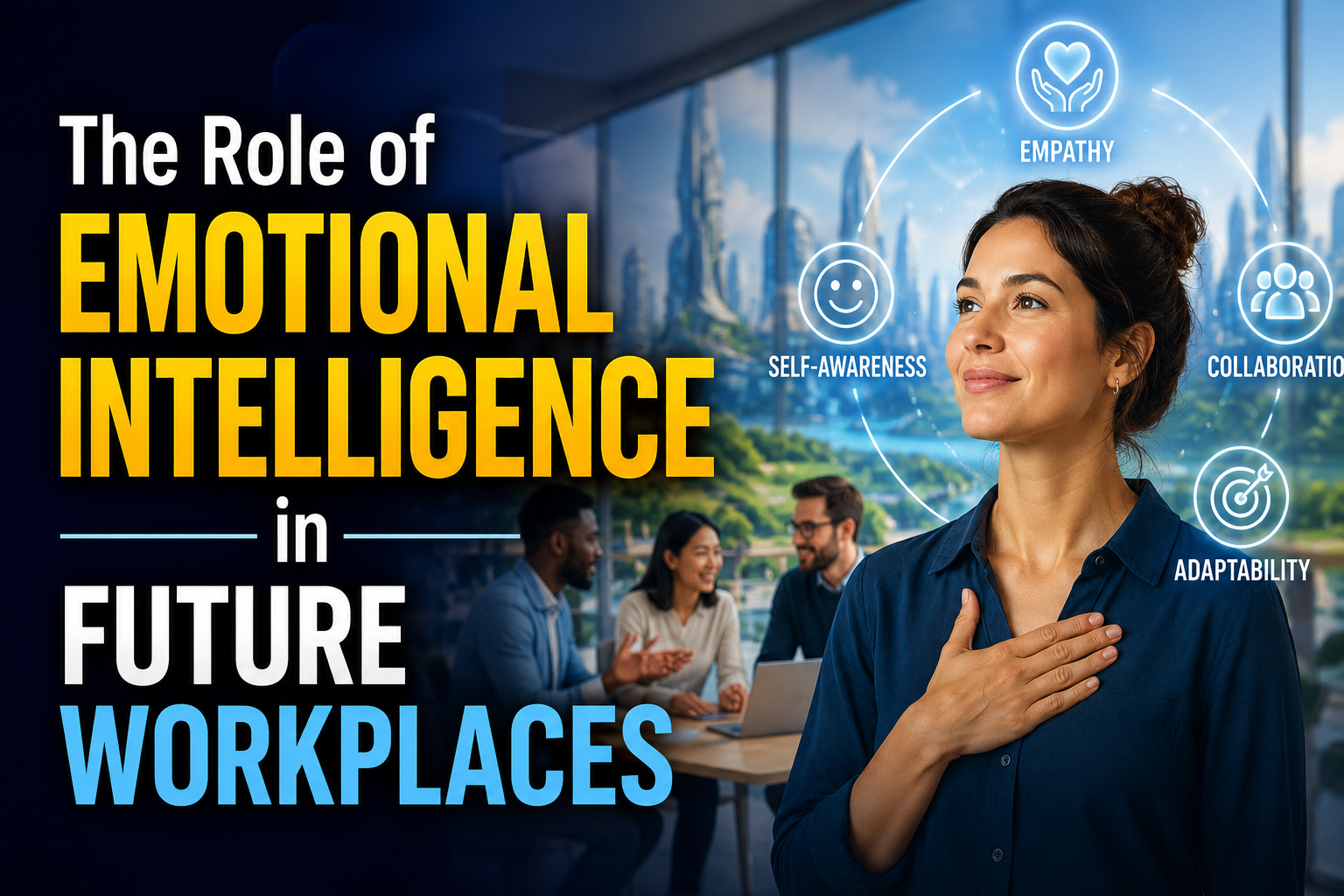
The Role of Emotional Intelligence in Future Workplaces
Emotional intelligence is quietly becoming one of the most important forces shaping the future of work. While technical skills, academic qualifications, and industry experience still matter, they are no longer enough on their own to guarantee long term success in modern workplaces. As organizations become more interconnected, diverse, and fast moving, the ability to understand and manage emotions, both your own and those of others, is becoming a core driver of productivity, leadership, and career growth. The workplace of the future is not only going to reward what people know, but how well they relate, adapt, and respond under pressure.
At its core, emotional intelligence refers to the ability to recognize, understand, and manage emotions in yourself and in others. It includes skills such as self awareness, self regulation, empathy, motivation, and social awareness. These abilities influence how people communicate, how they handle conflict, how they respond to feedback, and how they collaborate in teams. In a world where automation and artificial intelligence are increasingly taking over repetitive and technical tasks, emotional intelligence remains uniquely human. Machines can process data, but they cannot genuinely understand emotional nuance, build trust, or inspire people in meaningful ways.
Future workplaces are expected to become more collaborative and less hierarchical. Traditional top down management structures are already being replaced by more flexible and team based systems. In such environments, emotional intelligence becomes essential for maintaining harmony and productivity. Employees who can manage their emotions during stressful situations, listen actively to others, and respond constructively to disagreement will naturally become more valuable. The ability to stay calm under pressure and avoid emotional escalation can often determine whether a project succeeds or fails.
Another major factor driving the importance of emotional intelligence is the rise of remote and hybrid work. As teams become geographically dispersed, communication increasingly depends on digital tools rather than face to face interaction. This creates a higher risk of misunderstanding, misinterpretation, and emotional disconnect. Without emotional intelligence, written messages can come across as cold or aggressive, and collaboration can quickly break down. Workers who can express empathy through digital communication, interpret tone carefully, and maintain positive relationships across screens will have a significant advantage in this evolving environment.
Leadership in the future workplace will also rely heavily on emotional intelligence. The idea of the authoritarian leader who simply gives orders and expects compliance is becoming outdated. Modern employees expect leaders who understand their challenges, recognize their contributions, and support their development. Leaders with high emotional intelligence are better at motivating teams, resolving conflicts, and building trust. They are also more effective at managing change, which is increasingly important in industries that are constantly evolving due to technological disruption and global competition.
Emotional intelligence also plays a critical role in adaptability. The modern workplace is defined by rapid change. Job roles evolve, industries transform, and new technologies emerge at an accelerating pace. In such an environment, individuals who are emotionally rigid often struggle. They resist change, become overwhelmed by uncertainty, and find it difficult to adjust their mindset. On the other hand, individuals with strong emotional intelligence are more open to learning, more resilient in the face of setbacks, and more willing to embrace new ways of working. This adaptability makes them more future proof in their careers.
Conflict resolution is another area where emotional intelligence is becoming increasingly important. In any workplace where people with different backgrounds, perspectives, and communication styles come together, conflict is inevitable. However, the way conflict is managed determines whether it becomes destructive or productive. Emotional intelligence allows individuals to approach disagreements with empathy rather than ego. Instead of reacting impulsively, they can pause, understand the other person’s perspective, and find common ground. This ability not only preserves relationships but also leads to better decision making and stronger team outcomes.
The rise of artificial intelligence and automation further highlights the importance of emotional intelligence. As machines take over routine analytical and operational tasks, human workers are being pushed toward roles that require creativity, judgment, and interpersonal interaction. These roles depend heavily on emotional awareness. For example, customer service, leadership, marketing, education, healthcare, and negotiation all require a deep understanding of human emotions. In the future, the most valuable professionals will likely be those who can combine technical knowledge with strong emotional intelligence.
Emotional intelligence also has a direct impact on career progression. Many people assume that promotions and success are based purely on technical performance, but in reality, interpersonal skills often play an equally important role. Employees who can build strong relationships with colleagues, communicate effectively with management, and contribute positively to workplace culture are more likely to be noticed and rewarded. Emotional intelligence helps individuals navigate office politics, build professional networks, and create a reputation for reliability and collaboration.
Another important dimension of emotional intelligence in future workplaces is mental health and well being. As work becomes more demanding and always connected through digital devices, burnout and stress are becoming common challenges. Emotional intelligence helps individuals recognize their own emotional limits and take proactive steps to manage stress. It also enables organizations to create healthier work environments where employees feel supported and understood. Companies that prioritize emotional intelligence are more likely to retain talent and maintain high levels of engagement and productivity.
In the broader sense, emotional intelligence is becoming a form of economic advantage. Organizations that foster emotionally intelligent cultures tend to perform better because their employees communicate more effectively, collaborate more efficiently, and handle challenges more constructively. These organizations are also more innovative because people feel safe to express ideas without fear of judgment. Over time, this creates a competitive edge that is difficult to replicate through technology alone.
As the future of work continues to evolve, emotional intelligence will not replace technical skills, but it will elevate them. The most successful individuals will be those who can combine analytical ability with emotional depth. They will understand not only how systems work, but how people work. They will be able to influence, inspire, and collaborate in ways that drive meaningful results. In many cases, emotional intelligence will be the difference between simply having a job and building a lasting career.
Ultimately, the future workplace belongs to those who can connect on a human level. In an era dominated by automation, data, and speed, the ability to slow down, understand emotions, and respond thoughtfully will become increasingly rare and valuable. Emotional intelligence is not just a soft skill or an optional trait. It is becoming a foundational skill for navigating complexity, building relationships, and achieving long term success in a rapidly changing world.

EarnSmartOnline.com.ng is dedicated to helping readers make smarter financial decisions through practical guides on online income, personal finance, technology, digital business, and wealth creation. Our goal is to provide reliable, easy-to-understand, and actionable content that empowers individuals to earn smarter, build sustainable income streams and achieve long-term financial success.
Recommended: Start Earning Online
- Ultimate Affiliate Marketing Program — learn affiliate marketing with a done-for-you sales system ($15). Check it out
- The Newbie Affiliate Guide — the beginner-friendly starter guide (~$6.68). Check it out
- Easy Dollar Maker — earn in dollars uploading AI images and videos from your phone ($17). Check it out
Disclosure: These are affiliate links. If you buy through them, I may earn a commission at no extra cost to you.



