
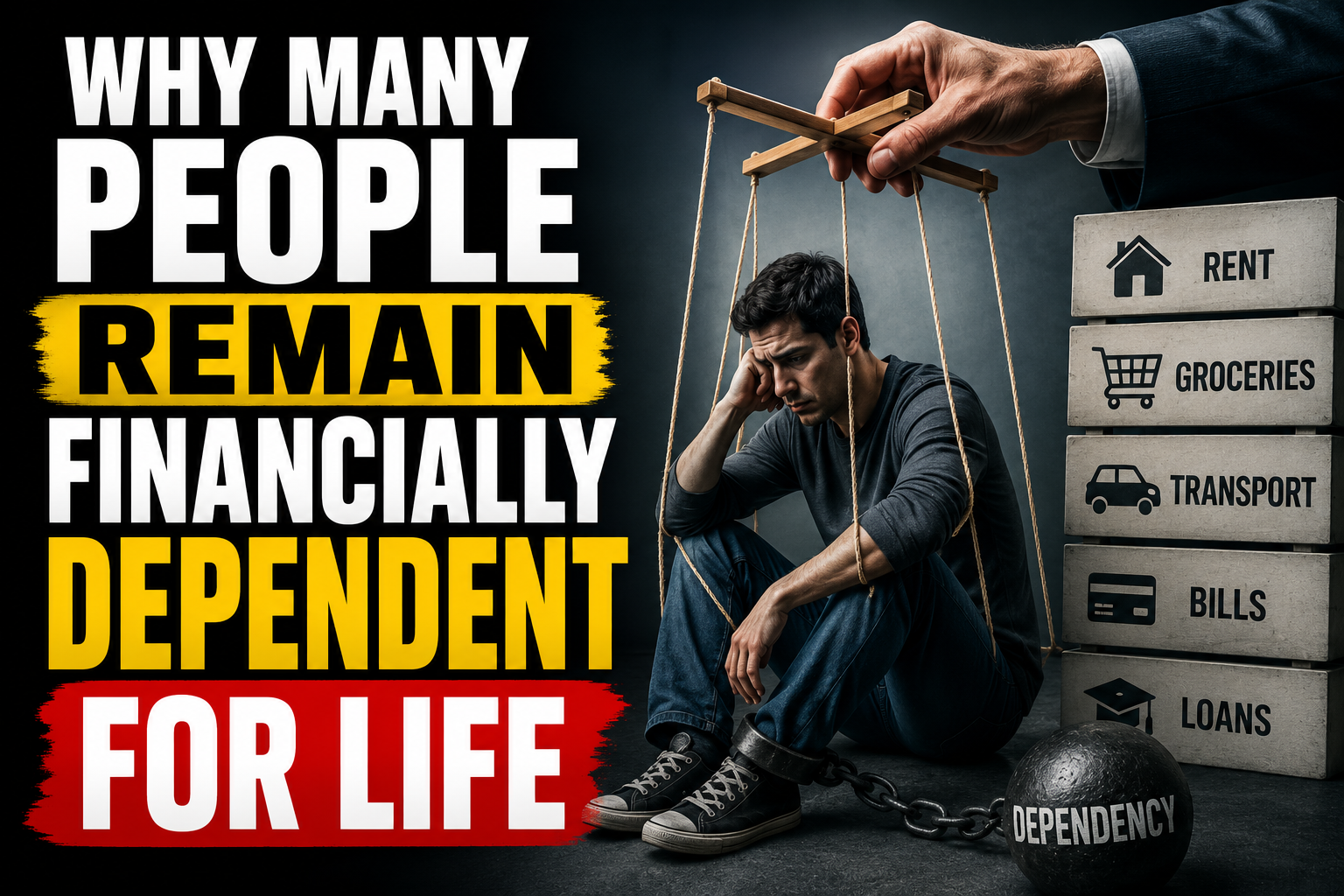
Why Many People Remain Financially Dependent for Life
Financial dependency is one of the most persistent conditions affecting individuals across different societies, and it often lasts far longer than people expect. Many assume that financial independence is simply a matter of earning more money or finding a better job, but in reality, long term dependency is shaped by deeper behavioral patterns, mindset limitations, and structural habits that quietly influence how people live, spend, and plan their lives. Understanding why many people remain financially dependent for life requires looking beyond income and focusing on the decisions and beliefs that shape financial outcomes over time.
One of the primary reasons financial dependency persists is the lack of early financial education. Many people grow up without being taught how money actually works in practical terms. Schools often focus on academic knowledge but rarely cover essential life skills such as budgeting, saving, investing, or debt management. As a result, individuals enter adulthood without a clear understanding of how to manage income effectively. This gap creates a cycle where people earn money but do not know how to grow or protect it, leading them to rely on others or remain stuck in survival mode for years.
Another major factor is the normalization of paycheck to paycheck living. In many environments, it becomes culturally acceptable to spend everything earned each month, leaving no room for savings or investment. When this pattern continues for a long time, it becomes a lifestyle rather than a temporary condition. People begin to adjust their needs and expectations around their income, and instead of seeking financial growth, they focus only on immediate survival. This mindset traps them in a cycle where any unexpected expense creates crisis, reinforcing dependency on loans, family support, or credit systems.
Poor financial discipline also plays a significant role. Even when people earn decent incomes, the inability to control spending often prevents wealth accumulation. Emotional spending, impulse purchases, and social pressure contribute to consistent financial leakage. Many individuals feel compelled to maintain appearances, match the lifestyle of peers, or satisfy short term desires without considering long term consequences. Over time, these repeated decisions erode any potential for savings or investment, keeping individuals dependent on their next paycheck or external assistance.
Closely related to this is the issue of lifestyle inflation. As income increases, many people immediately increase their expenses rather than strengthening their financial base. A raise or new source of income often leads to upgrading housing, clothing, transportation, and entertainment. While this may feel like progress, it often cancels out any real financial growth. Instead of using increased income to build assets or emergency funds, people expand their consumption habits, locking themselves into a higher cost of living that requires continuous income just to maintain.
Another overlooked reason is the lack of long term thinking. Financial independence requires delayed gratification and strategic planning, but many people are conditioned to prioritize immediate comfort over future stability. The idea of sacrificing present enjoyment for future benefit feels difficult or unnecessary. This short term mindset leads to choices that provide instant satisfaction but weaken long term financial security. Without the ability to plan beyond the present moment, individuals struggle to build anything sustainable and remain dependent on ongoing income streams.
Debt culture also contributes significantly to financial dependency. Many people rely heavily on loans, credit cards, and informal borrowing to manage their lives. While debt can be a useful financial tool when properly managed, it becomes dangerous when used to sustain lifestyle or cover recurring expenses. Over time, debt repayments consume a large portion of income, leaving little room for savings or investment. This creates a cycle where individuals work primarily to service debt rather than build wealth, making financial independence increasingly difficult to achieve.
Another important factor is limited income diversification. Many individuals depend entirely on a single source of income, usually employment. While jobs provide stability, they also limit financial growth potential. Without additional income streams, people remain vulnerable to job loss, salary stagnation, or economic downturns. This dependency on one source of income creates a fragile financial structure where survival is tied directly to continued employment, making true independence almost impossible.
Psychological conditioning also plays a powerful role. Many people grow up in environments where financial struggle is normalized, and this shapes their beliefs about what is possible. If someone consistently observes scarcity, debt, and financial stress, they may unconsciously accept these conditions as permanent. This mindset influences their decisions, reducing ambition and limiting their willingness to take financial risks or pursue opportunities that could change their situation. Over time, these internal beliefs become self fulfilling barriers to financial independence.
Fear is another hidden driver of financial dependency. Fear of failure, fear of investment loss, and fear of instability often prevent people from making bold financial decisions. Instead of exploring opportunities for growth, they choose perceived safety, even if that safety keeps them stagnant. This fear driven approach leads to excessive caution, missed opportunities, and reliance on familiar but limiting financial patterns.
Social influence also cannot be ignored. Many financial decisions are shaped by the need to fit in or meet societal expectations. People often spend money not because they need to, but because they want to be seen in a certain way. This constant comparison leads to financial pressure that keeps individuals dependent on continuous income. Instead of building financial strength, they focus on maintaining image, which often comes at the cost of long term stability.
Another contributing factor is the absence of financial goals. Without clear targets, it becomes difficult to measure progress or stay disciplined. Many people simply work and spend without a defined plan for saving, investing, or building assets. In the absence of direction, money flows in and out without creating lasting value. Financial independence requires intentional planning, but without goals, dependency becomes the default outcome.
Poor saving habits further reinforce this cycle. Even when people are aware of the importance of saving, many struggle to consistently set aside money. Irregular saving behavior means there is no accumulated capital to rely on during emergencies or opportunities. Without savings, individuals are forced to depend on external support whenever financial pressure arises, reinforcing long term dependency.
Another key issue is the misunderstanding of wealth building itself. Many people equate financial success solely with earning a high income, without understanding the importance of asset accumulation. True financial independence comes from building systems that generate income over time, not just working for money. Without this understanding, individuals continue to exchange time for money indefinitely, never transitioning into a position where their money works for them.
Environment also plays a significant role. People who are surrounded by financially dependent individuals often adopt similar behaviors. When dependency is common within a community or family, it becomes the default expectation. Breaking out of this pattern requires exposure to different perspectives, but many people remain within environments that reinforce financial limitation.
Ultimately, financial dependency is not usually the result of a single mistake but a combination of repeated habits, beliefs, and choices that accumulate over time. It is sustained by lack of education, poor discipline, emotional decision making, and limiting environments. The challenge is not only about increasing income but about transforming the way individuals think and behave around money.
Breaking free from lifelong financial dependency requires intentional change. It demands discipline, financial literacy, long term thinking, and the willingness to delay gratification. It also requires building multiple income streams, reducing unnecessary expenses, and shifting focus from consumption to accumulation. Most importantly, it requires a mindset shift from survival thinking to growth oriented thinking.
Financial independence is achievable, but it is not automatic. It is the result of consistent decisions made over time. Those who remain financially dependent are often not lacking opportunities, but lacking the structure and mindset needed to convert opportunities into lasting stability. When these internal and external factors are addressed, the cycle of dependency can finally be broken, opening the path toward true financial freedom.

EarnSmartOnline.com.ng is dedicated to helping readers make smarter financial decisions through practical guides on online income, personal finance, technology, digital business, and wealth creation. Our goal is to provide reliable, easy-to-understand, and actionable content that empowers individuals to earn smarter, build sustainable income streams and achieve long-term financial success.
Recommended: Start Earning Online
- Ultimate Affiliate Marketing Program — learn affiliate marketing with a done-for-you sales system ($15). Check it out
- The Newbie Affiliate Guide — the beginner-friendly starter guide (~$6.68). Check it out
- Easy Dollar Maker — earn in dollars uploading AI images and videos from your phone ($17). Check it out
Disclosure: These are affiliate links. If you buy through them, I may earn a commission at no extra cost to you.



