
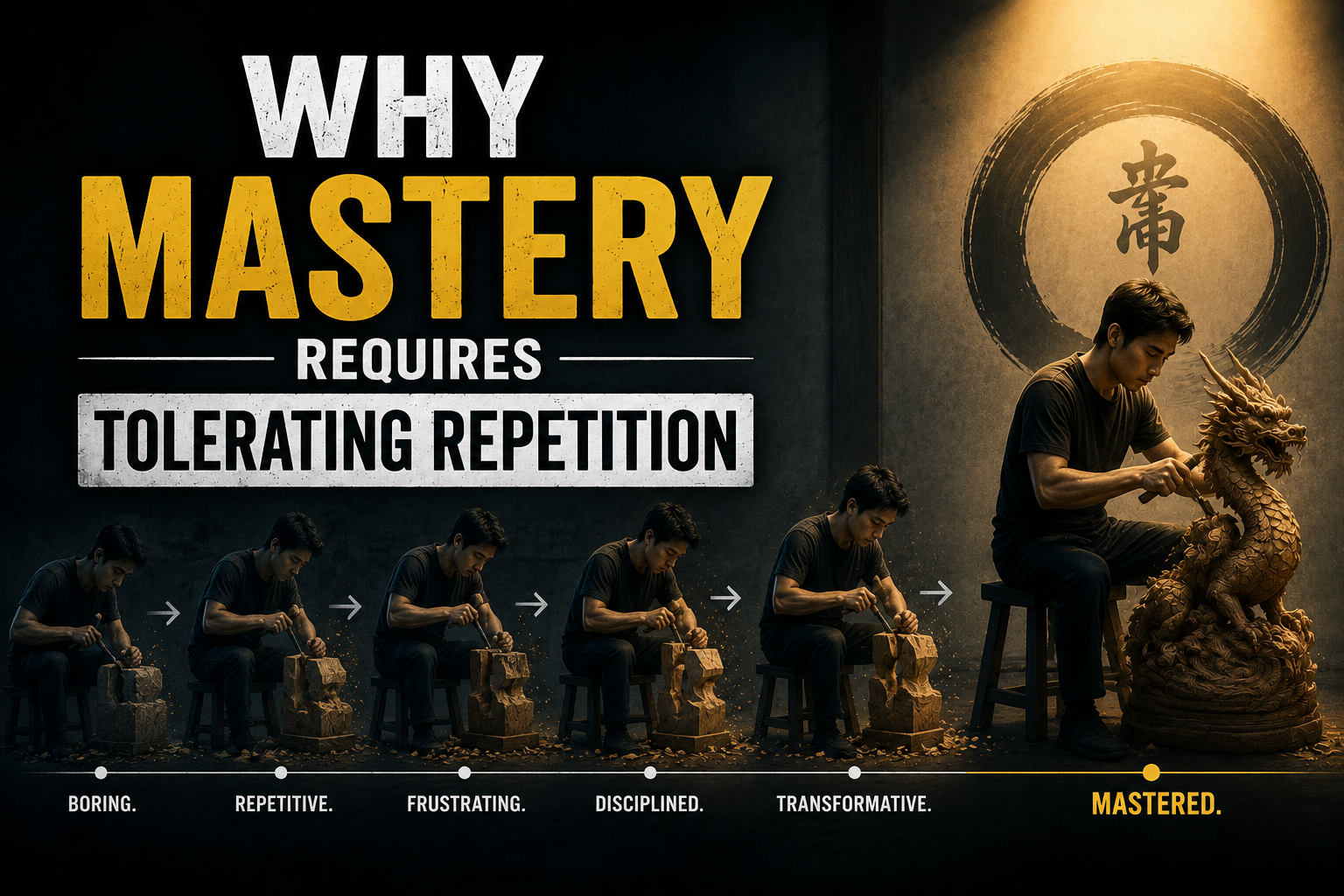
Why Mastery Requires Tolerating Repetition
In a world obsessed with quick results, overnight success, and instant gratification, repetition has become one of the most undervalued ingredients of achievement. People admire excellence, celebrate expertise, and praise mastery, but very few are willing to endure the repetitive process that creates those outcomes. The reality is that mastery requires tolerating repetition. There is no shortcut around it. Every accomplished musician, athlete, entrepreneur, writer, artist, scientist, or professional has spent countless hours doing the same things repeatedly until those actions became second nature.
Many people begin their journey toward a goal with enthusiasm and excitement. The early stages are often fueled by motivation and curiosity. Everything feels new, interesting, and rewarding. However, after the novelty fades, repetition takes over. This is the point where most people quit. They become bored with practicing the same skill, reviewing the same concepts, making the same adjustments, and repeating the same routines. What they fail to realize is that mastery begins precisely where excitement ends.
Repetition is not a sign that you are stuck. It is evidence that you are building competence. Every skill in life is strengthened through repeated exposure and repeated execution. A person does not become a great public speaker by giving one speech. A person does not become financially successful by making one good investment. A person does not become physically fit after one workout session. Improvement happens through consistent repetition over time.
The human brain is designed to learn through repetition. Every time you repeat a task, your brain strengthens the neural pathways associated with that activity. What initially feels difficult gradually becomes easier. Actions that once required conscious effort begin to happen automatically. This is why experienced professionals often perform complex tasks effortlessly. Their expertise is not magic. It is the result of thousands of repetitions that transformed difficult actions into natural habits.
One reason people resist repetition is because they mistakenly associate it with boredom. They assume that doing the same thing repeatedly means there is no progress. In reality, repetition often hides progress because improvements occur gradually rather than dramatically. The person practicing a skill every day may not notice significant changes from one day to the next, but when compared to where they started months or years earlier, the transformation becomes obvious.
Consider professional athletes. Fans see the final performance on game day, but they rarely see the repetitive drills performed behind the scenes. The athlete may practice the same movement thousands of times. To an outsider, it may appear monotonous. To the athlete, however, each repetition builds precision, consistency, and confidence. When the moment of competition arrives, their body responds automatically because repetition has prepared them.
The same principle applies in business. Successful entrepreneurs often repeat activities that others find tedious. They study markets repeatedly, refine products repeatedly, analyze data repeatedly, and improve systems repeatedly. What appears to be innovation from the outside is often built upon countless cycles of repetition and refinement. Mastery is rarely about doing something extraordinary once. It is about doing ordinary things extraordinarily well over a long period.
Many people chase variety because variety feels exciting. They jump from one project to another, one opportunity to another, or one skill to another. While exploration has value, constant switching prevents deep mastery. Every time a person abandons a process because it becomes repetitive, they reset their progress. They remain beginners in many areas instead of becoming experts in one.
Repetition also develops discipline. Motivation is unreliable because it changes with emotions, circumstances, and moods. Discipline, however, grows through repeated action. When you continue practicing despite boredom, discomfort, or lack of excitement, you strengthen your ability to remain committed. This ability becomes valuable far beyond the specific skill you are learning. It shapes your character and influences every area of life.
The most successful individuals often possess a higher tolerance for repetition than the average person. They understand that excellence is built through routine. They recognize that greatness often looks boring from the outside. While others search for shortcuts, they focus on consistent execution. While others seek constant stimulation, they embrace the repetitive process that produces results.
Another reason repetition is important is that it reveals weaknesses. When you repeat an activity enough times, flaws become visible. You begin to notice mistakes, inefficiencies, and areas for improvement. Each repetition becomes an opportunity to refine your approach. Over time, these small refinements accumulate into substantial improvements. Mastery is often the result of thousands of tiny adjustments made during repeated practice.
Many people underestimate the power of incremental progress. They expect dramatic breakthroughs and immediate rewards. However, mastery usually develops through small gains that compound over time. A one percent improvement repeated consistently can eventually create remarkable results. Repetition allows these small gains to accumulate until they become impossible to ignore.
The workplace offers countless examples of this principle. Skilled professionals often perform tasks that appear simple because repetition has eliminated unnecessary effort. An experienced accountant can quickly identify financial inconsistencies. A seasoned mechanic can diagnose problems efficiently. A talented writer can organize ideas effectively. Their abilities were not developed overnight. They emerged through years of repeated practice and repeated exposure.
Repetition also builds confidence. Confidence is not merely positive thinking. Genuine confidence comes from competence, and competence comes from repeated experience. When you have successfully performed a task hundreds or thousands of times, you trust your ability to do it again. This trust reduces fear, increases performance, and improves decision making.
One of the greatest misconceptions about mastery is that talented people require less repetition. In reality, even naturally gifted individuals must practice extensively. Talent may provide an initial advantage, but repetition determines long term success. Many talented individuals fail because they rely solely on natural ability, while less gifted but more disciplined individuals eventually surpass them through consistent repetition.
Technology and modern culture often encourage impatience. People consume short videos, expect instant responses, and seek immediate results. As a result, many struggle with activities that require long periods of repetition. Yet the laws of mastery have not changed. Whether learning a language, building a business, developing leadership skills, or improving financial literacy, repetition remains essential.
There is also a psychological benefit to embracing repetition. Repeated practice teaches patience. It shifts your focus away from immediate gratification and toward long term growth. Instead of constantly asking how quickly you can achieve a result, you begin asking how consistently you can follow the process. This mindset reduces frustration and increases resilience.
The journey toward mastery often feels uneventful because much of the progress happens beneath the surface. Like a tree growing roots before producing visible growth, repeated practice strengthens foundations before producing remarkable outcomes. People often admire the visible results without appreciating the invisible repetitions that created them.
Those who achieve mastery understand a simple truth. Success is rarely hidden inside complicated secrets. More often, it is hidden inside ordinary actions repeated consistently over time. The writer writes. The musician practices. The athlete trains. The entrepreneur improves systems. The student studies. They continue repeating the process long after others have stopped.
Ultimately, mastery requires tolerating repetition because repetition is the mechanism through which excellence is created. Every significant achievement is supported by countless actions that were performed again and again. While repetition may feel boring, slow, or unremarkable, it remains one of the most powerful forces for growth. The individuals who learn to embrace it gain a tremendous advantage because they understand what many others refuse to accept.
The path to mastery is not glamorous. It is often repetitive, demanding, and predictable. Yet it is precisely this repetition that transforms beginners into experts, amateurs into professionals, and ordinary individuals into extraordinary performers. Those willing to endure repetition discover that what once felt monotonous eventually becomes the foundation of excellence. In the end, mastery belongs not to those who seek constant excitement, but to those who remain committed long enough to let repetition work its remarkable magic.

EarnSmartOnline.com.ng is dedicated to helping readers make smarter financial decisions through practical guides on online income, personal finance, technology, digital business, and wealth creation. Our goal is to provide reliable, easy-to-understand, and actionable content that empowers individuals to earn smarter, build sustainable income streams and achieve long-term financial success.
Recommended: Start Earning Online
- Ultimate Affiliate Marketing Program — learn affiliate marketing with a done-for-you sales system ($15). Check it out
- The Newbie Affiliate Guide — the beginner-friendly starter guide (~$6.68). Check it out
- Easy Dollar Maker — earn in dollars uploading AI images and videos from your phone ($17). Check it out
Disclosure: These are affiliate links. If you buy through them, I may earn a commission at no extra cost to you.



