
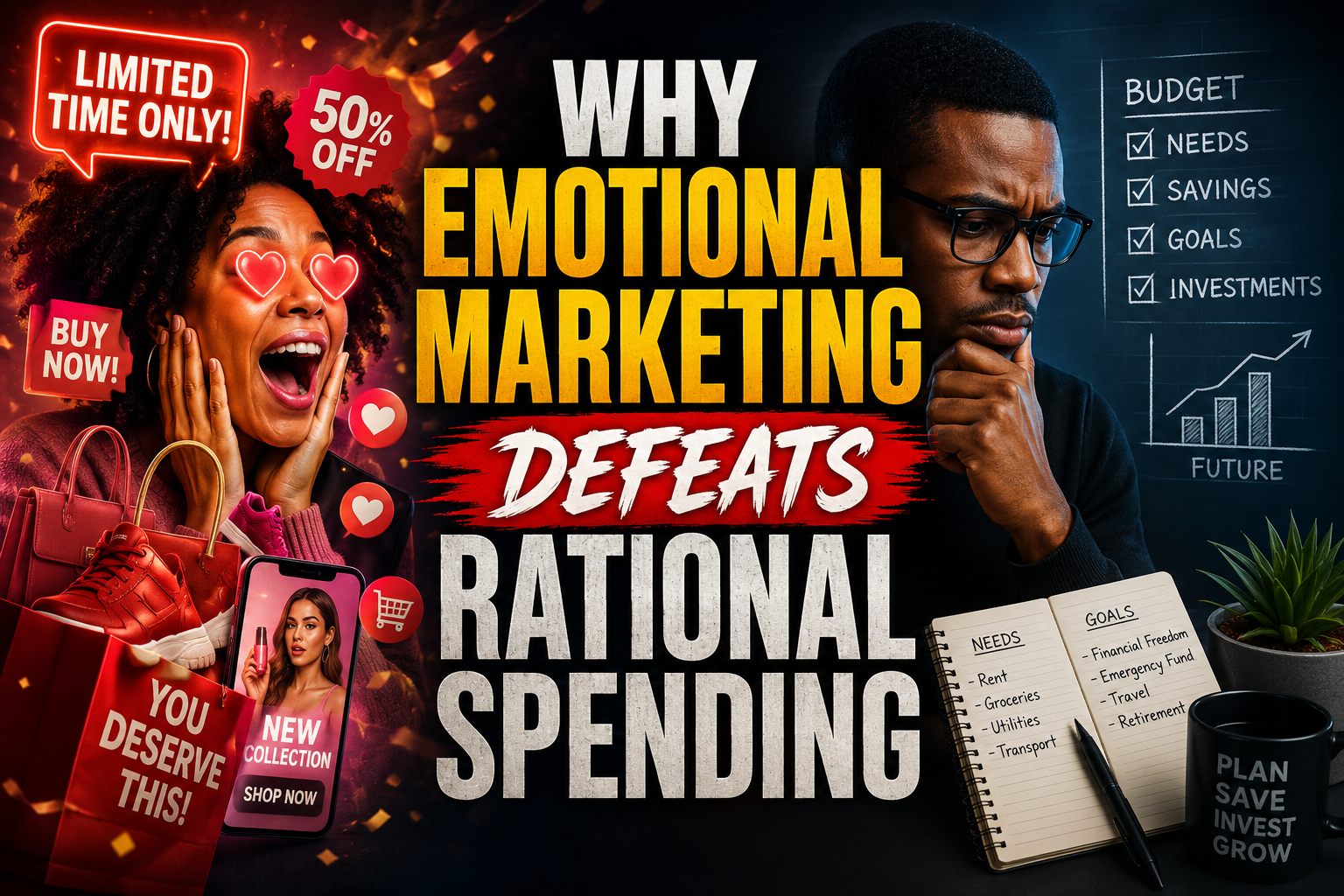
Why Emotional Marketing Defeats Rational Spending
Every day, millions of people believe they make purchasing decisions based on logic, careful comparison and financial wisdom. Most consumers like to think they weigh the advantages and disadvantages of every product before deciding whether it deserves their money. They compare prices, study features, consider alternatives and convince themselves they are acting rationally. Yet decades of behavioural research and everyday experience reveal something very different. The reality is that emotions influence purchasing decisions far more than facts ever could. Long before logic has a chance to speak, emotions have often decided the outcome. This is why emotional marketing defeats rational spending in ways that many people never notice until they look back and wonder why they bought something they never truly needed.
Why emotional marketing defeats rational spending is a question that explains much of modern consumer behaviour. Companies have realised that people rarely buy products simply because they are useful. They buy because those products make them feel successful, accepted, secure, attractive, respected, confident or hopeful. Marketing has evolved far beyond simply presenting facts about a product. Instead, it creates stories, experiences and emotional connections that influence how people think and, more importantly, how they feel.
Imagine walking into a supermarket intending to buy only bread and milk. You leave with chocolates, drinks, snacks and several items that were never on your shopping list. Nothing magical happened. No one forced you to spend more money. Your emotions were quietly influenced by attractive packaging, promotional displays, colourful arrangements and carefully chosen words that made those products feel irresistible. Your brain responded emotionally long before it attempted to justify the purchases logically.
This pattern happens every single day across every industry. From smartphones to luxury cars, clothing, cosmetics, insurance, banking services and even educational courses, emotional marketing works because it speaks directly to human psychology. People rarely purchase products because they completely understand every technical specification. Instead, they purchase because they imagine a better version of themselves after owning the product.
Marketers understand something many consumers overlook. Human beings are emotional creatures who use logic to defend emotional decisions. After making a purchase, people often create rational explanations to convince themselves they made the right choice. They might say the product was on sale, the quality seemed better or the investment will save money in the future. While these explanations may contain truth, they usually appear after the emotional decision has already been made.
Fear remains one of the strongest emotional triggers in marketing. Insurance companies rarely begin by discussing policy documents or complicated legal terms. Instead, they encourage people to imagine what could happen if they remain unprotected. Security companies show images of vulnerable homes. Health campaigns present the consequences of ignoring symptoms. Financial advisers often describe the dangers of retiring without savings. Fear captures attention because the human brain naturally prioritises survival over comfort. Once fear has been activated, rational analysis becomes secondary.
Hope is equally powerful. Every advertisement promising a better future, healthier body, happier relationship or more successful career appeals to hope. The product itself may only be a tool, but the emotion it creates is the real product being sold. People purchase gym memberships because they hope for confidence. They buy books because they hope for knowledge. They invest in courses because they hope for financial freedom. Hope transforms ordinary products into symbols of possibility.
Belonging also plays a remarkable role in consumer behaviour. Human beings naturally desire acceptance. Throughout history, belonging to a group increased chances of survival. Although modern society has changed dramatically, the psychological need remains deeply rooted. Brands understand this instinct perfectly. They rarely advertise products alone. Instead, they advertise communities, lifestyles and identities.
When someone purchases a football jersey, they are not only buying fabric. They are expressing loyalty. When someone buys luxury fashion, they often purchase recognition as much as clothing. When people choose certain technology brands, they sometimes identify themselves with innovation, creativity or exclusivity. Emotional marketing transforms ownership into identity.
Social proof strengthens emotional influence even further. Consumers often assume that if thousands of people recommend a product, it must be worthwhile. Online reviews, testimonials, influencer endorsements and customer ratings create emotional reassurance. Even when individuals have no personal knowledge of a product, seeing others approve of it reduces uncertainty. Rational analysis becomes less important because emotional comfort has already been established.
Scarcity introduces another powerful emotional force. Limited edition products, countdown timers and phrases like “Only a few remaining” encourage people to act quickly. Scarcity creates the fear of missing out. Instead of asking whether they truly need the product, consumers begin worrying about losing the opportunity forever. Their attention shifts from value to urgency. Rational evaluation disappears under emotional pressure.
This explains why online shopping platforms frequently display messages about low stock levels, special offers ending soon or increasing numbers of people viewing the same product. Whether completely accurate or not, these messages encourage emotional decision making by creating urgency. The customer begins acting against time instead of acting according to careful financial planning.
Colours themselves influence emotional spending more than many people realise. Restaurants often use warm colours because they stimulate appetite. Luxury brands frequently prefer black because it communicates prestige and sophistication. Financial institutions commonly use blue because it represents trust, stability and security. Children’s products often feature bright colours associated with excitement and happiness. These choices are not accidental. Every visual element aims to influence emotional perception before any conscious evaluation begins.
Music has similar effects. Gentle background music encourages customers to spend more time browsing inside shops. Fast music may encourage quicker movement in supermarkets. Luxury stores often select elegant music that creates feelings of exclusivity. Hotels, restaurants and shopping centres carefully design sound environments because emotions respond automatically to atmosphere.
Storytelling remains perhaps the most effective emotional marketing strategy ever developed. Human beings have communicated through stories for thousands of years. Long before written language existed, stories passed knowledge from one generation to another. Modern marketers use this same psychological tendency by creating narratives around products rather than simply describing features.
Instead of saying a car has excellent safety technology, an advertisement may show a family arriving home safely after a challenging journey. Instead of listing camera specifications on a smartphone, marketers show parents capturing precious memories with their children. Instead of advertising coffee as simply containing caffeine, companies show friends laughing together over warm conversations. Consumers remember emotions more easily than technical information.
This emotional connection explains why famous brands continue attracting loyal customers despite cheaper alternatives offering similar quality. Loyalty often develops because customers associate positive emotions with previous experiences. They remember birthdays celebrated with certain foods, family holidays connected to particular hotels or childhood memories involving familiar products. Emotional associations become stronger than price comparisons.
Brand loyalty therefore extends beyond satisfaction. It becomes part of personal history. A customer who trusts a brand repeatedly experiences reduced uncertainty. That emotional comfort becomes valuable in itself. Instead of evaluating dozens of alternatives every time they need a product, they simply return to what feels familiar.
Advertising during holidays demonstrates emotional marketing at its strongest. Christmas advertisements rarely focus on product specifications. Instead, they celebrate generosity, family, love and togetherness. Valentine’s campaigns highlight romance. Mother’s Day promotions focus on gratitude. Father’s Day advertisements celebrate appreciation. Businesses understand that purchases increase when products become symbols of emotional expression rather than simple objects.
Children also influence emotional spending. Parents naturally want to provide opportunities, comfort and happiness for their families. Marketing directed towards families frequently appeals to love, protection and responsibility rather than practical features. Educational toys promise brighter futures. Healthy foods promise stronger children. Family vehicles promise safety. Insurance policies promise peace of mind. Each message speaks primarily to emotions rather than calculations.
Digital marketing has made emotional influence even more sophisticated. Companies collect enormous amounts of information about browsing habits, interests and purchasing behaviour. This allows advertisements to become increasingly personalised. Instead of showing identical messages to everyone, businesses present offers that match individual preferences, increasing emotional relevance.
Artificial intelligence now helps businesses predict what consumers may want before consumers consciously recognise those desires themselves. Recommendation systems on shopping websites analyse previous purchases and browsing behaviour to present products most likely to generate emotional interest. Streaming services recommend entertainment based on viewing history. Social media platforms prioritise content that triggers emotional engagement because emotional reactions encourage longer screen time.
The psychology behind impulse buying illustrates emotional marketing perfectly. An impulse purchase rarely begins with logical necessity. Instead, it begins with emotional stimulation. Someone feels bored, excited, lonely, stressed or rewarded and suddenly spending money seems appropriate. Afterwards, logic attempts to justify the decision by focusing on discounts, usefulness or future benefits.
Retail environments deliberately encourage these impulses. Checkout counters display sweets, drinks and small inexpensive products because customers waiting in queues become mentally fatigued after making numerous decisions throughout the shopping trip. Their ability to resist temptation weakens, making emotional decisions easier. Even small purchases generate significant profits when repeated millions of times every day.
Behavioural economists have consistently shown that human beings experience losses more intensely than gains. This psychological principle explains why marketers often frame messages around avoiding loss instead of achieving gain. Consumers react more strongly to “Don’t miss this opportunity” than “Here is a good opportunity.” Emotionally, losing feels more urgent than winning.
Luxury marketing demonstrates another fascinating aspect of emotional spending. Luxury products frequently provide only modest functional improvements over far cheaper alternatives. Yet consumers willingly pay enormous premiums because luxury communicates exclusivity, status and achievement. The emotional value far exceeds the physical value. A watch may tell time no better than an inexpensive model, but it communicates success, identity and aspiration.
This does not necessarily mean consumers are irrational. Emotions themselves provide genuine value. A wedding ring may contain precious metal, but its true worth lies in emotional meaning. Family photographs possess emotional importance far beyond the cost of printing them. Gifts often become valuable because of relationships rather than price. Emotional value is real, but marketers understand how to expand that emotional value into commercial advantage.

EarnSmartOnline.com.ng is dedicated to helping readers make smarter financial decisions through practical guides on online income, personal finance, technology, digital business, and wealth creation. Our goal is to provide reliable, easy-to-understand, and actionable content that empowers individuals to earn smarter, build sustainable income streams and achieve long-term financial success.
Recommended: Start Earning Online
- Ultimate Affiliate Marketing Program — learn affiliate marketing with a done-for-you sales system ($15). Check it out
- The Newbie Affiliate Guide — the beginner-friendly starter guide (~$6.68). Check it out
- Easy Dollar Maker — earn in dollars uploading AI images and videos from your phone ($17). Check it out
Disclosure: These are affiliate links. If you buy through them, I may earn a commission at no extra cost to you.



